

Part 1 here
As the forecast had promised, during the night the wind calmed down. Sun warmed up the surroundings and air was not freezing anymore. Time to go geocaching! We are going to have a long walk during the search, but the caches are not well hidden, so we are supposed to find them pretty quickly. Because it is a series, the goal is to find all and fast, no one would want to spent a lot of time near each cache.
Walking outside brings a good appetite, so before starting the search we decided to have an early lunch. Cooking dry-frozen food is easy – boil some water, add to the pouch and let it sit a little. While waiting, we ran to the closest cache to check it how it looked like. Yep, small container – a medical pill bottle to be exact, and rolled piece of paper inside, where player supposed to write his name. The container is either hung on the bush or laid on the ground near the bush. The distance between the caches is about 400 feet. So all that we need for the search is GPS navigator and a pen (or several pens).
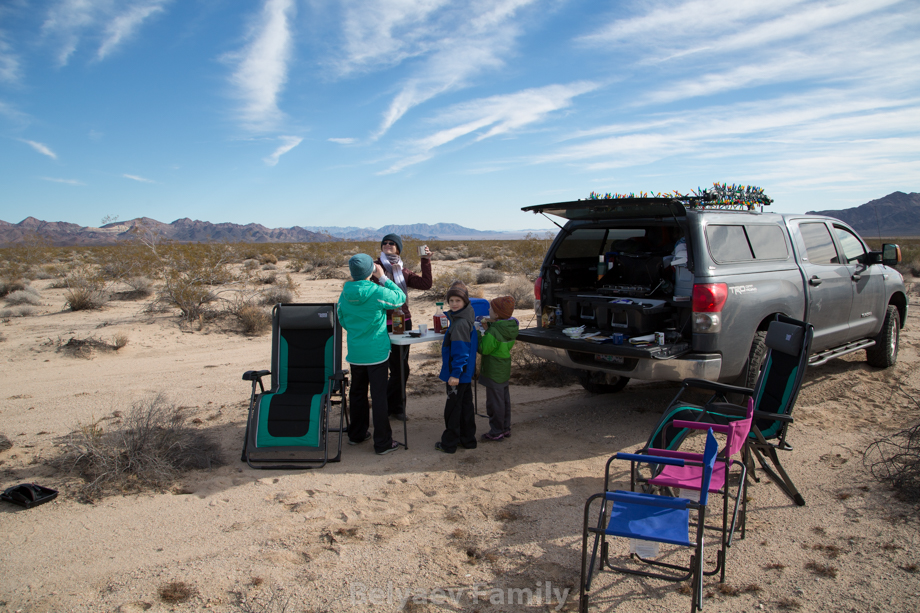
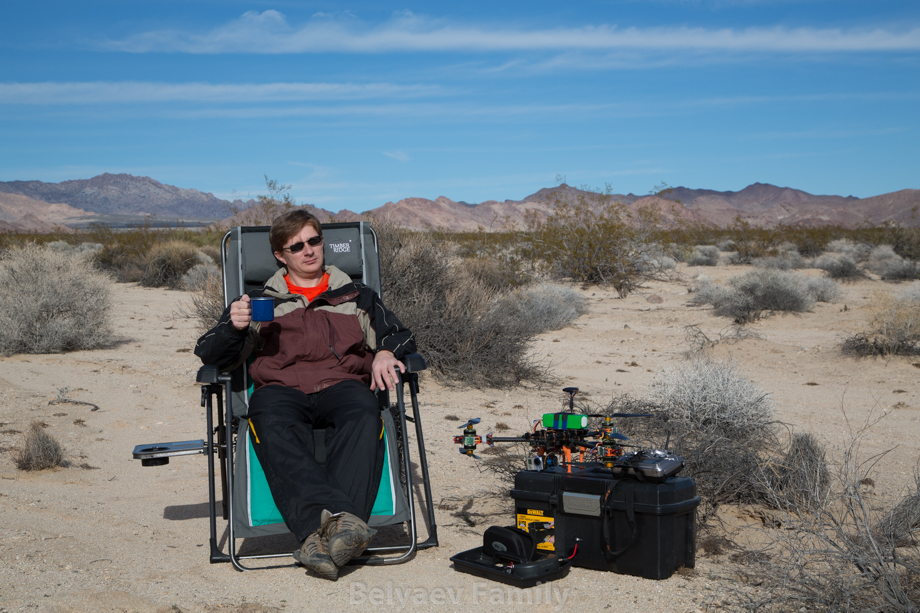
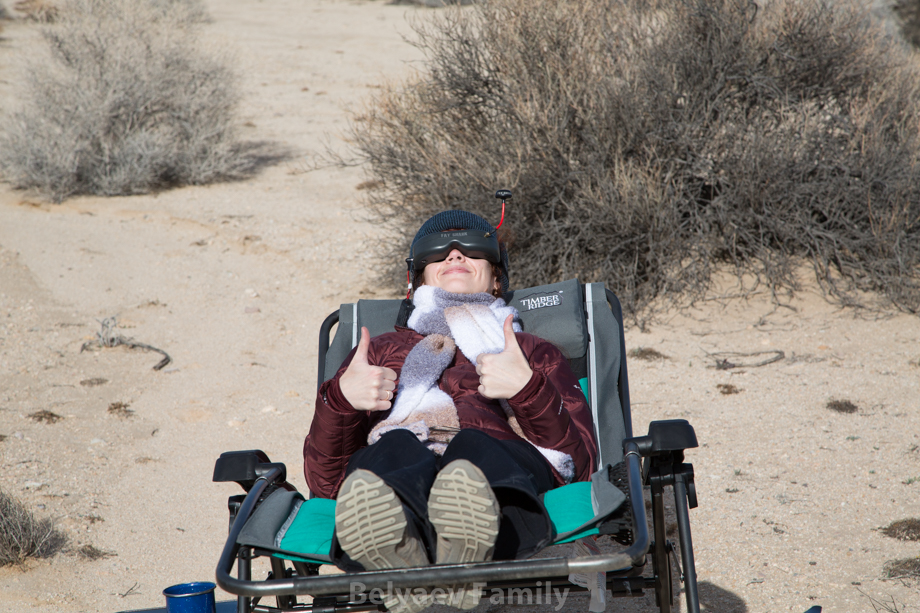
After lunch we divided into two groups – Dad, Pavlik and Kate were searching for the caches of the left number six and Ira and I took care of the right number.
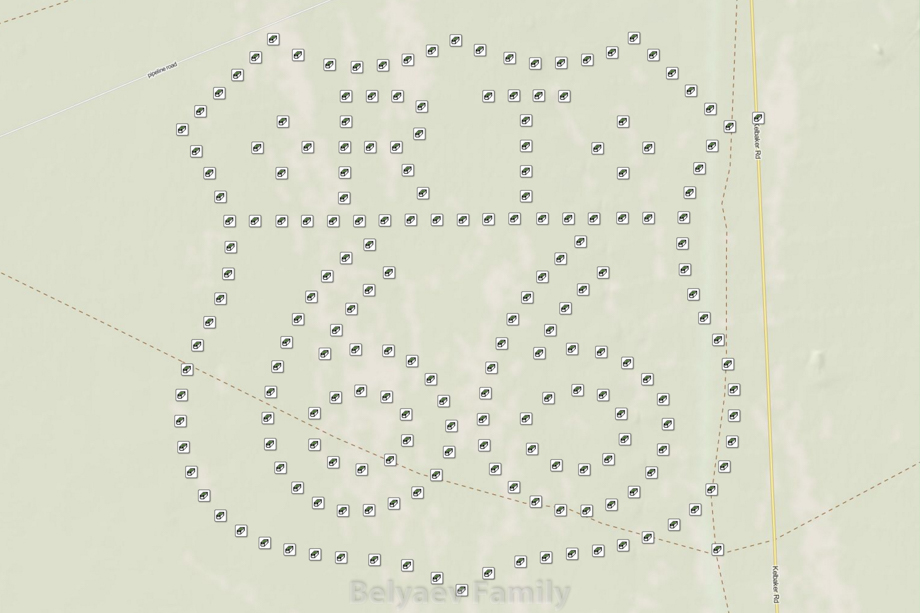
Let’s the search begin!
The walk wasn’t hard, the dirt was packed, with small creeks dry beds here and there. Only in some spots we felt soft sand, bust most of the ground is hard. So the first half of caches we found pretty quickly, Some difficulties started when the path of the caches turned and sun was shining in our eyes. Everything was so bright so we couldn’t spot the cache as quickly as before and situations when we where walking around the bush with the cache, but not noticing it, became more and more often. But we were stubborn and did find all our caches in the end. After that we went to help dad and kids with their caches.
We were able to find only outer borders of the Six’es – the sun was too low above the horizon already, the air was getting cooler and cooler and the lightning went down as well. Time to go back to the car.
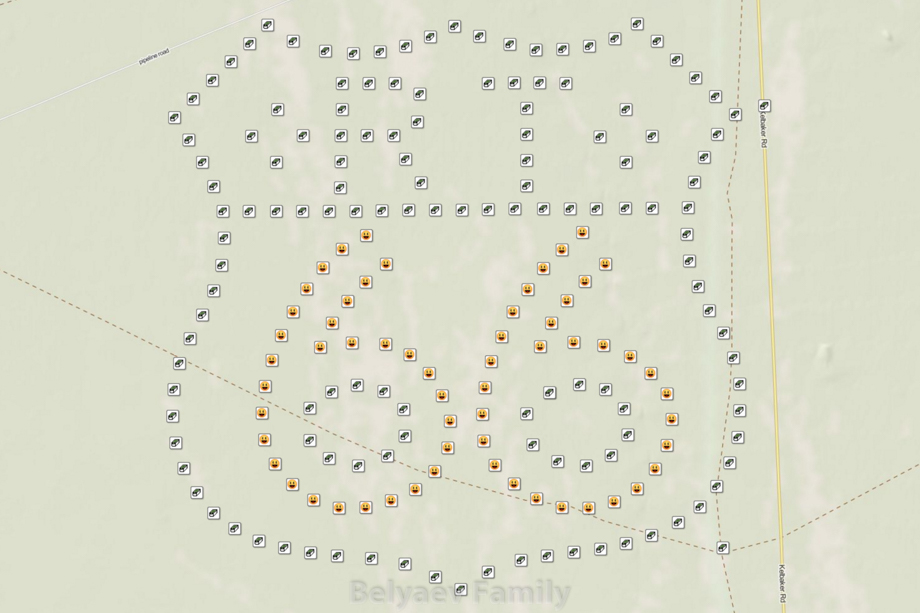
After several hours of fun search
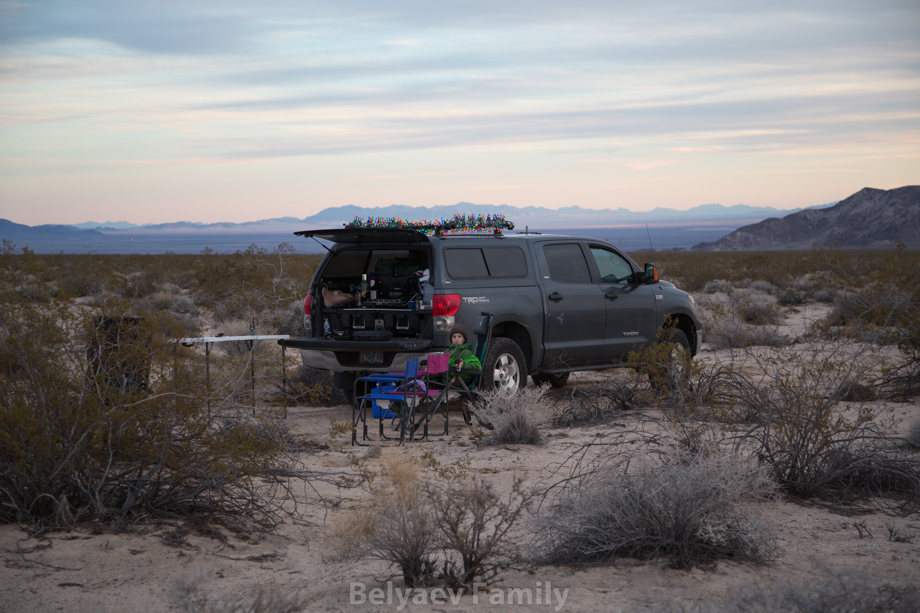
Soon the setting sun’s rays light up the hills on the opposite side of the valley. So beautiful! Dad’s copter went up to make a picture and I took my camera as well.
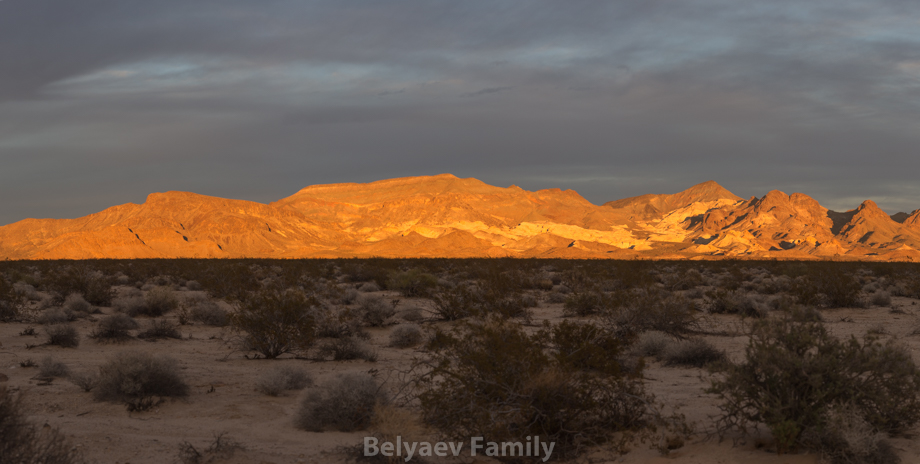
“Martian” hills
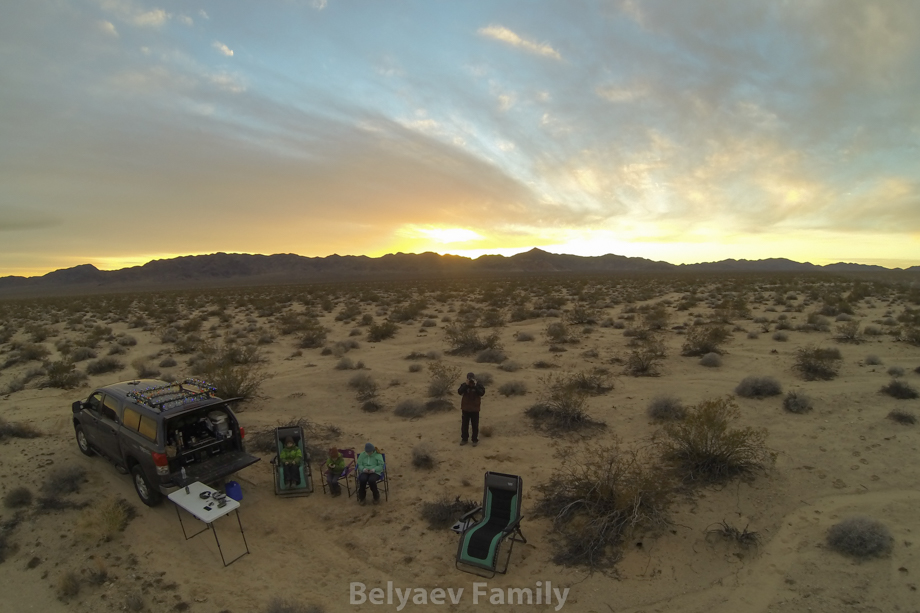
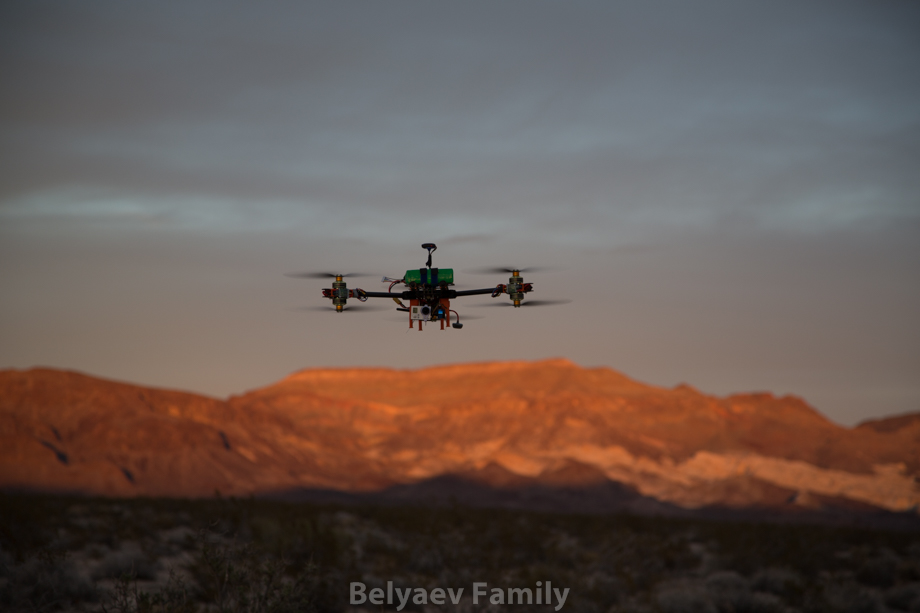
Last ray waved us last goodbye and hid behind the horizon. The sky gained all colors of red and orange.
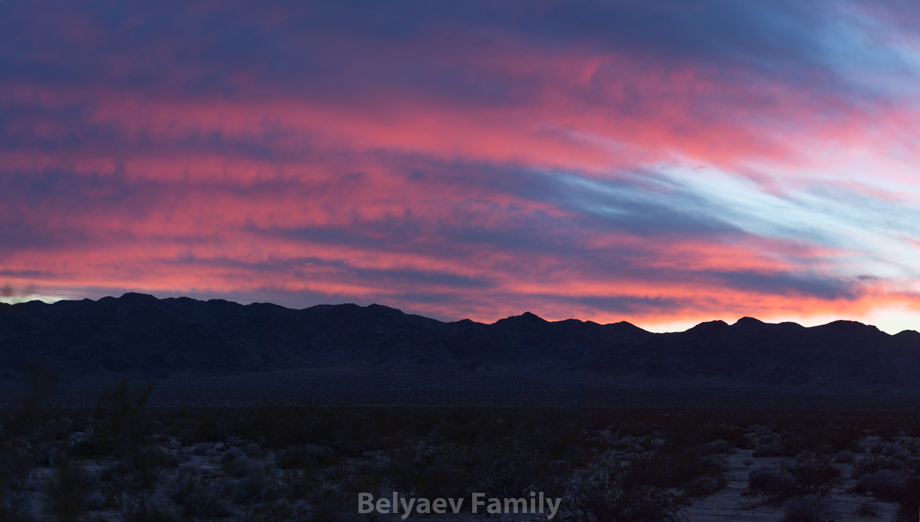
The farther away the civilization, the prettier sunsets are
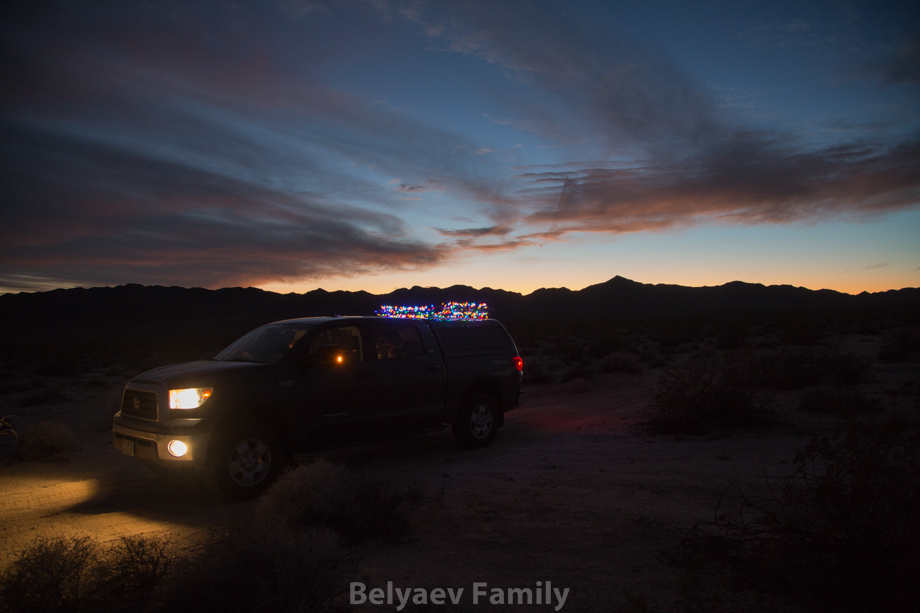
We turned on our garland
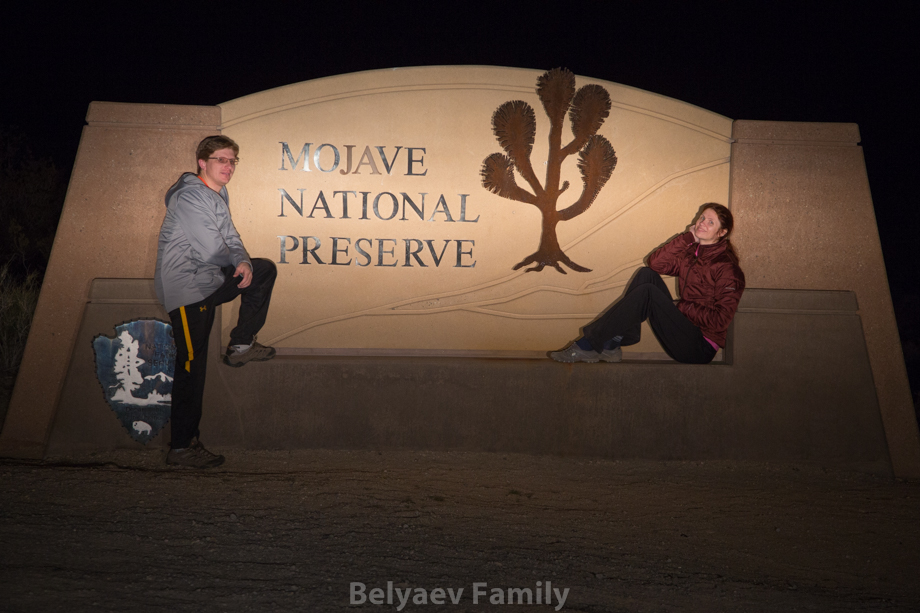
While driving back to hotel, we noticed the restaurant named ‘The Mad Greek’. Hmm, let’s check it out? The size of the crowd inside told us that food should be good here. And it truly was, definitely worth to stop there! 🙂
There still couple days of our vacation left and we had no idea to what to do during that time. Sitting in the cafe we tried to make a plan. Maybe go to the Death Valley again? Nope, all hotels are booked there. OK, let’s go back to Barstow for now – we had spent two previous nights there.
In the morning we decided to drive towards Tonopah in Nevada. There are couple of museums there that we would like to visit. But after checking the weather forecast we were disappointed a little – there will be snow and wind. Sigh… Next time then, when it will be warm.
But we stopped to take a look at Dumont Dunes. Oh wow, they are too steep for our car. And all parking lot is full anyway, people are coming here to spend several days here.
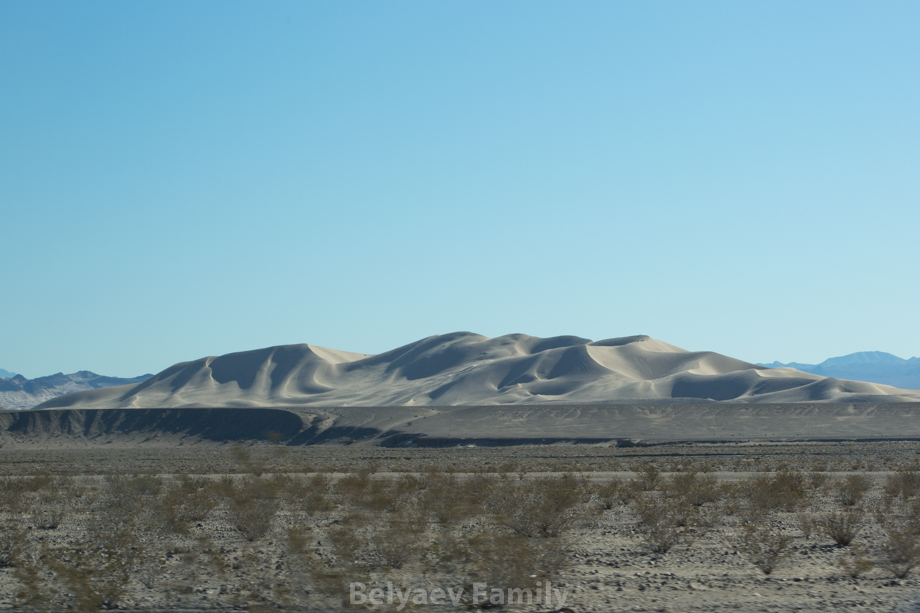
Dumont Dunes издали
Right near it there are Small Dumont Dunes, just what we need – they were very short and not scary at all. And no one was around too, that’s what we like! First we were driving there, next would be the lunch and kids will play in the sand.
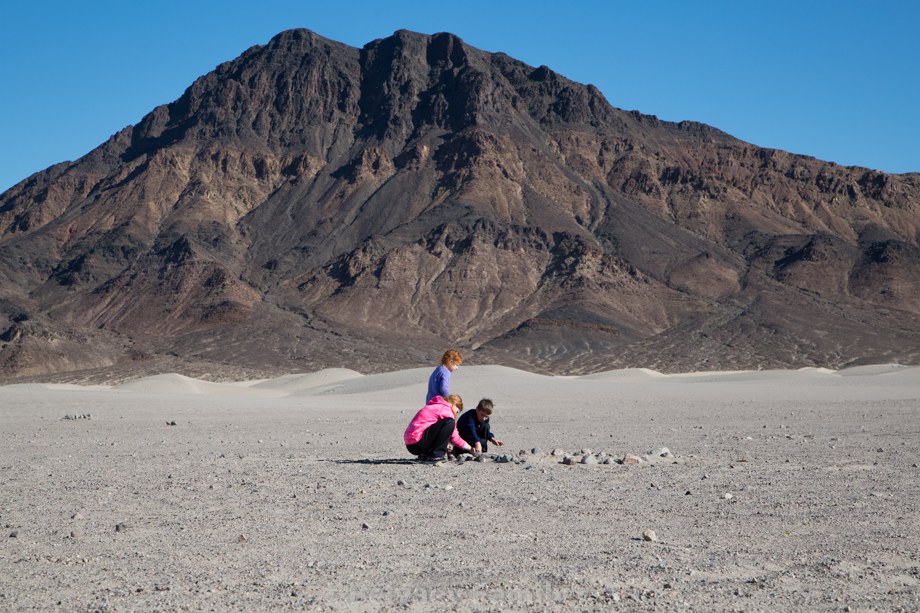
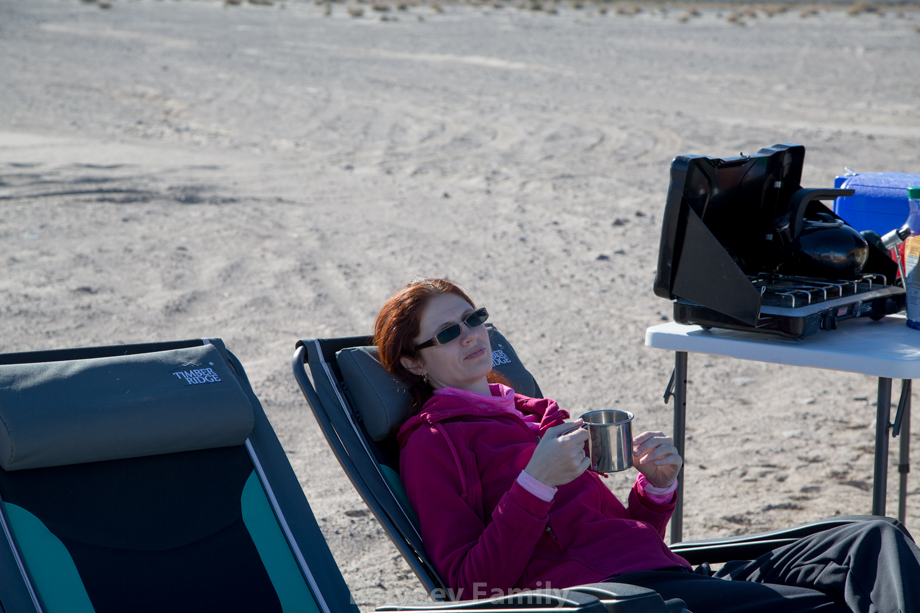
We made lunch, but kids were so busy with building the castle so even didn’t want to stop. Oh well, they will come when they would be hungry, but we, parents, want to eat now. And we did. I was relaxing in the warm air and couldn’t believe that by the evening we will be in the snow and cold area.
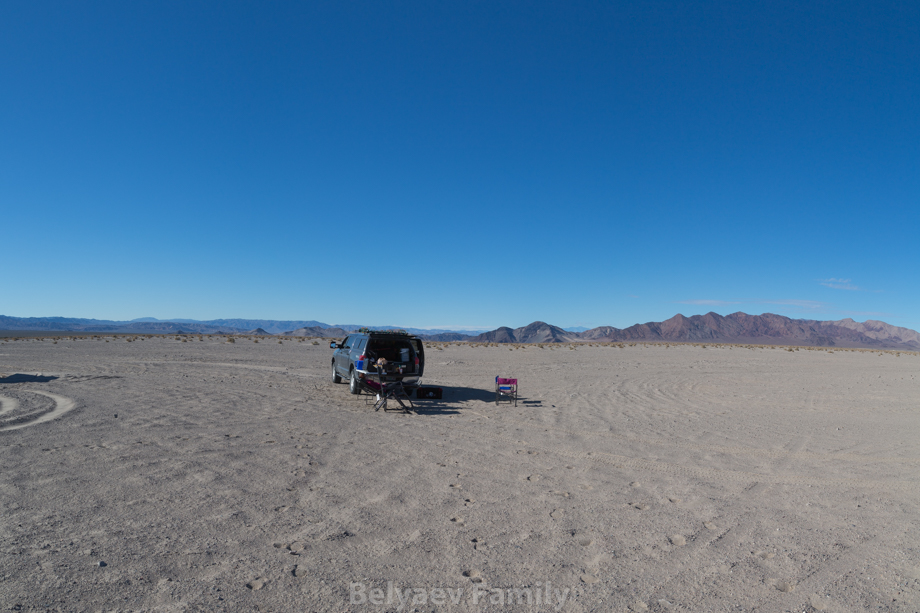
Looking away from the endless blue sky, I noticed some yellow object. What was it? Turned out it was a toy excavator forgotten by some previous visitors. Kids became very excited and immediately asked me to find them another car. Really?
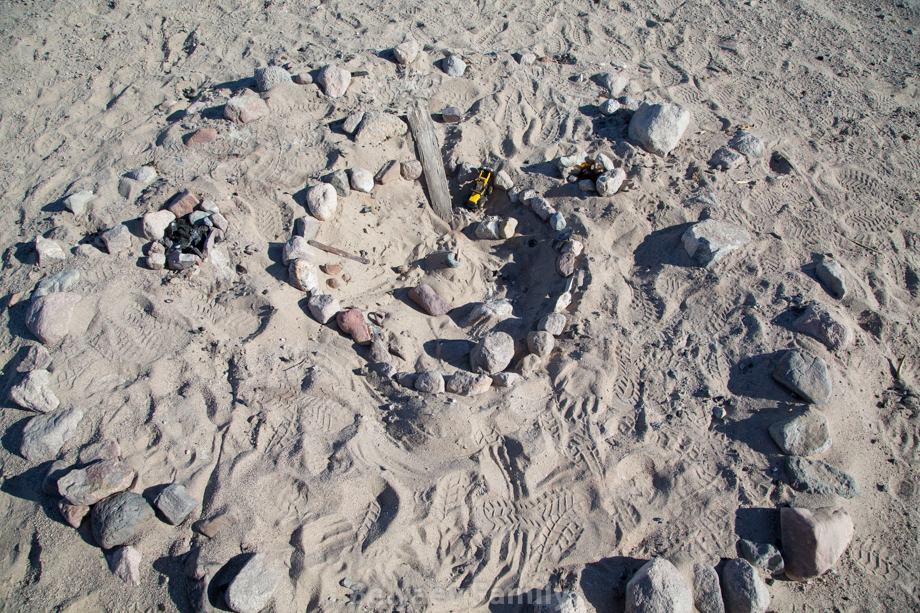
Yellow excavator in the middle of the castle
Soon kids became really hungry and went to eat. And it was right on time, we need to drive to Tonopah still.
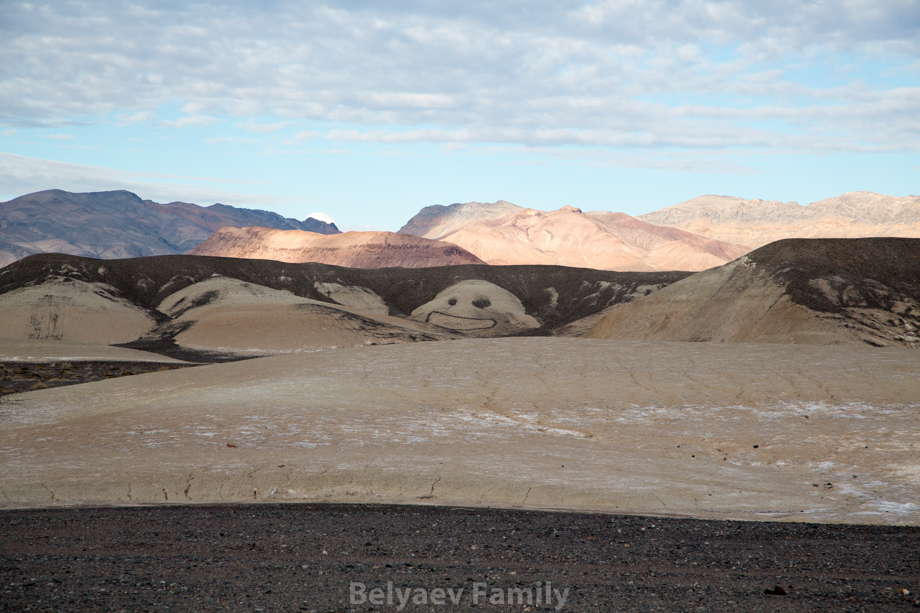
Do you see fun face?
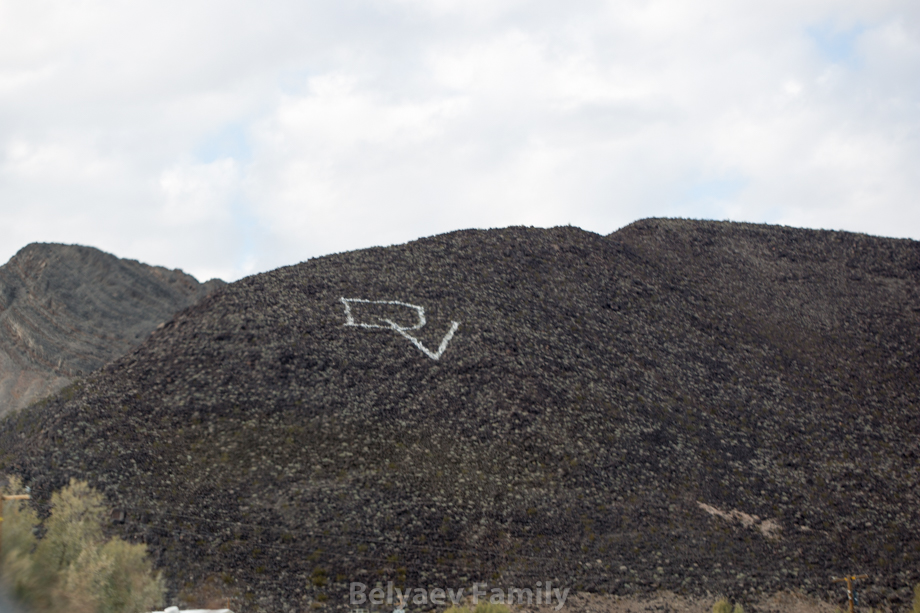
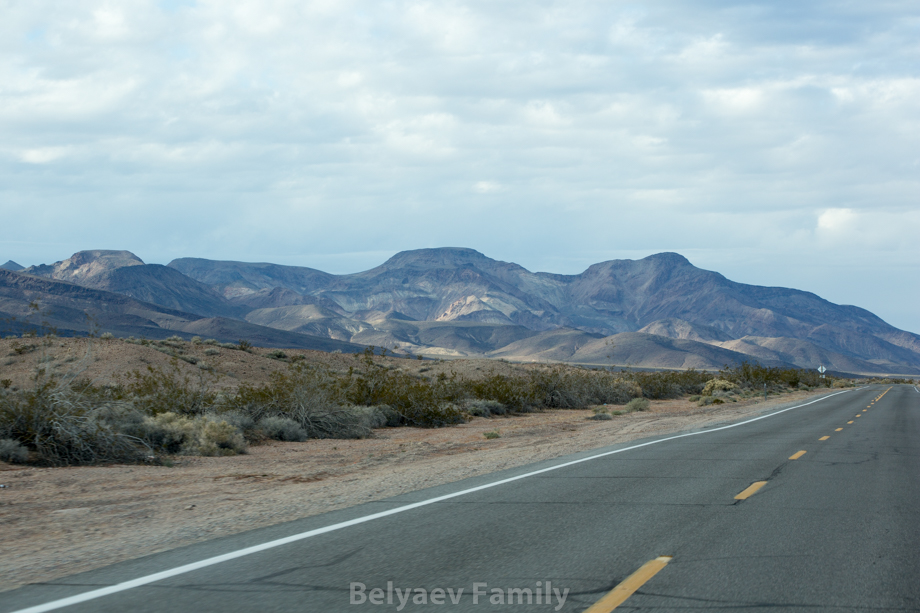
The Death Valley is right behind that hill
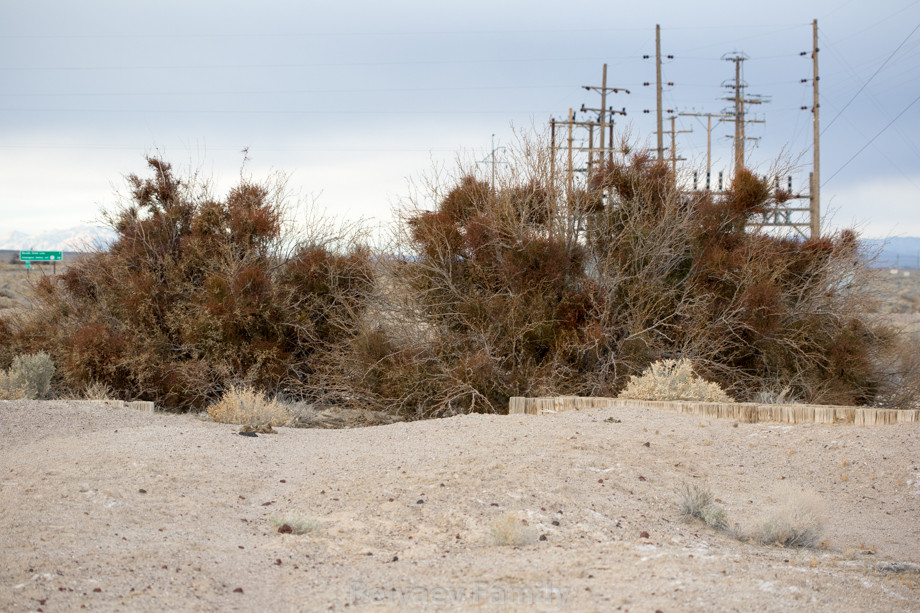
I saw some sort of plants looked like a furry balls growing here and there and wondered if they have symbiotic or parasitic nature?
While driving, we noticed something looked like a railway embankment.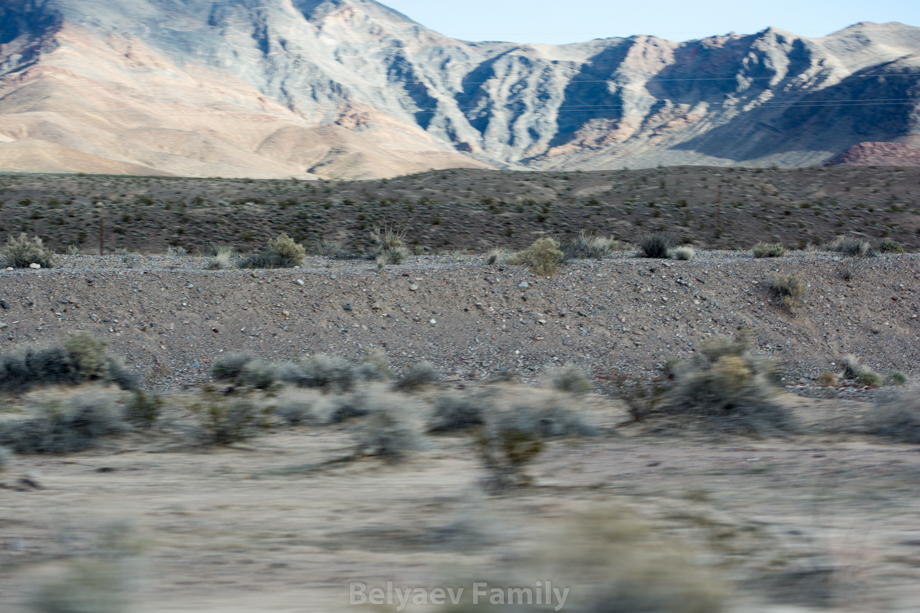 It wasn’t first time we noticed it. Actually, after one of our previous vacations I’ve been so curious that even looked in the Internet what it could be. During last century’s mining boom nothing could compare with railroad – the speed and amount of goods made it the winner. And the remains of the old railroads could be found here and there. Even in Portland there are some, for example, the bicycle route from Vernonia to Banks uses the old railway embankment.
So yes, this current embankment is the remains of Tonopah & Tidewater Railroad.
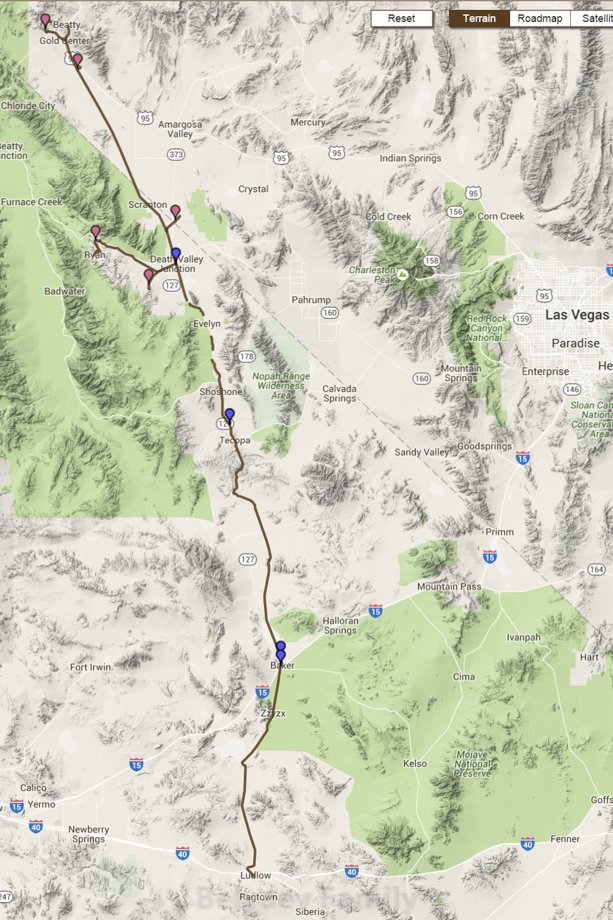
Here is the short story from mojavedesert.net
In the end of XIX borate mineral deposites were found in the Death Valley and William T. Coleman was the pioneer in developing them. In 1882 he built a factory to convert ulexite to borate since the last one was more desirable on the market. Harvested materials were transported to the Southern Pacific Railroad by mules’ wagons, and it was a very difficult path since they had to travel from Mojave over the Wingate pass. Some years later Coleman sold everything to Francis Marion Smith because of the financial difficulties. Other name for Smith was “Borax” Smith – he knew about borate harvesting process and founded Pacific Coast Borax Company in 1890. Smith decided to build a railroad to transport the harvested materials. But the idea was to build railroad that could serve gold and silver mines surrounded Goldfield and Tonopah as well. That was when Tonopah and Tidewater Railroad Company (T&T) had been founded.
Originally Smith had planned to begin the line in Las Vegas and connect it with the Southern Pacific Railroad (SP). In May 1905 the construction started, but when already 12 miles were built, the T&T was denied to connect with SP. That happened because the Senator Clark of Nevada had made large investments in the mining in Tonopah and Goldfield areas, so he needed his own railroad.
So T&T had to sell newly build part and start over. In that time the beginning was located in Ludlow, but that would made the total length by 50 miles longer. Smith started new line in the November of 1905 and by May 1906 75 miles had been built, ending to the north of Dumont Dunes.
Here was the big complication awaiting. Total 12 miles had to be built through the mountains to the town Tecopa and there were no possibilities to go around. To make the task a little bit easier it was decided to start constriction from Tecopa, going downhill. But that meant that all materials required to be delivered to Tecopa prior construction. It was hard task, summer of 1906 was extremely hot and workers started to quit one after another. Only during the fall Smith was able to rehire people back since the temperature dropped to the comfortable levels. During construction, workers dug the ground or created embankments and built three trestles. One of them was 500 feet long! In May 1907 that difficult passage was finally finished and scheduling train service began operating to Tecopa.
The further construction was faster and by October 1907 T&T reached Gold Center. But there were no big excitement about that, because it was the Market crush time and also Senator Clark had beat T&T by one year and his line went further, to Beatty and Goldfield.
However regular train service still made people’s life easier, in one direction went mine equipment, post and different goods, and in the other the deposited minerals and ores.
During time being T&T faced a lot of challenges – mud slides, floods (especially in dried lakes), wreckages and breakdowns. Huge portion of it happened because of the difficult desert climate.
The flood of 1938 made a lot of severe damages to the railroad, and in 1940 the service has stopped. With the beginning of World War II the line was requisitioned by the War Department and in 1942 the decision to remove the rails was made. For the last time the train was scheduled from Beatty to Ludlow, delivering removed rails. That was the end of T&T line.
We were in the Death Valley Junction when noticed the embankments again. This time we decided to stop and take a closer look.
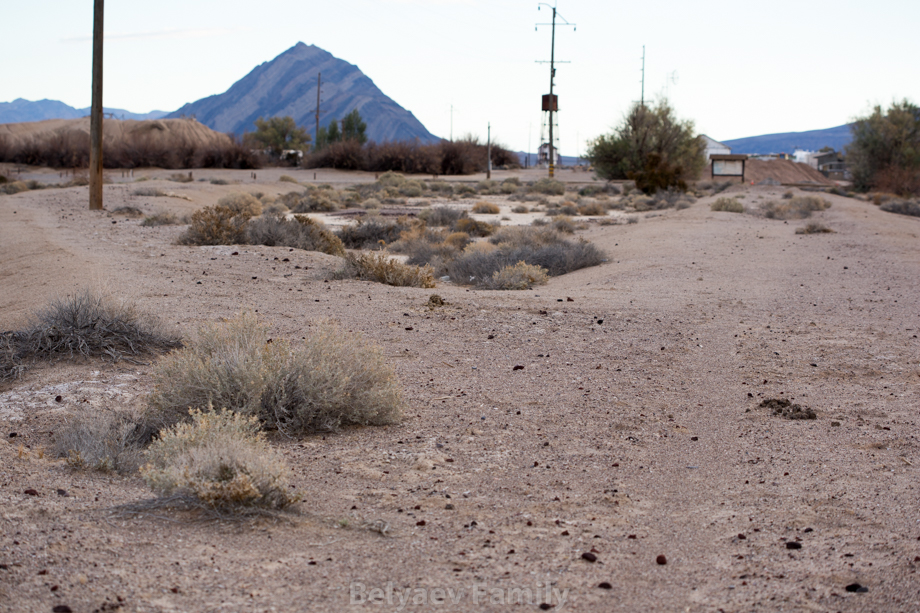
The junction was here
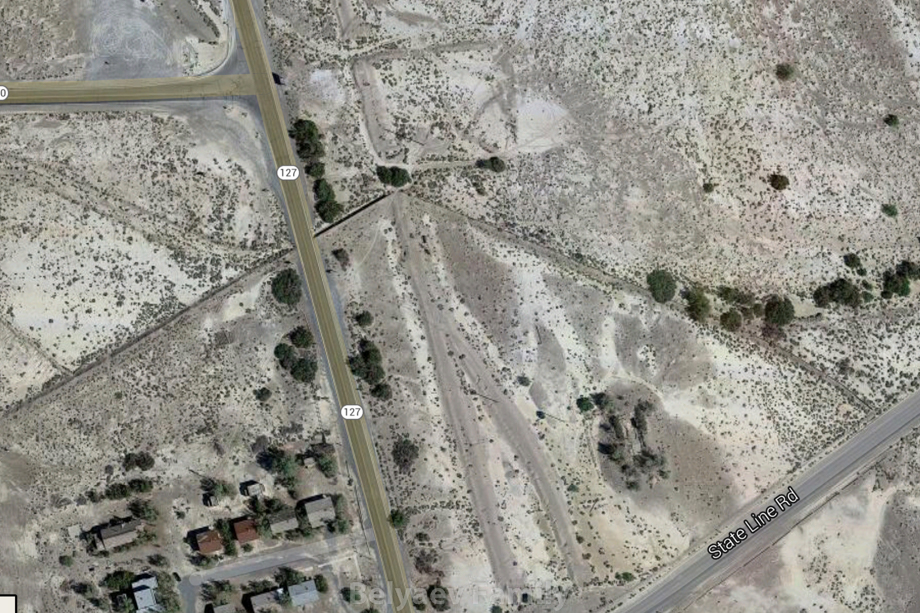
View from the above (google maps)
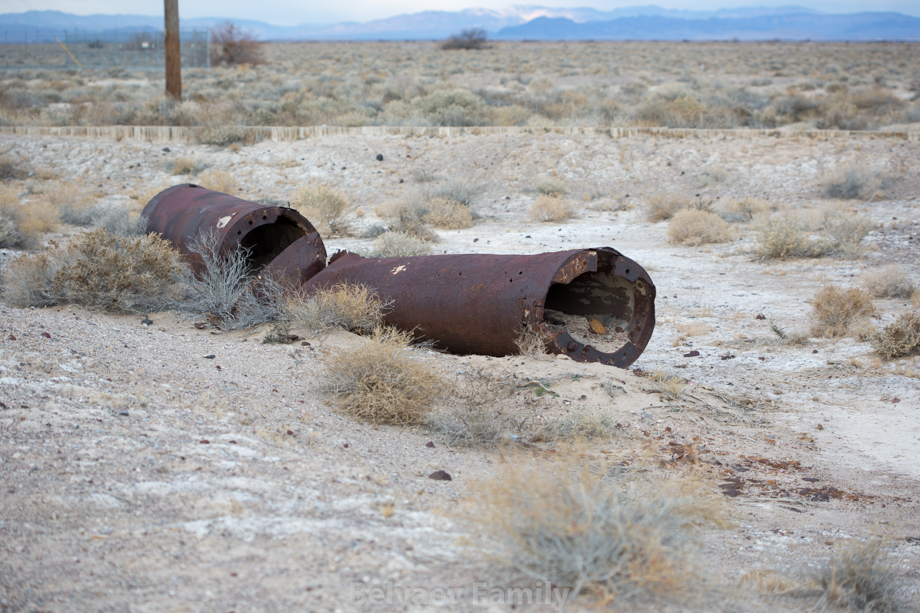
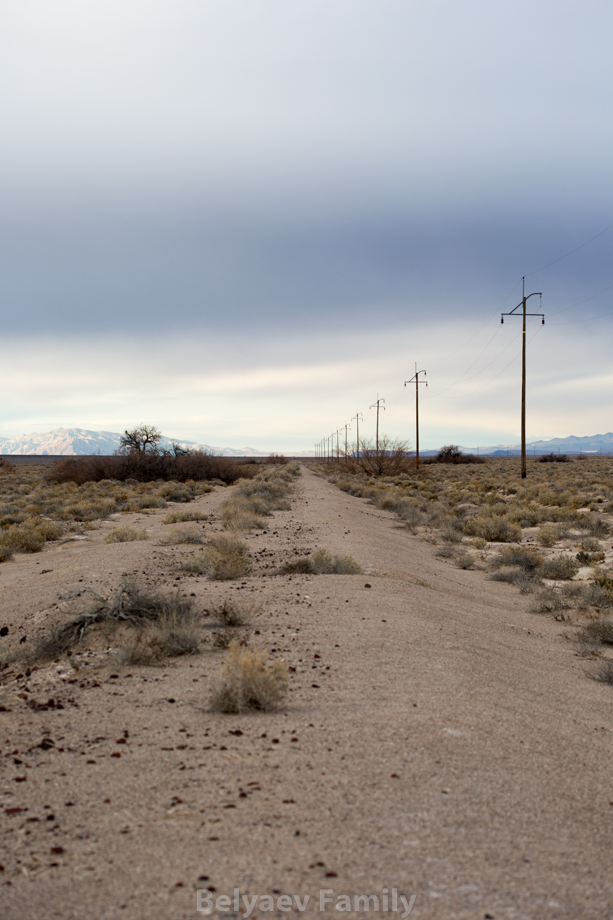
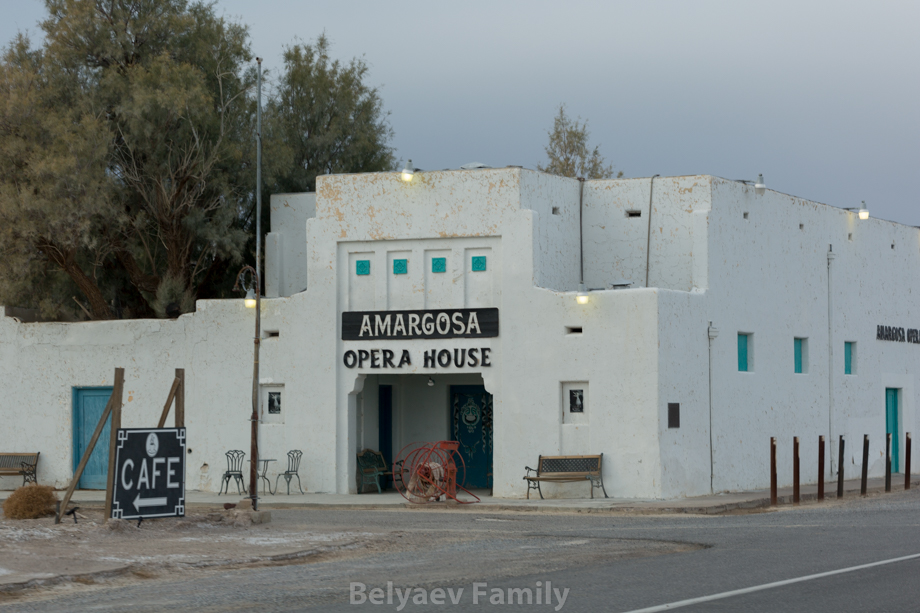
Also in that town Armagosa Opera House is located. It is know by the fact that the ballerina Marta Becket danced on it’s stage for more than 40 years.
Marta had started to dance at age 14 and had performed on the Broadway stage. Soon she started to travel across the country, performing one-woman show in the local theaters. She was driving through the Death Valley Junction when she had to stop because of the flat tire. This is how she discovered the Town Hall building named Corkhill Hall at the time. She liked the place and decided to stay here. She rented the building, renamed it to Armagosa Opera House and started a redecoration. She hand painted wall murals inside. In 1970 the journalists of the National Geographic noticed her during the performance in the absolutely empty theater. That brought the worldwide attention to Marta. Her last performance she showed in 2012 at the age 88 and since that her place in the show took ballerina Jenna McClintock and Marta comes to watch some of the performances.
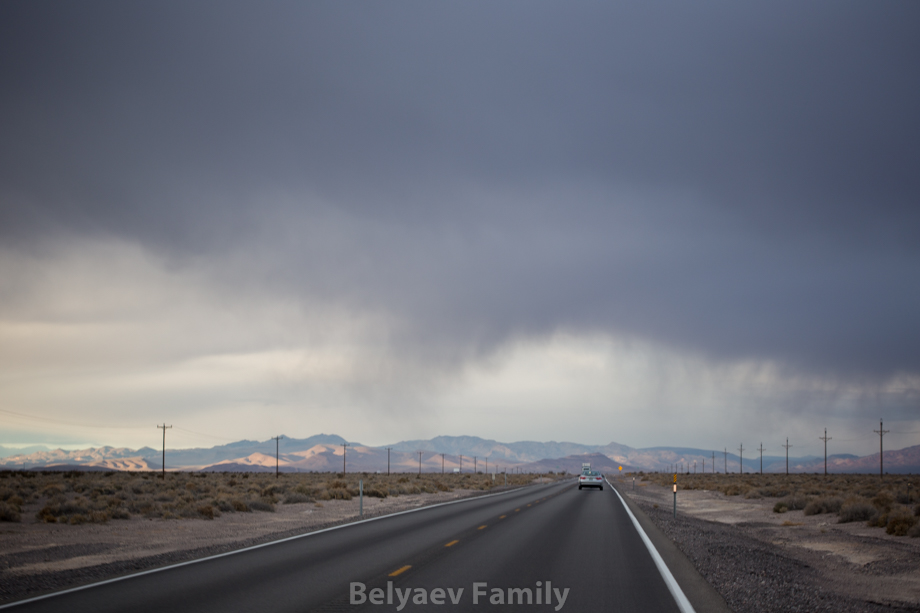
There is rain in the distance
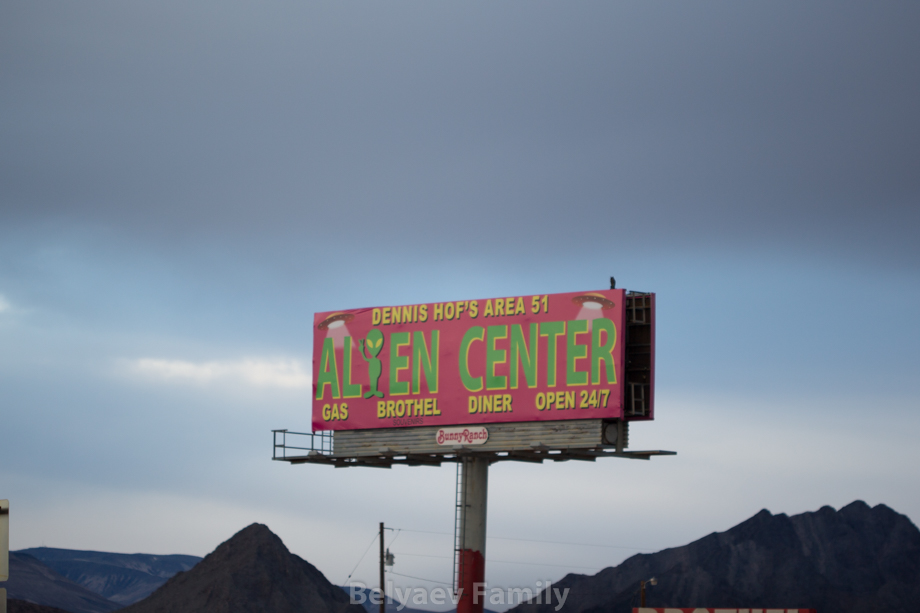
You can see everything in Nevada!
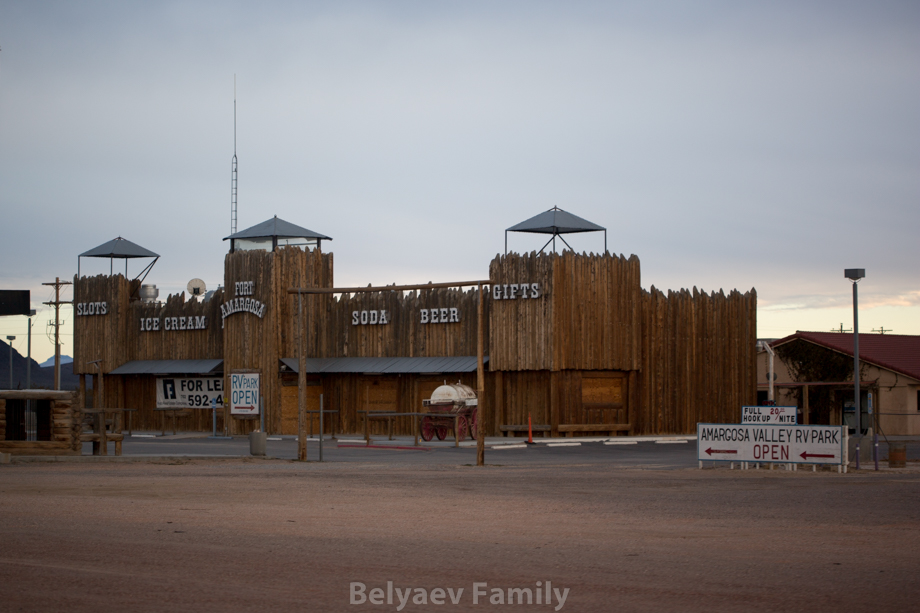
Suddenly we noticed some ruins by the right side of the road. Hmmm, what it could be? We must go check it out!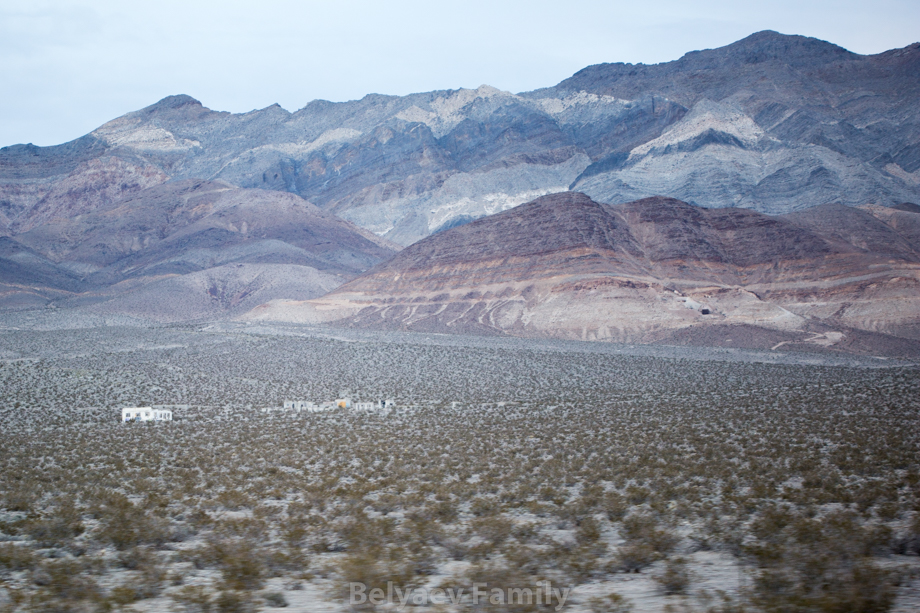
And again, Internet told us that these are the remains of the Carrara Portland Cement Company factory from 1940. However the history of that place has more to tell. Not far from that ruins lays ghost town Carrara. It was founded in 1904 and had that name because of the white marble deposits found in the area. This marble was looked like the marble that Italian sculptors used in their work, so it was a great deal. American Carrara Marble Company started to harvest the marble and Carrara had grown. There was hotel, general store, restaurant and even a town fountain that was lit with colored lights. (Again, we are speaking about 1904!). The water for marble cutting and town needs was delivered from the neighbor town, Gold Center.
To the quarry high in mountains led the railroad, and small cars were used to deliver the marble downhill. It was very interesting how the weight of a loaded car was used in bringing an empty car uphill. In the middle was a junction so cars could pass each other.
The railroad leading to quarry was finished in 1914, and first bricks of white-blue marble were sent to Los Angeles via Senator Clark’s Las Vegas & Tonopah Railroad. The cutting tables were built near the station to cut marble bricks to smaller sizes more suitable for the transportation. Carrara’s peak year were 1915-16, at that time there were about 40 buildings in the town and the population approximately 150. The school district was founded in January 1915. Carrara’s marble won gold medal at the Panama-California exhibit.
But by the end of 1916 Nevada-California Power Company decided that delivering electricity to Carrara is too expensive, and in 1919 marble quality was considered as too low, so the customers started to loose interest. After the World War I the Las Vegas & Tonopah Railroad stopped train service and Carrara didn’t have another connection with the rest of the world. The quarry was closed and people left. Carrara stood empty.
The town had a second chance in 1928 when small gold mine was opened about one mile to the north of the town. To deliver ore deposits the small railroad branch was built by T&T. About 50 people were working in the mine, some workers lived in Carrara, some in newly built camp named Arista. By the end of 1929, the profit of the mine was questionable and the owners of the mine, the Gold Ace Mining Company, made a decision to close it. And again Carrara stood empty.
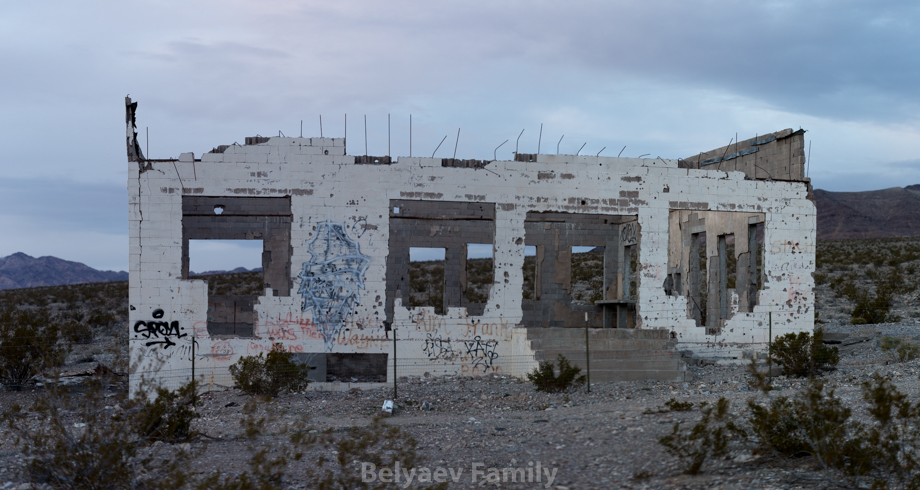
Ten years later, Carrara Portland Cement Company came into the area and started their construction. One month later, 10 buildings were built with the use of concrete blocks, and the plan was to build 30 more. The construction of the cement plant had began in April 1941, and the plant was supposed to produce two types of cement: builder grade and special, white, high quality one, with the marble chips from the old Carrara quarry.
In the plant, a steam engine of 1100 horse power was built, and it required diesel fuel. As it was projected, the plant would produce up to 80 tons of cement daily. Cost of the construction was more than 500,000 dollars. Grand opening was scheduled in August 1941, with the celebration for the people lived nearby. Not far from the cement plant another pilot factory was built that should produce concrete blocks, for the houses construction were the workers would live.
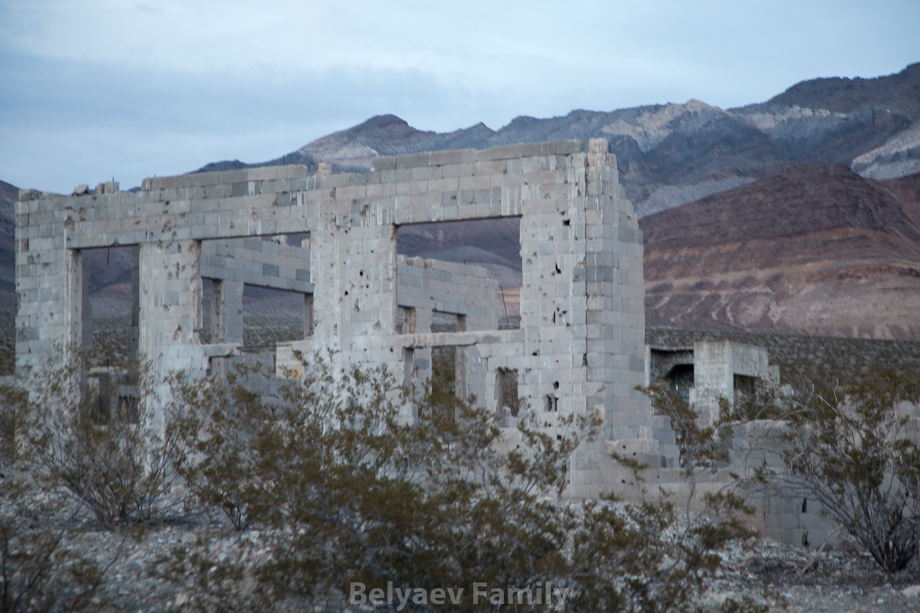
However, the huge fire in June 1941, just one month before the opening, destroyed the engine room, storage and the company shop, and one of the office buildings as well. It would cost up to 30,000 dollars to fix everything, as it was written in Reno Evening Gazette and there were troubles with the equipment since the spare parts were hard to get. But all restoration work continued.
But despite all efforts the plant was never opened and now ruins stays here decorated with graffiti and bullet holes.
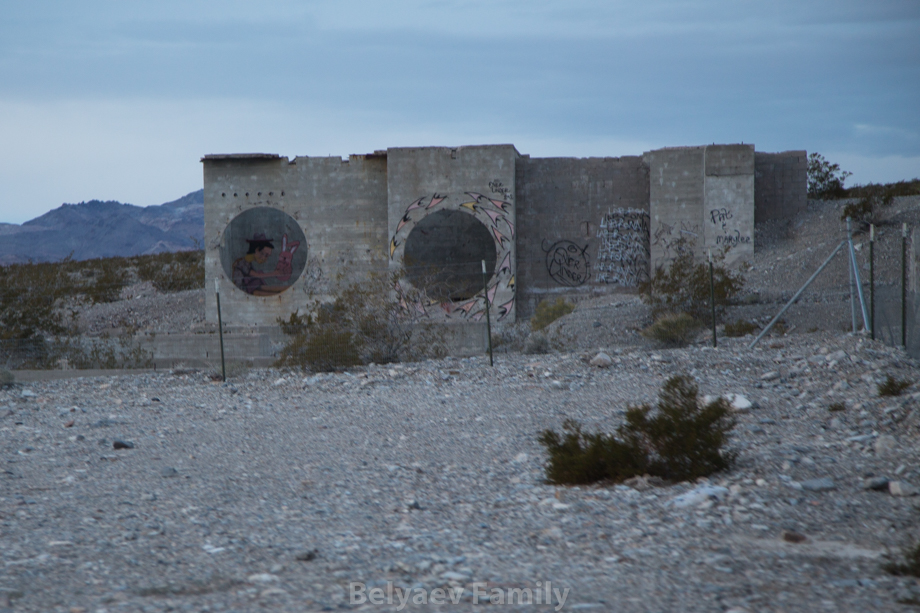
The reason was World War II. Pearl Harbor happened in December 1941, and fuel rationing started in May 1942, and that was the end for the diesel-operated plant.
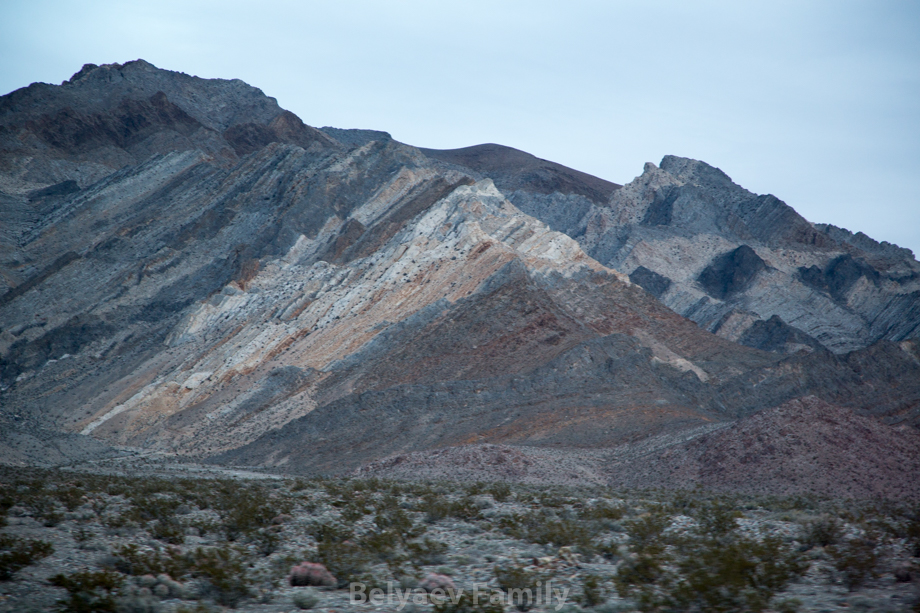
Quarry Carrara hides somewhere in those mountains
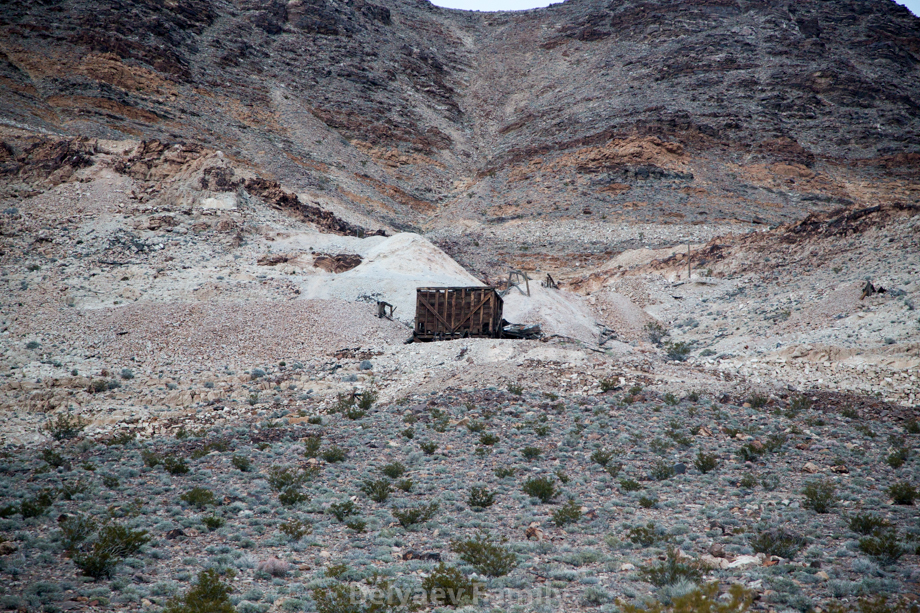
Remains of the gold mine Gold Ace
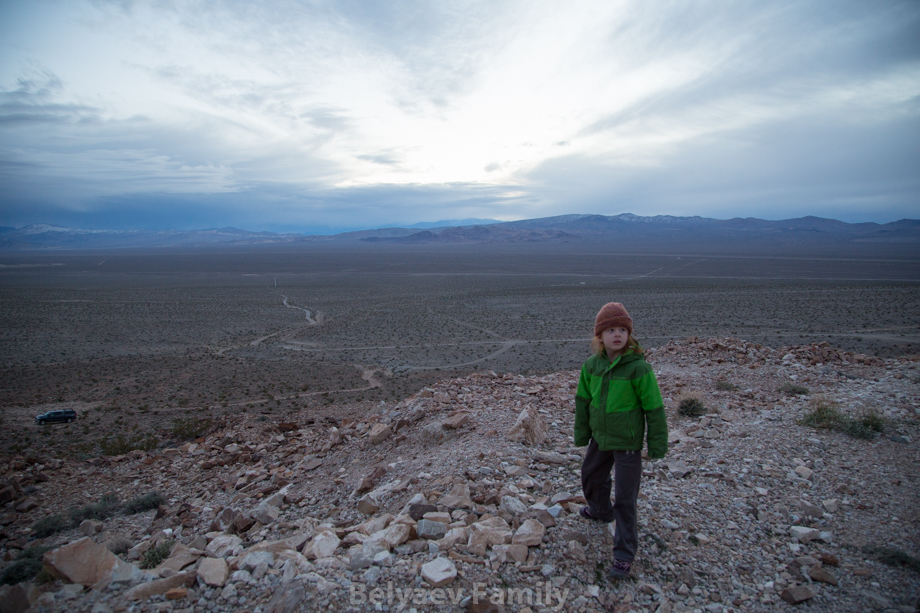
Once upon a time there was life here
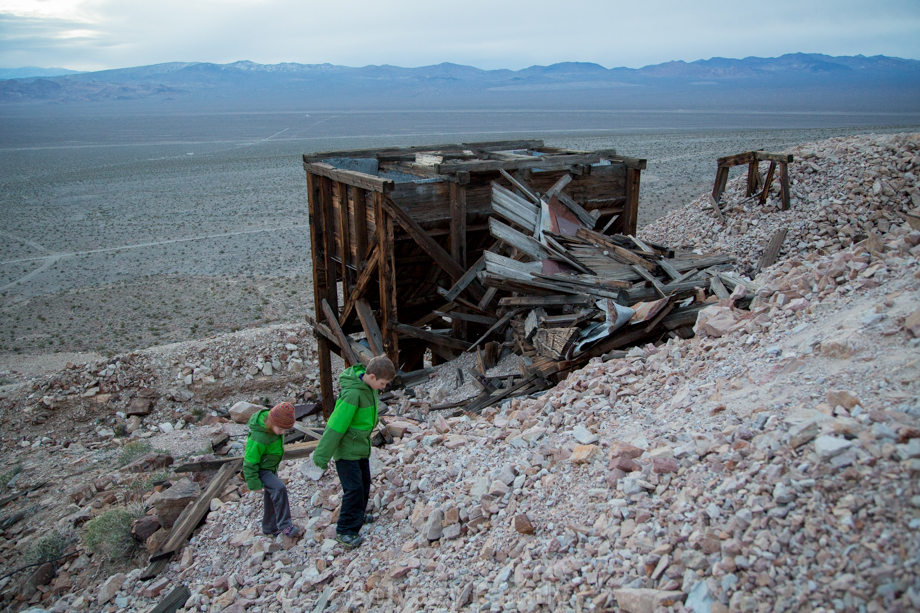
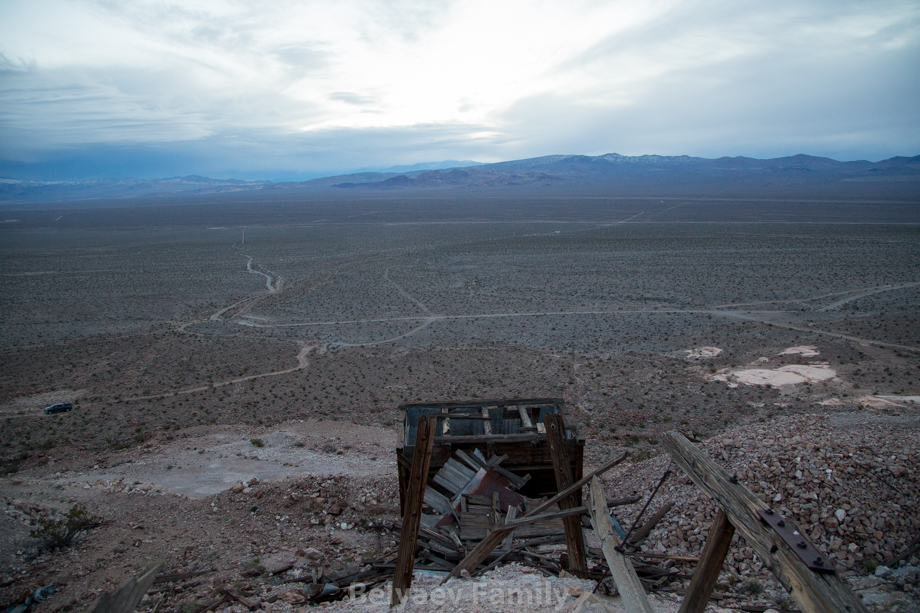
Soon the sun hid behind the horizon and sky became darker and darker. We took some more pictures and went back to the car. It is not a smart idea to wonder in the mountains in the dark..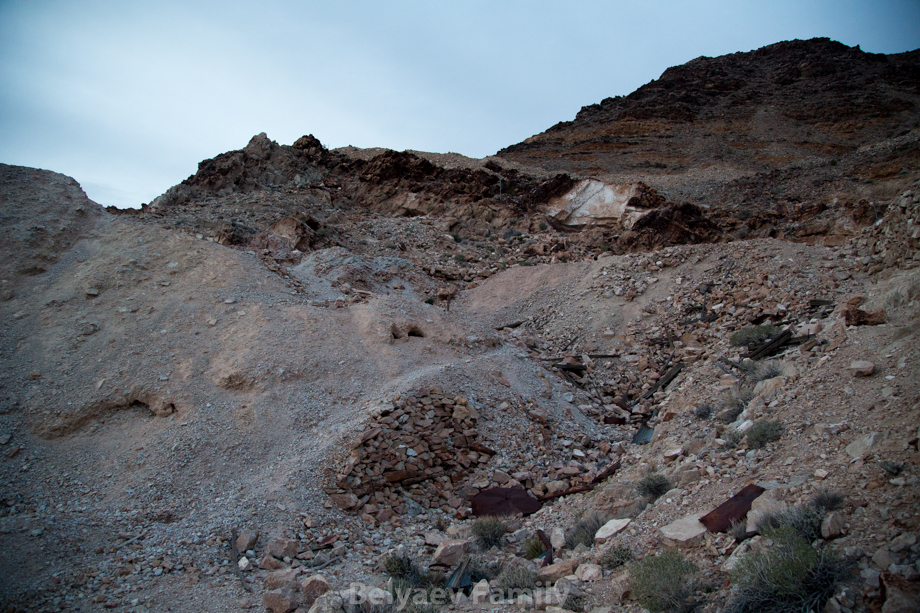
Somewhere there sits an entrance to the mine. The abandoned mines are dangerous, anything bad could happened inside, from collapsing of the roof, to broken wooden stairs and hidden holes. The air could be poisonous because of different gases, and snakes or other animals could live there. Better to keep out, but it it doesn’t prevent some from entering.

We continued our driving to Tonopah’s hotel. Despite the cold temperatures there was almost no snow in the town. Maybe it was dry and the wind blew it out?
Continued here