

Part 2 here
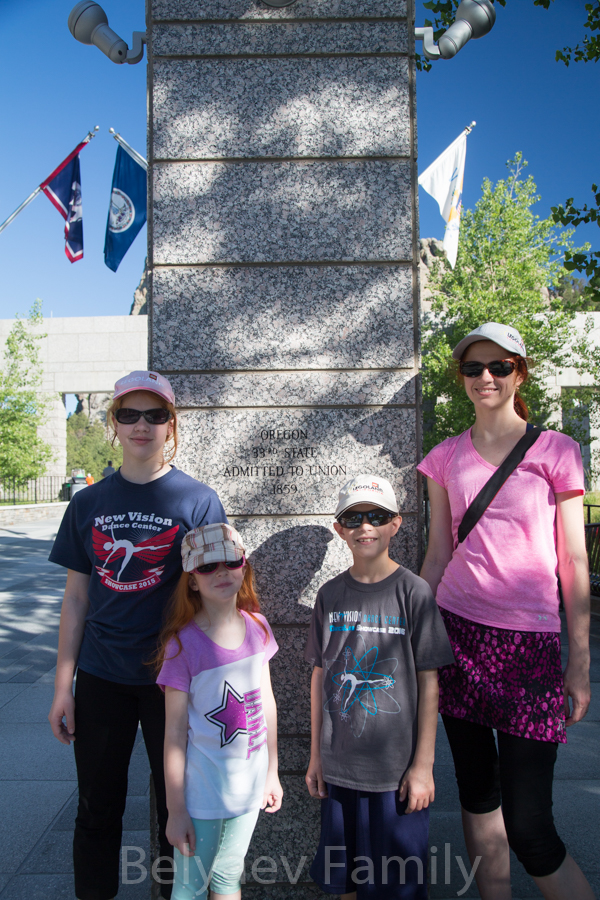
Today it will be very hot outside – close to 100F. We would like to do as much as we can while it is still cool outside but that means we need to get up really early. However, even at 7.30 am when we came to the monument it was pretty warm and starting to get warmer and warmer. There was the hallway-like passage with columns and flags of each state. After a short search we found Oregon. There were still only a few people in the whole monument.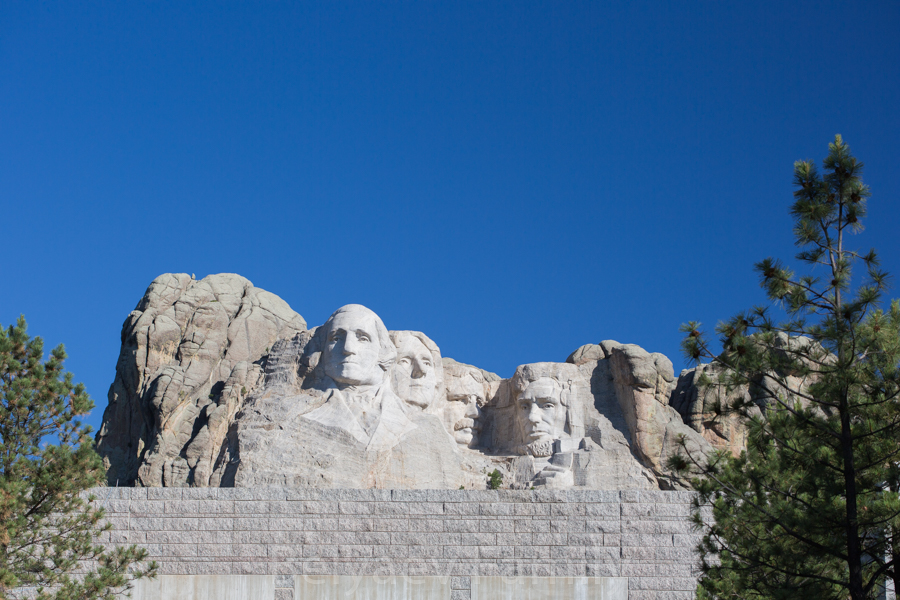
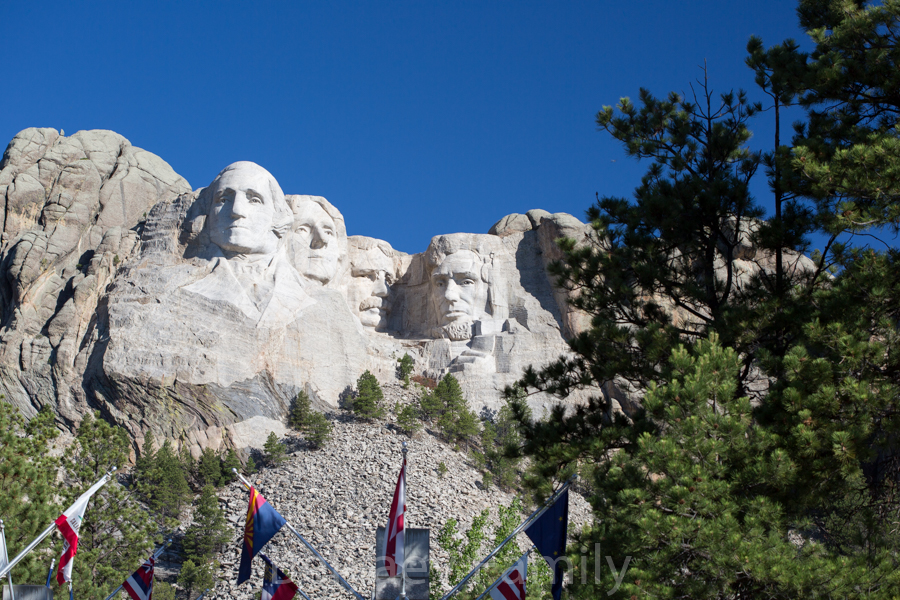
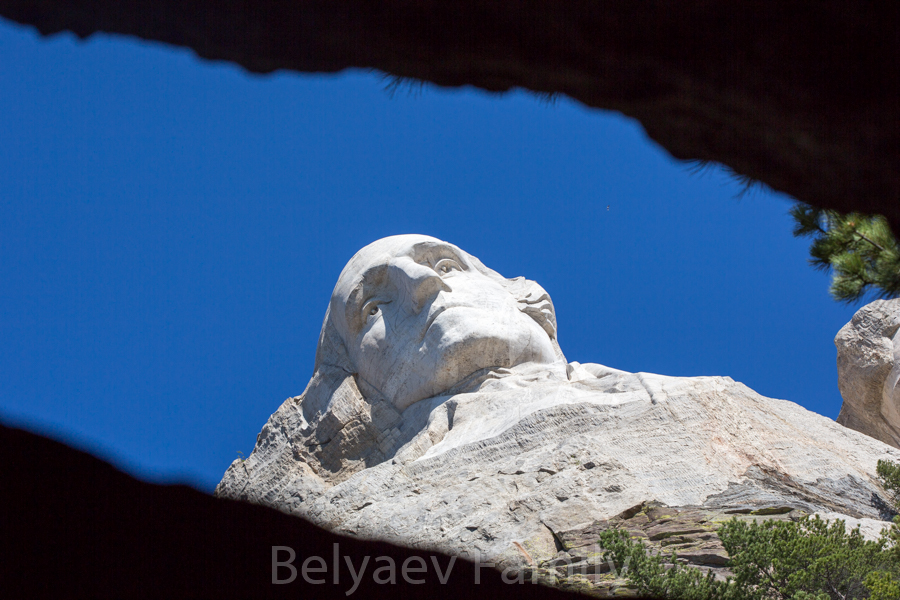
While it is still like-able weather we rushed to the President trail. It has tables with information about each of four presidents carved at the monument. Next we went to the carving museum that contains all the information about how the work was done 70 years ago. Over 450,000 tons of rock were removed from Mount Rushmore to bring out the four presidential faces. Although about 90% of the rock was removed with dynamite, the remaining rock was removed by drilling with Jackhammers and wedging the rock off the mountain. The finishing touches on faces was completed using small jackhammers and facing bits. Air compressors located here at the base of the mountain provided the power to operate these jackhammers.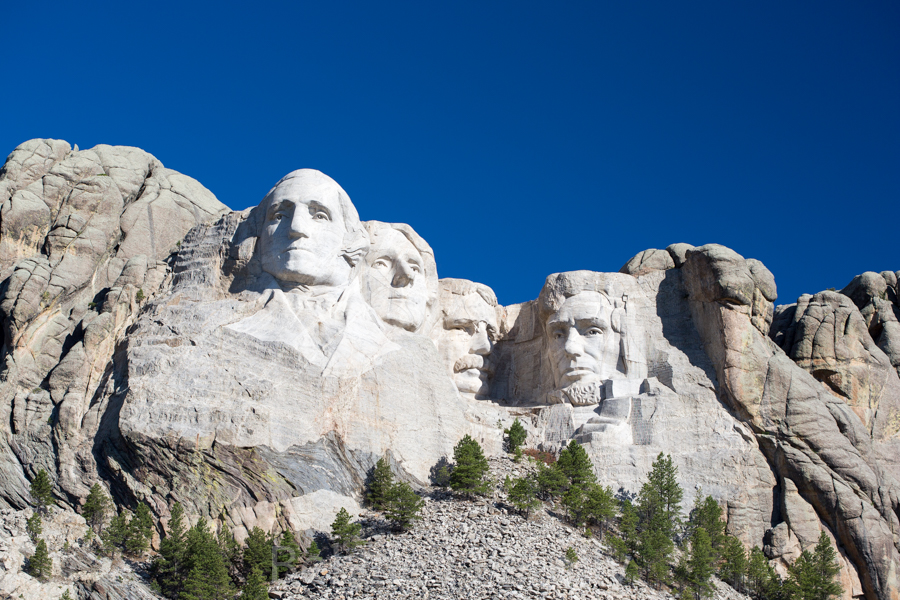
In 1936 Julian Spotts, a National Park Service engineer, checked this system for leaks. He discovered that the blacksmith had tapped into the line with a nozzle to blow compressed air on himself while he worked. Spotts provided a fan instead. Spotts also tried to discover the reason for a large power loss suffered at Rushmore every Monday morning. Then he found out that just about every woman in Keystone washed clothes on Monday, and a lot of them had electric washing machines. Spotts suggested to buy a gasoline-powered auxiliary compressor to solve that problem.
There is the Hall of Records behind the Abraham Lincoln face. Original plan included a large room (80 by 100 feet) to be drilled into the north wall of the small canyon behind the faces. The plan also included an 800-foot granite stairway leading to the entrance. Important historical documents were to e placed in the Hall of Records including a history of the united States, busts of famous people and a list of U.S. contributions to the world. Construction of the Hall of Records took place between July 1938 and July 1939, when a 70-foot tunnel was blasted out of the mountain. The entrance, 20 feet high and 14 feet wide, was to have glass doors opening into large room. As World War II approached funds were not available and the Hall of Records was never completed as conceived by architect Borglum. On August 1998 Borglum’s dream was completed in part when a repository consisting of 16 porcelain enamel panels depicting a history of the country and how and why Mount Rushmore was carved was placed in the floor of the entryway to the hall of Records. There is no public access to that place and it is not visible from areas open to public.
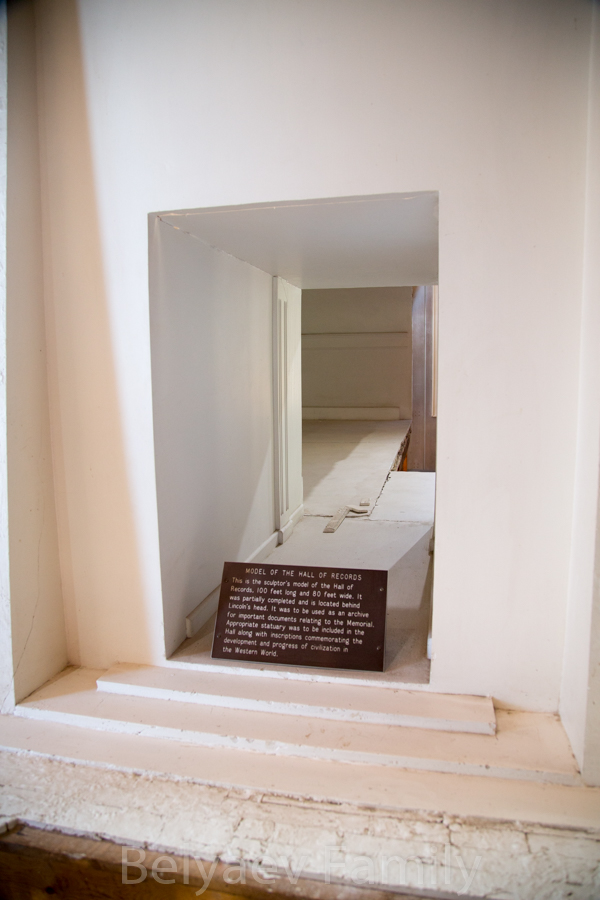
Hall of Records model, the entrance
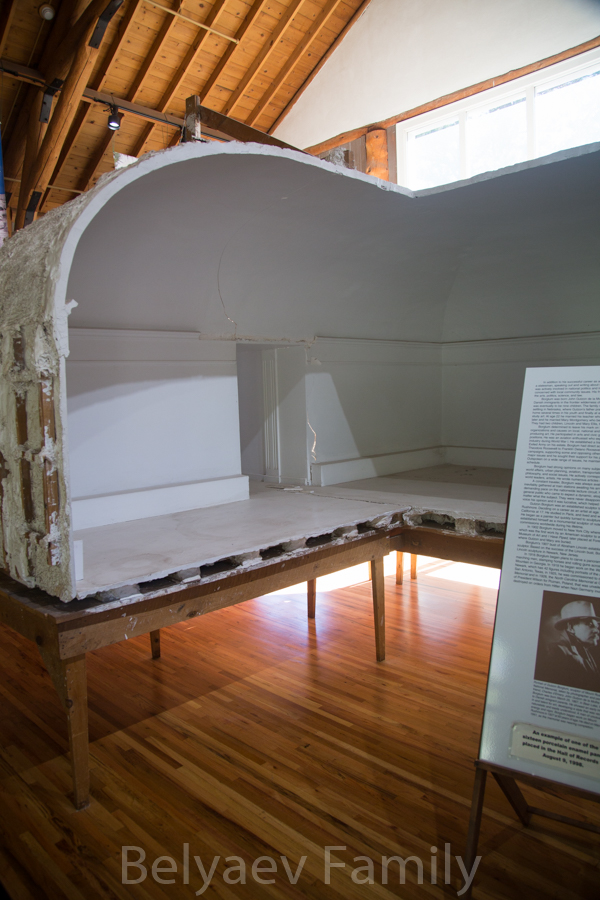
Hal of Records model, inside
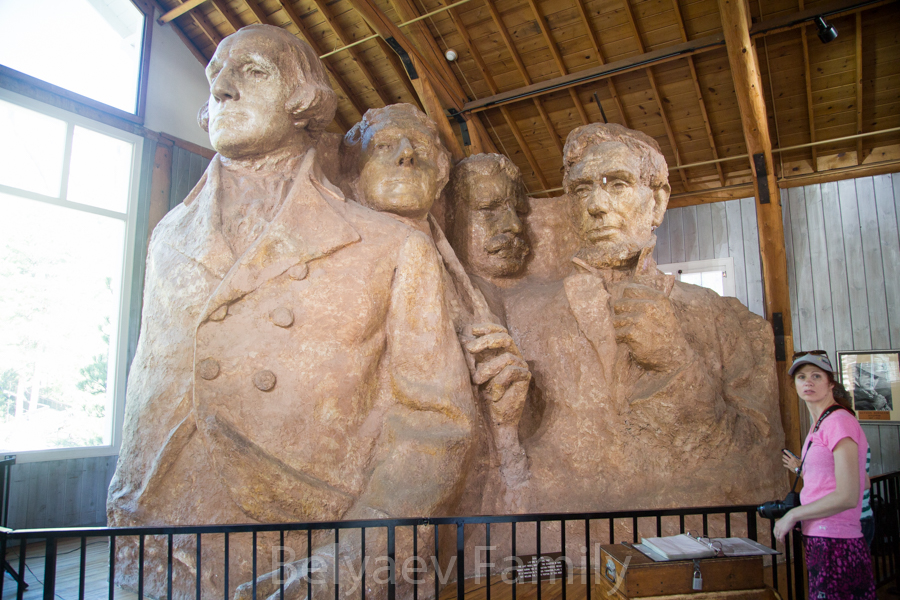
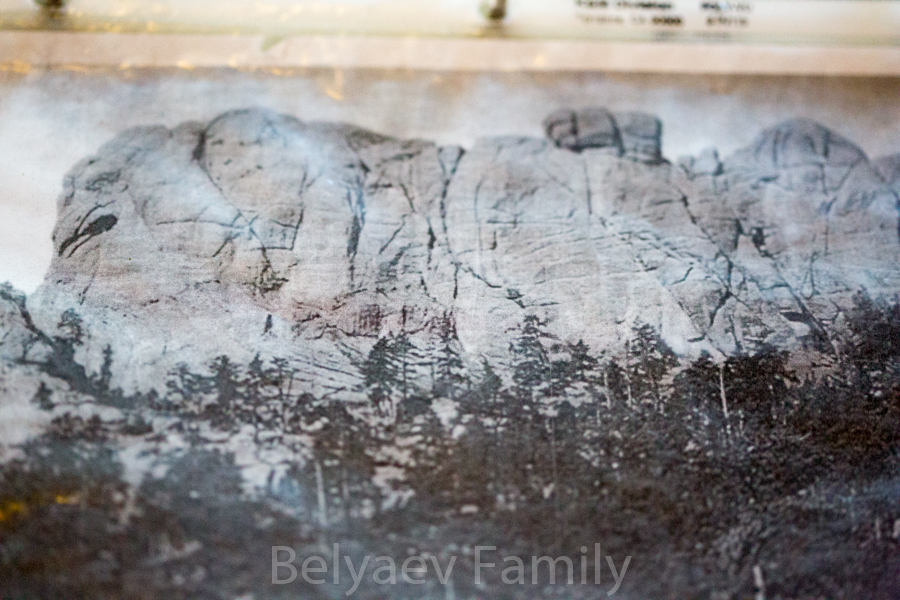
The mountain before carving
We ended up visiting another museum where we could learn about carving history of each presidential face. While reading information stands I didn’t notice that dad and elder kids went away. Me and Kate assumed that they decide to go to the gift shop so we followed them. It was pretty hot outside already so we rushed to the gift shop but there was no signs of dad or kids. Well, they probably near that museum still? So we tried to go back, walking around coming tourists, when Kate started to pulling my hand.
– Mommy, I’m seeing Johnny’s little sister! (He is Pavlik’s friend, they went to boy scouts together)
– No way! – while answering, I was trying to spot dad’s yellow t-shirt in the crowded hallway. – She can’t be here alone by herself. If you can see her that means Johnathan should be here too. Can you see him? – I was pretty sure in the negative answer.
– Yes, I do! – answered my child with a smile on her face. So here I started to slowly realize that Kate really sees our neighbors.
We made our way through the crowd, welcomed each other and laughed in amusement. Indeed, it is worth it to leave home and drive for 1,500 miles to meat our neighbors there who did the same! Soon dad and kids found us, all kids grouped together in the tiny shadow and had fun time and adults were exchanging travel experiences.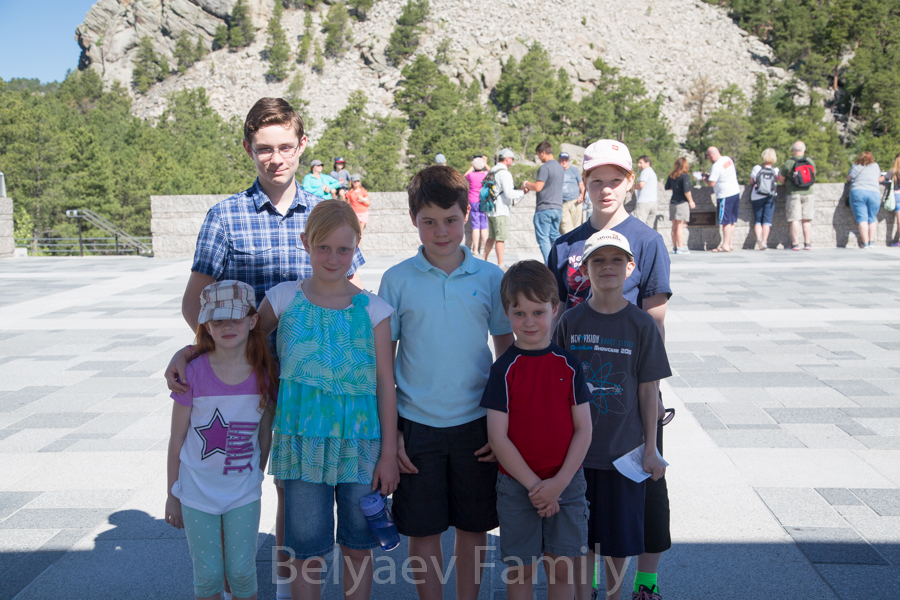
After about a half an hour we have to say goodbye and continue our journey – we need to drive a lot today.
Next stop was in the Crazy Horse Memorial. Carving of the mountain is still in the process so it would be interesting to visit that place again in 10 years to see the progress.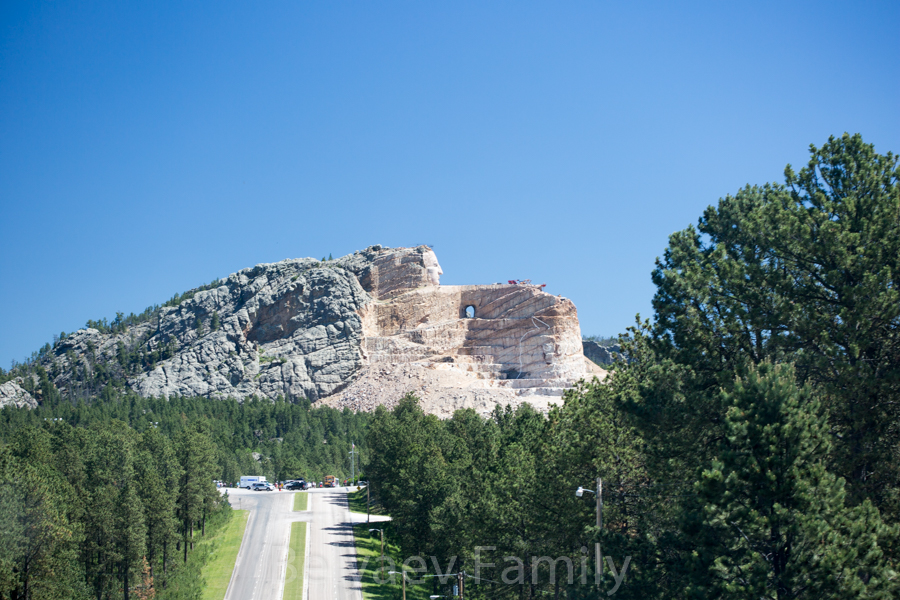 Sculptor Korczak Ziolkowski got a mail in 1939 from Lakota Chief Henry Standing Bear to come to the black hills of the South Dakota and carve a mountain. The letter stated, ” My fellow chiefs and I would like the white man to know the red man has great heroes, also”. After some studies and many letters back and forth, Korczak accepted the invitation and work began in 1948. Crazy Horse was the chosen subject for the project. Korcak wrote, “Crazy Horse is to be carved not so much as linear likeness, but more as a memorial to the spirit of Crazy Horse – to his people. With his left hand, outstretched in answer to the derisive question, asked by a white man, “Where are your lands now?” He replied, “My Lands are where my dead lie buried.”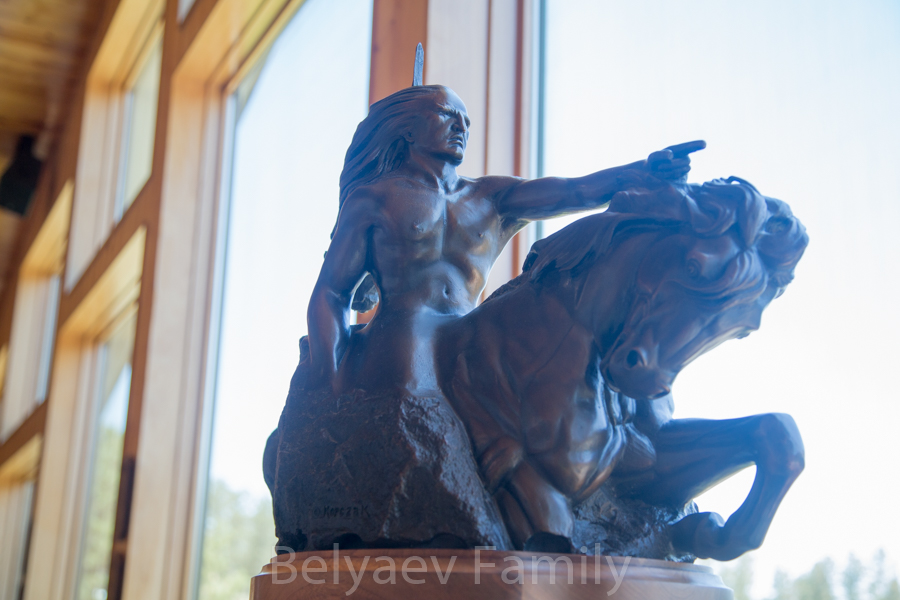
Ruth Ziolkowski followed Korczak to the Black Hills and they were married Thanksgiving day, 1950 and had ten children. The Memorial became a family undertaking as well as humanitarian and educational public charity. Realizing this project would span generations, Korczak and Ruth created plans to ensure the future of Crazy Horse Memorial Foundation. When Korczak passed away Ruth took over leadership. She shifted focus to finish Crazy Horse’s face, enabling visitors to see the profile from the Visitor Center. Now work on Crazy Horse Mountain continues with the main focus on Crazy Horse’s hand and Horse’s mane.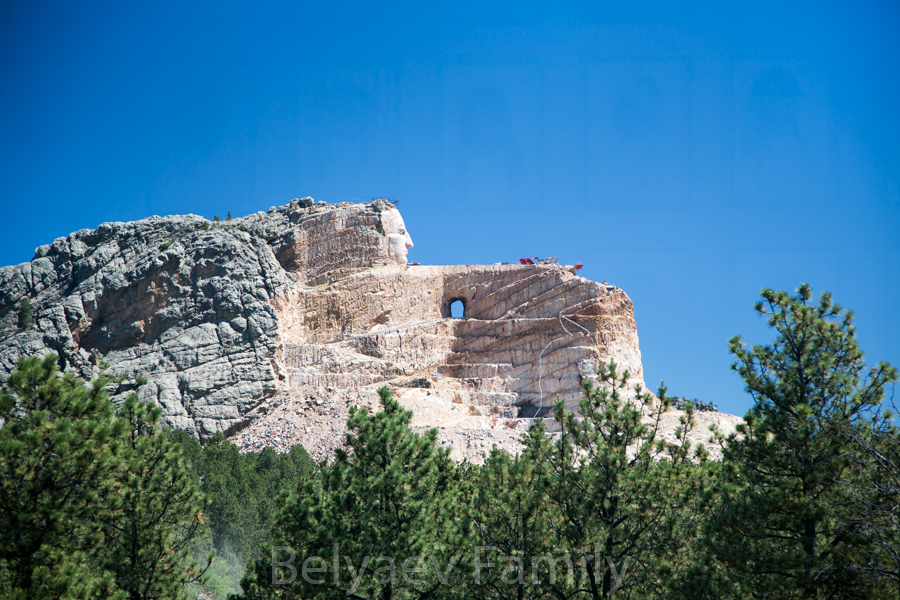
Someday this Memorial will include a University, Medical Center and Museum for Indians of North America.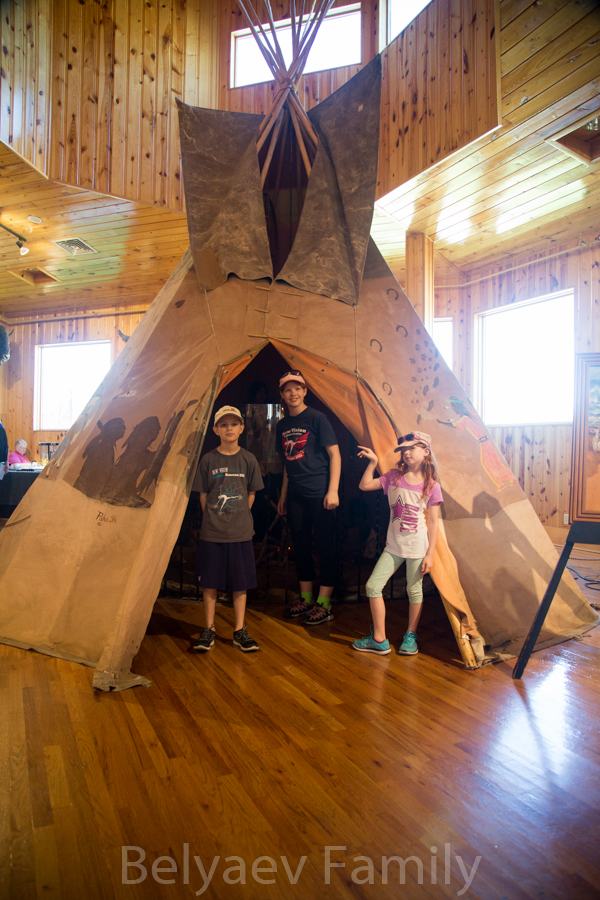
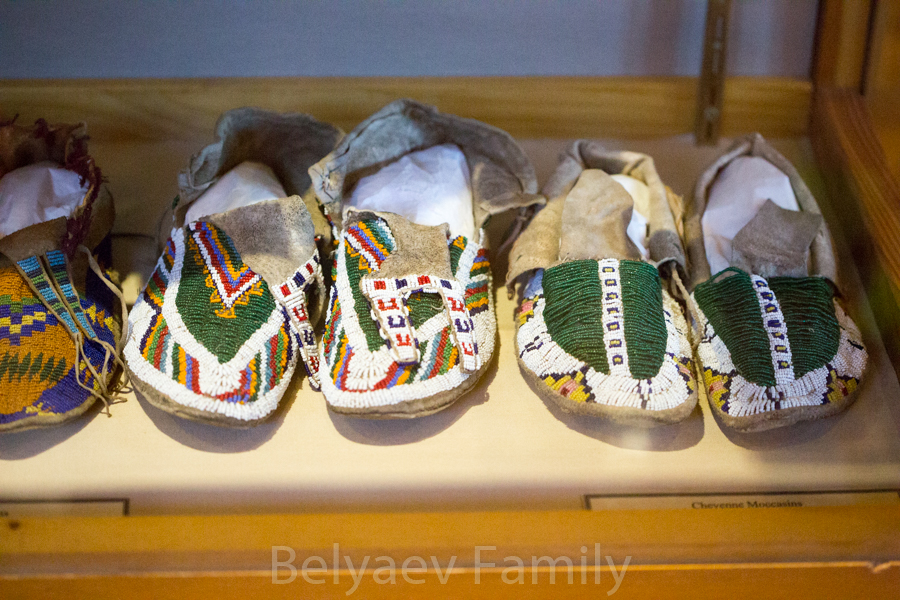
Women shoes
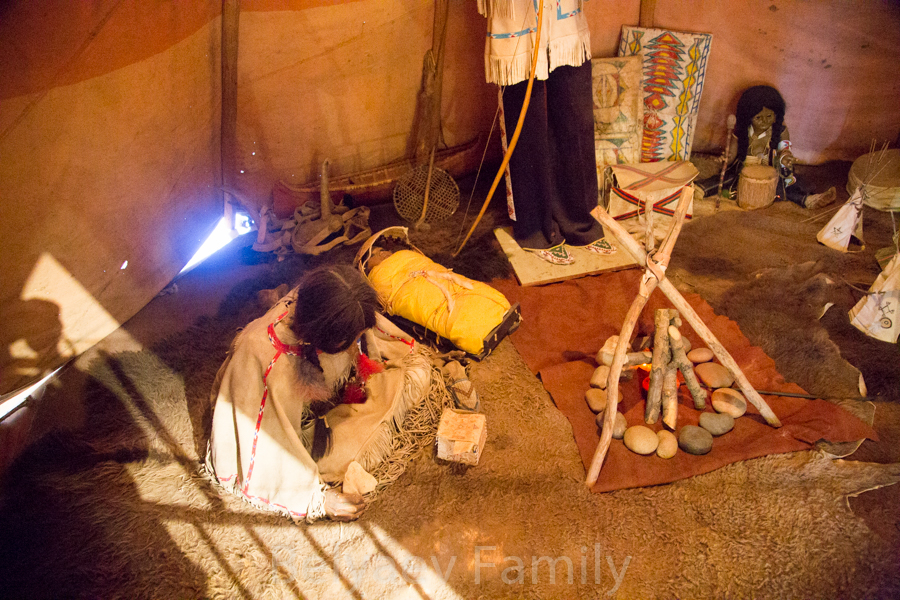
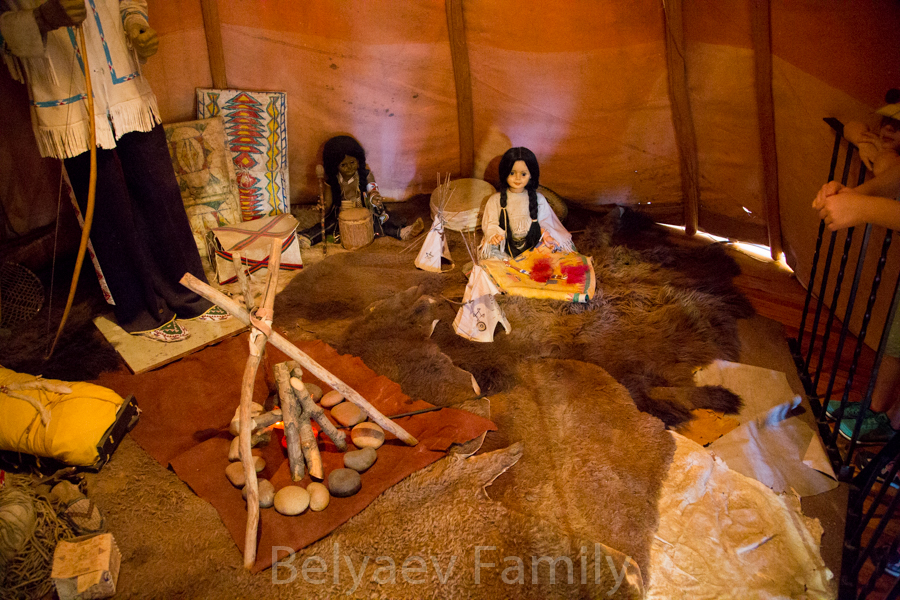
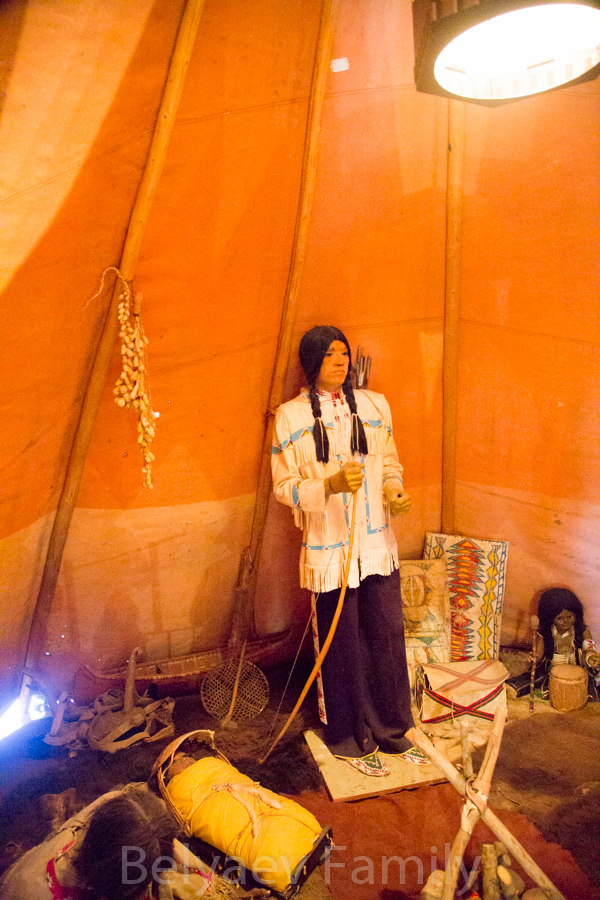
Inside the tipi
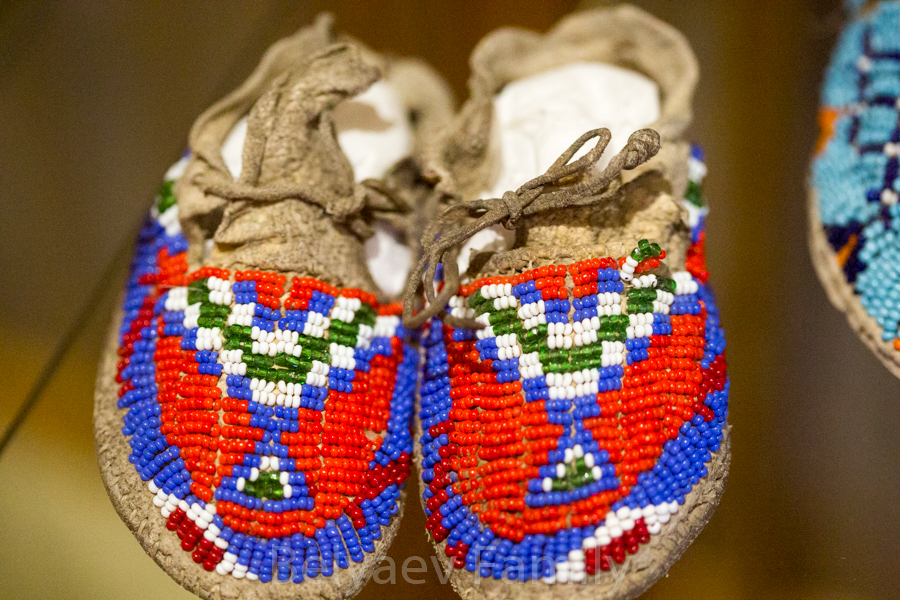
Very little shoes, maybe 2,5 inches in length. Maybe for the newborn?
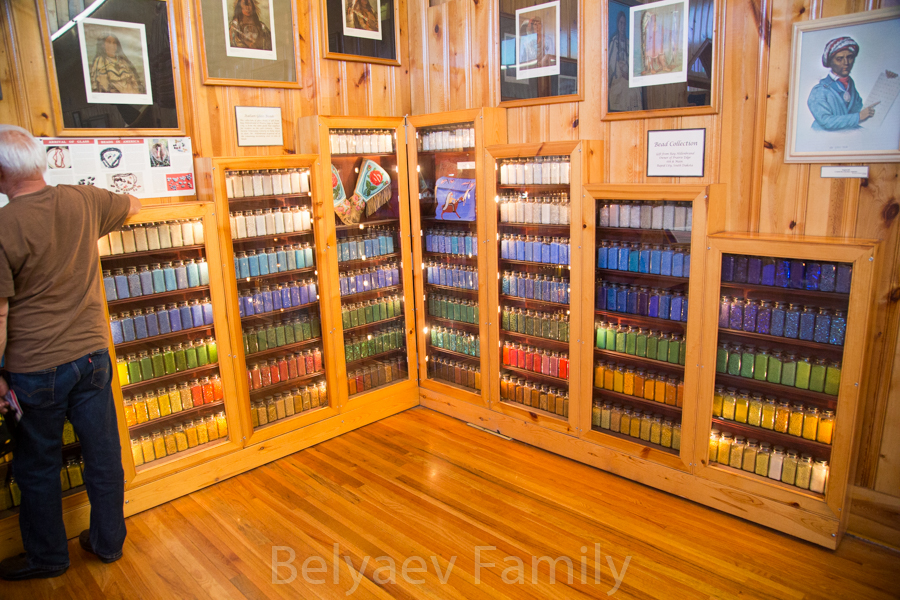
Lakota women used those glass beads
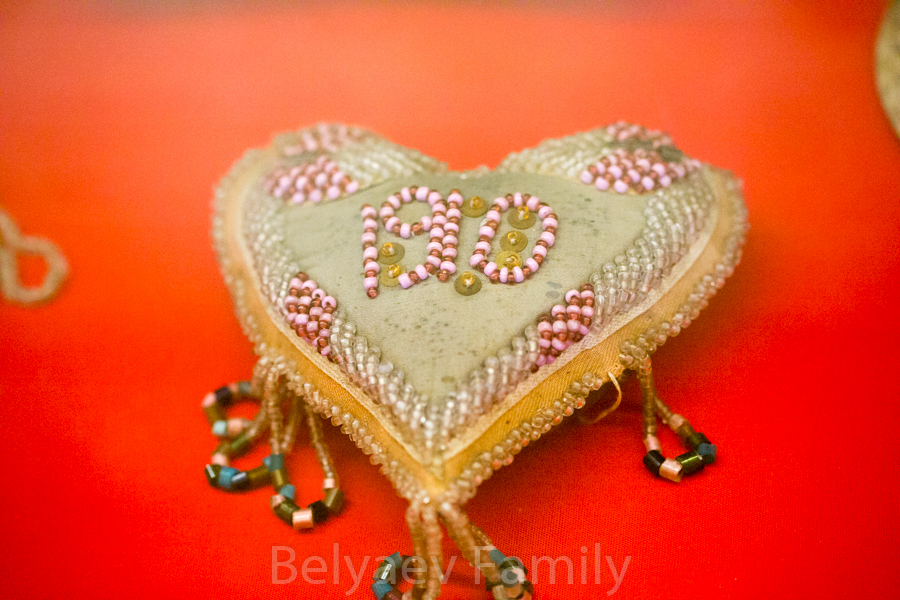
Similar items were made by Indian women for selling

It is time to continue our road.
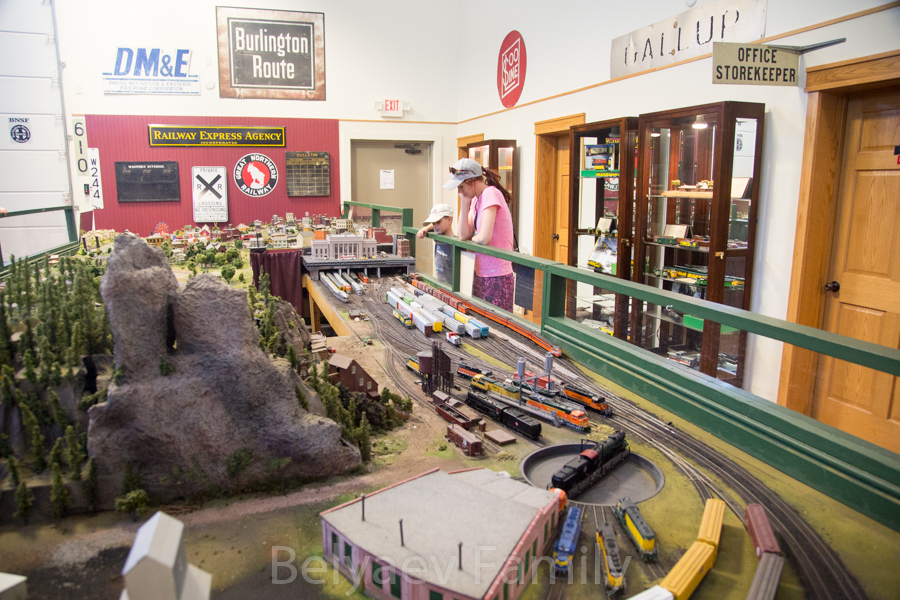
Next stop was the South Dakota State Railroad Museum and Dinosaurs Museum that we accidentally spotted during driving.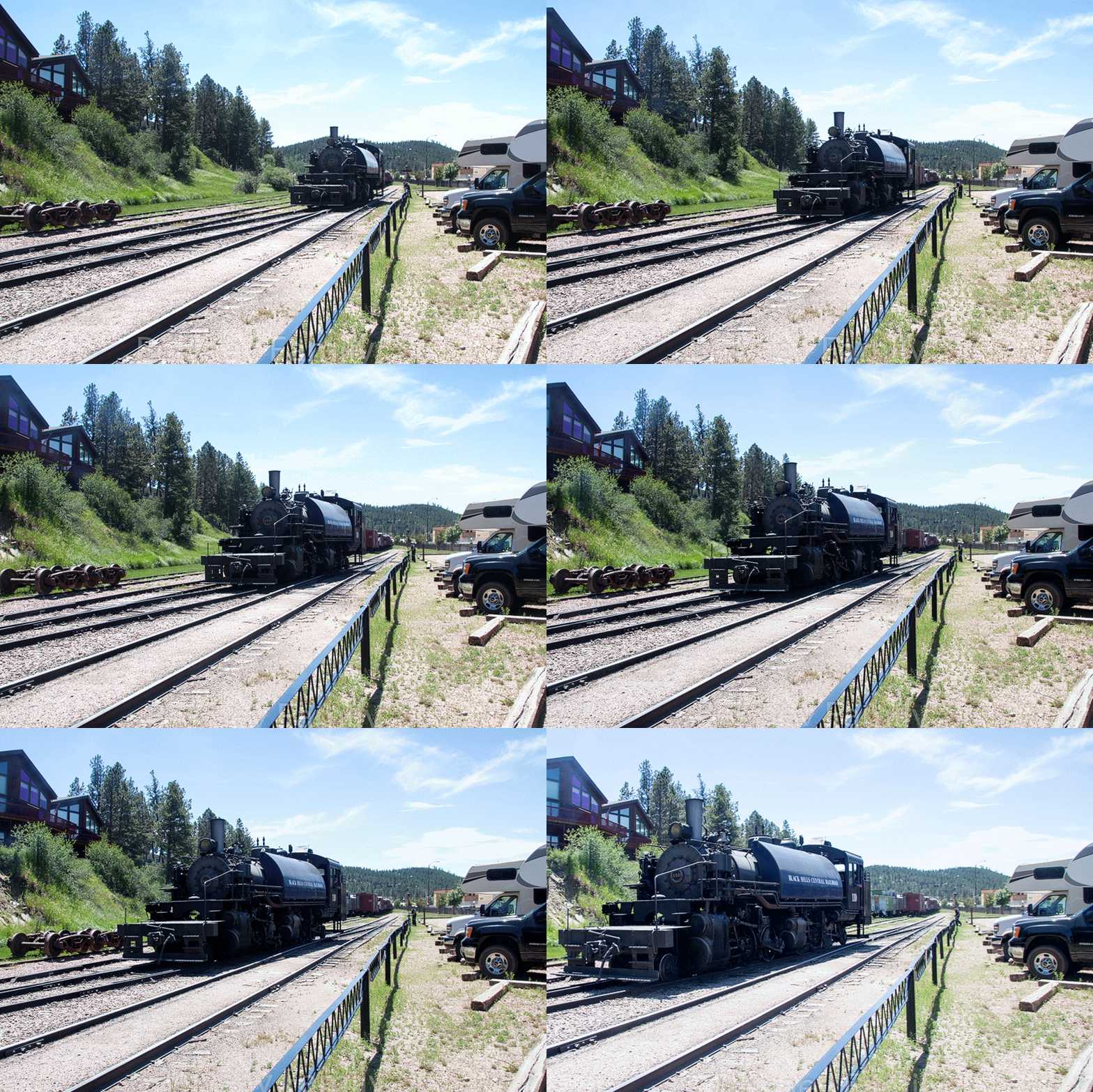
Parasaurolophus walker is one of the last and largest of the duckbilled dinosaurs known scientifically as ‘hadrosaurs’. They are probably the best known of all dinosaur groups: skeletal remains, track ways, and even eggs and nests are abundant, skin impressions and stomack contents (conifer needles, twigs, and unidentified seeds and fruits) are known, and even nesting behavior, including parental care! Hadrosaurs evolved to feed near the ground and to chew tough plants with incredible batteries of closely packed teeth. They evolved crest on the head, that most certainly functioned as a display device, and contained an enormous, trombone-like extension of the nasal passages, which probably served to amplify the bellows, snorts, hoots, and honks.
But there is a gigantic hole in our knowledge of hadrosaurs. Virtually all of the dinosaurs that lived at the same times and places as hadrosaurs bear extensive adaptations that are best interpreted as adaptations to predation by the tyrannosaurids by having horns, becoming prone to charging or having a powerful tail clubs. But not hadrosaurrs: though they became increasingly large through time, hadrosaurs exhibit few if any adaptations that are obvious responses to predation by increasingly swift and powerful tyrannosaurids; hadrosaurs, being slower than tyrannosaurids, could not run from them, lacked weapons to fight and were unarmored. So how did hadrosaurs cope with the tyrannosaurids they lived alongside for millions and millions of years?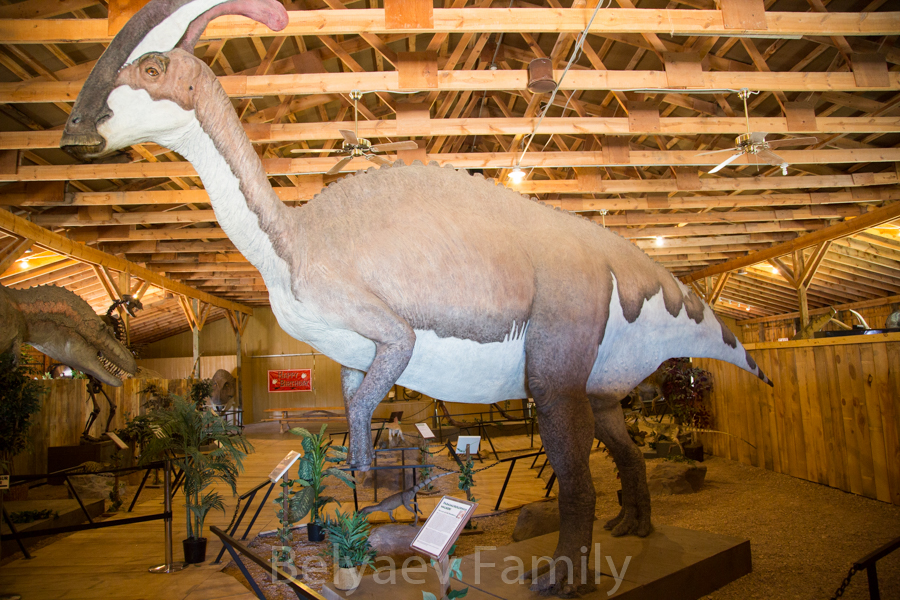
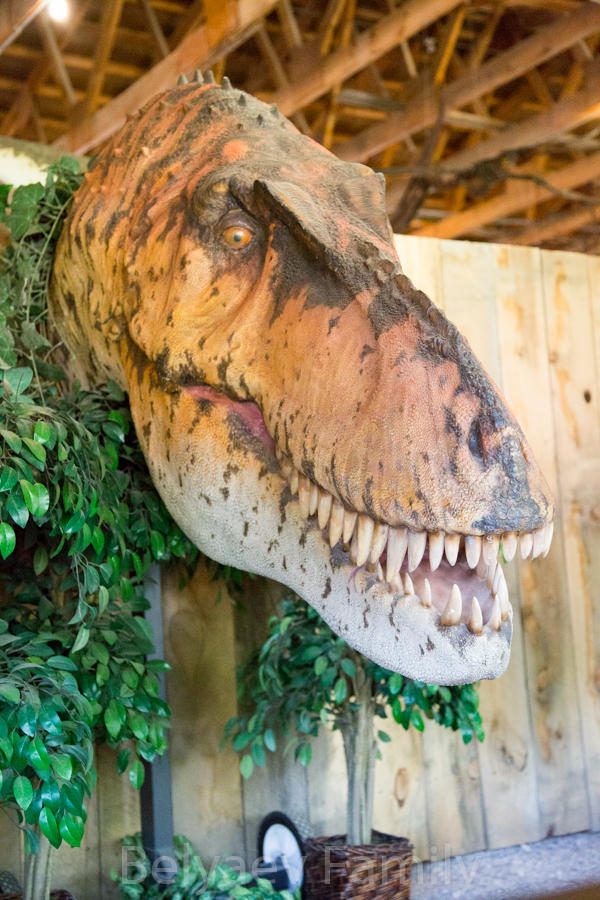
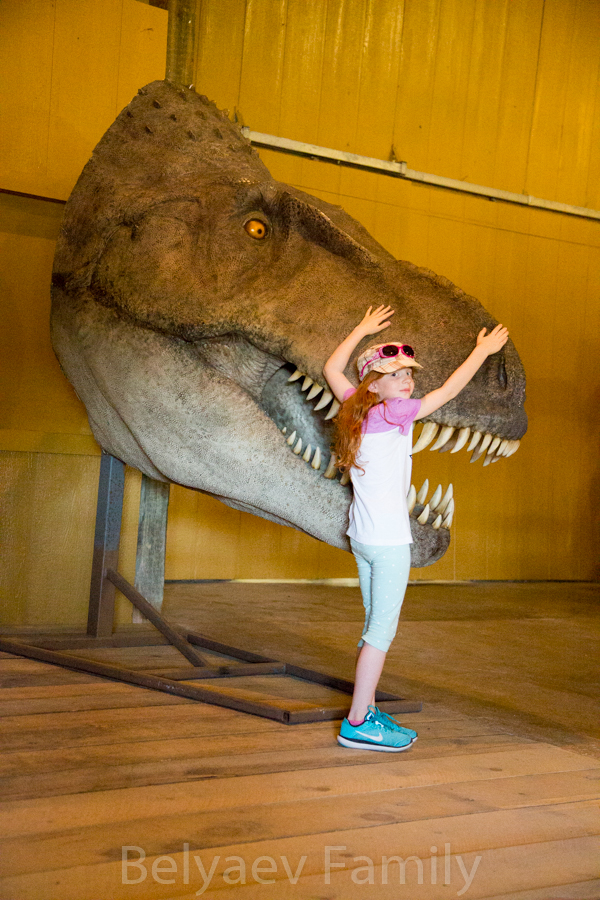
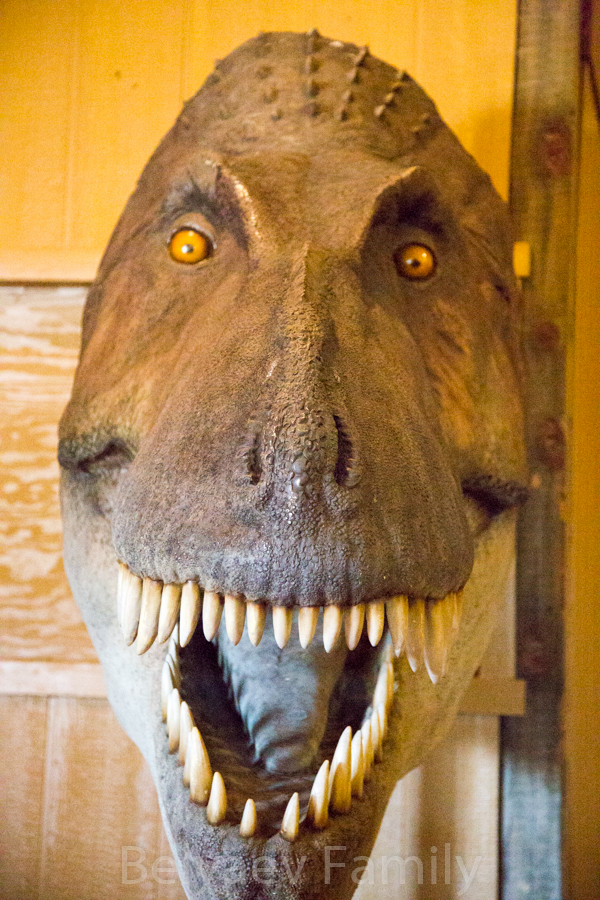
Using of the medical imaging technologies – especially CAT scans – increase the knowledge of the greatest of all dinosaur predators. Formerly, it was thought that T. rex was small-brained for its size and probably not too bright. However, recent CAT scans of the skull of Sue (the world’s most famous T. rex now housed at the Field Museum in Chicago) have revealed that far from being small-brained, T. rex had a large brain that was not wholly contained in the ‘brain cavity’. In all, T. rex had a larger brain than all reptiles, all dinosaurs, all birds, and most mammals. T. rex’s brain was, in fact, as big as the average human brain! However, equating brain size alone with intelligence is a tricky matter. A better technique is to examine the relative proportions and functions of the different parts of the brain in conjunction with all other evidence to better estimate the intelligence and total capability of an animal, living or extinct. T. rex’s brain in particular had enormous olfactory lobes, a very well developed cerebellum and a large optic lobes.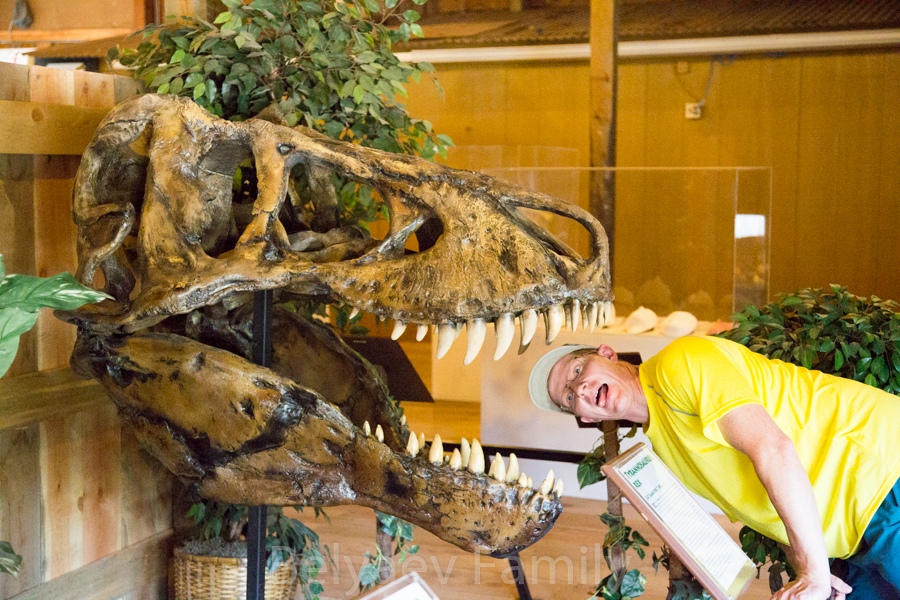
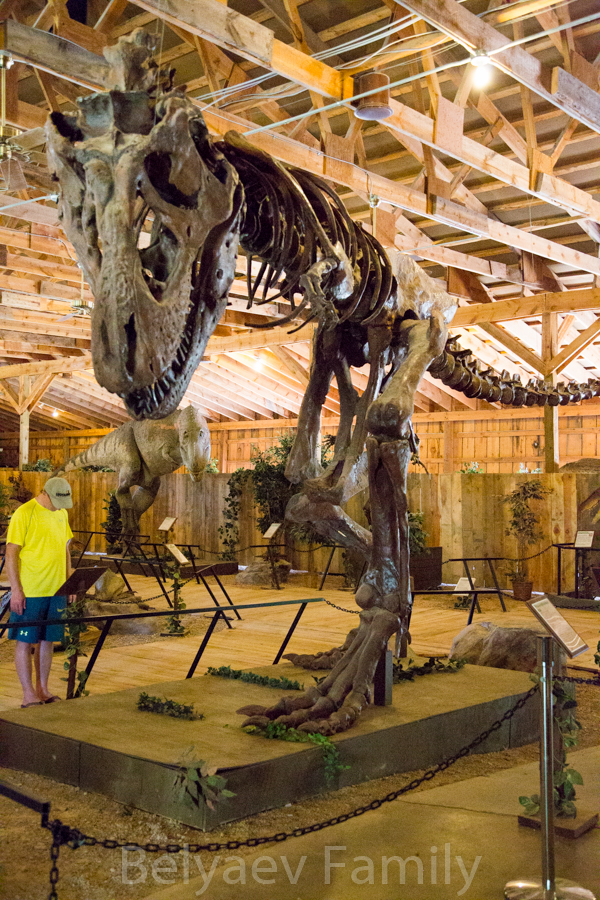
Dimetrodon is not a dinosaur. It is mammal-like reptile, which is the group that gave rise to mammals. it existed in the Permian period and was a T.rex of his time and probably hunted any critter it wanted to hunt in the ancient Permian landscape.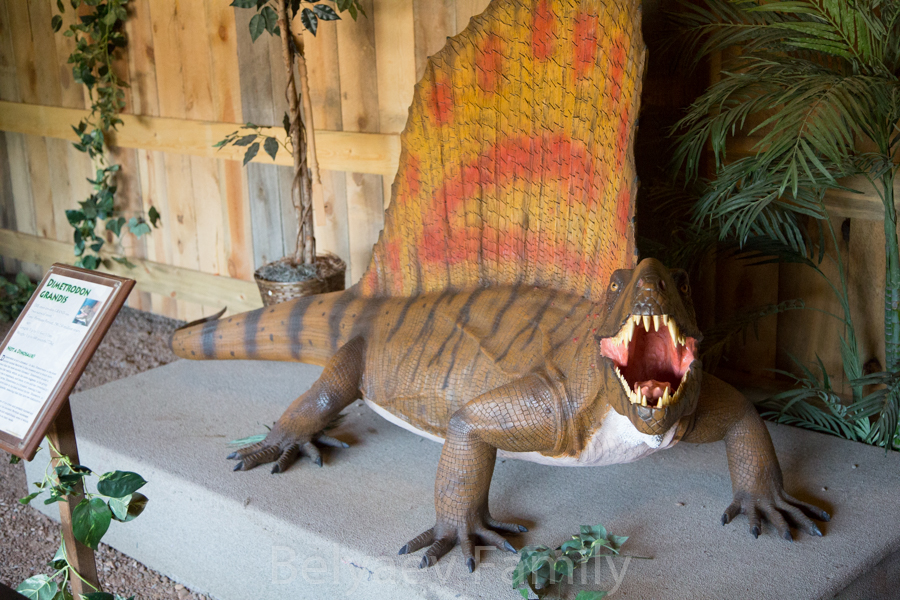
Allosaurus Fragilis, the most common large predator of the late Jurassic Period.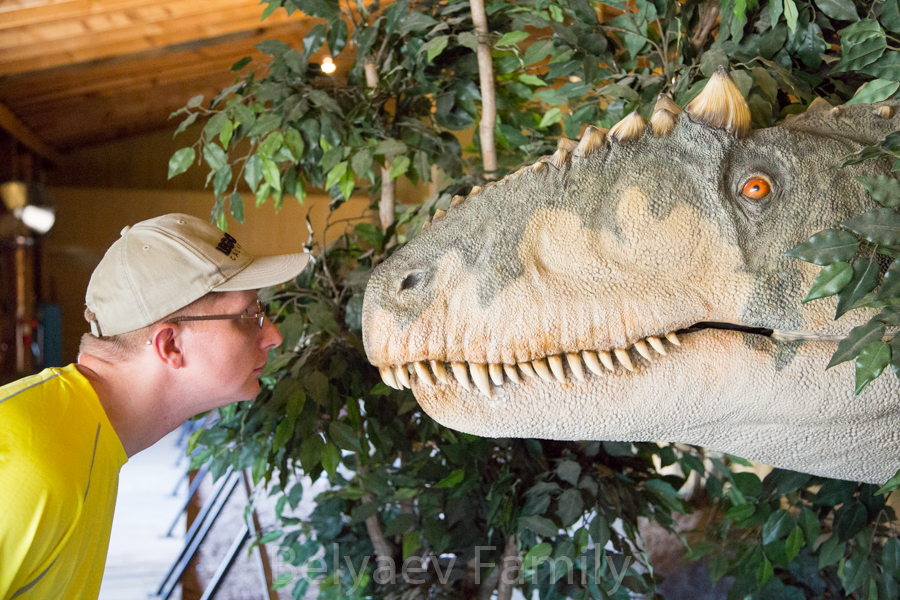
Troodon Formosus had the largest brain for its size of any dinosaur. One of Troodons has been found fossilized on the nest, brooding eggs exactly as birds brood eggs.. It is very closely related to birds and was probably feathered.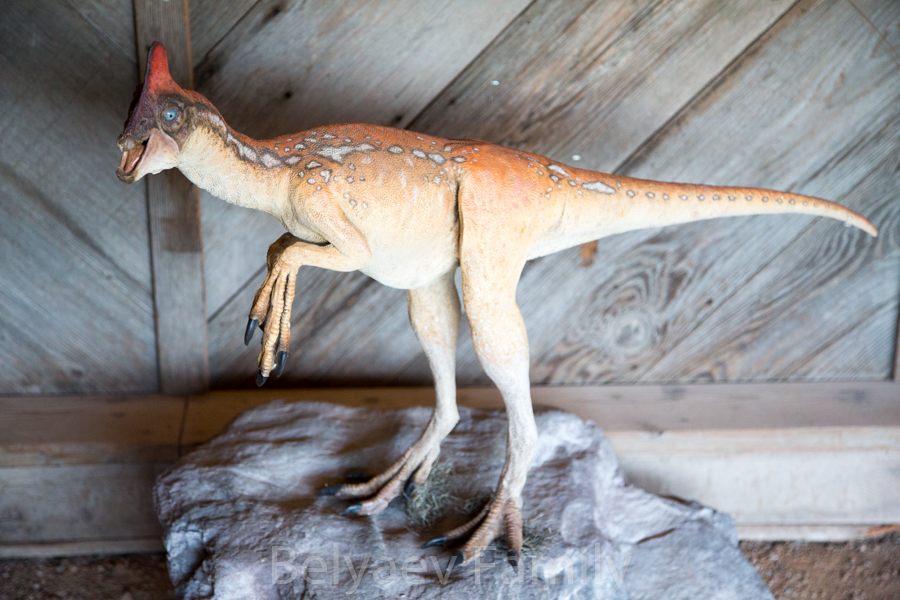
Utahraptor existed in the Early Cretaceous Period and is the largest confirmed true dromaeosaur (the family to which all true raptors belong). Utahraptor bears an enlarged killing claw on the second toe. During locomotion, the claw was retracted and held clear off the ground. Powered by tremendous muscles in the leg and feet, the claw was a weapon of extraordinary power for an animal of this size. In all, other than the great tyrannosaurids, perhaps no dinosaur was an formidably armed for its size as Utahraptor and other of that kind. Utahraptor, like all raptors, is very closely related to Archaeopteryx, the firs flying bird, and may be Archaeopteryx’s flightless descendant. As such, utahraptor may have been feathered.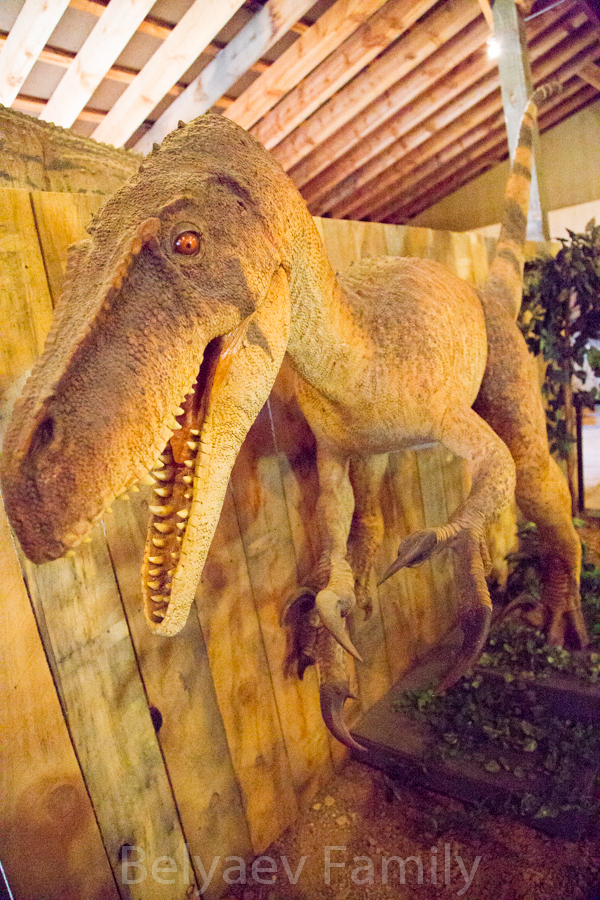
The Short-Faced Bear became extinct only 11,000 years ago. In life, these bears ranged from Alaska to Mexico and were very large, reaching weights of at least 1,300 pounds. Of living bears, only the brown bear and the polar bear are larger, both of which reach at least 1,600 pounds.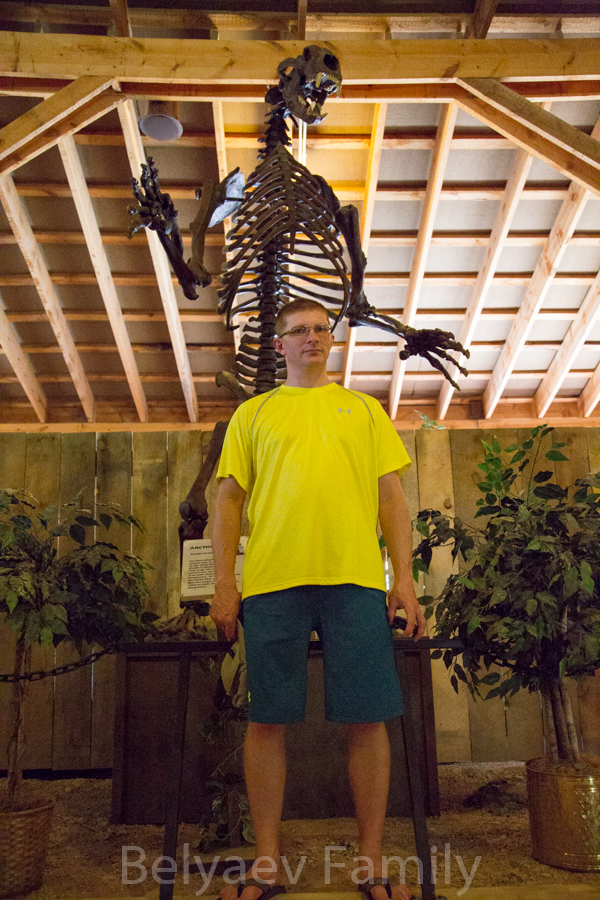
Daspletosaurus Torosus from the late Cretaceous Period was probably closely related to T. rex. It has all the features characteristic of tyrannosaurids: a huge, strongly built an heavily muscled neck and head; huge teeth; very long legs; relatively tiny, two-fingered arms.
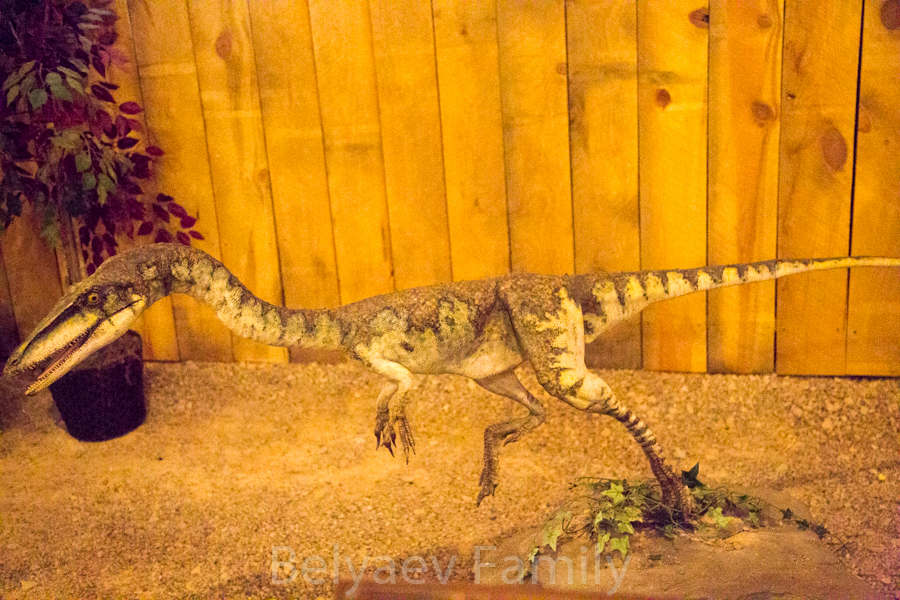
It is interesting to look to the T. rex evolution, to get the answer to the question, does the pattern of tyrannosaurids evolution that culminated in T. rex, support the theory that T. rex was a scavenger or a hunter? After all, many tyrannosaurid features like huge size would have been extremely useful in scavenging, especially when other carnivores needed to be driven off carcasses. However, other features like the increasingly good stereoscopic vision of later tyrannosaurids are hard to see as anything but adaptations for predation. Contrary to popular belief, the huge to gigantic tyrannosaurids of the Cretaceous Period did not evolve from the large allosaurs or large allosaurs relatives of the Jurassic Period. Details of tyrannosaurids skeletal anatomy reveal that tyrannosaurids evolved from small predatory dinasours in the Cretaceous Period and quickly evolved gigantic size.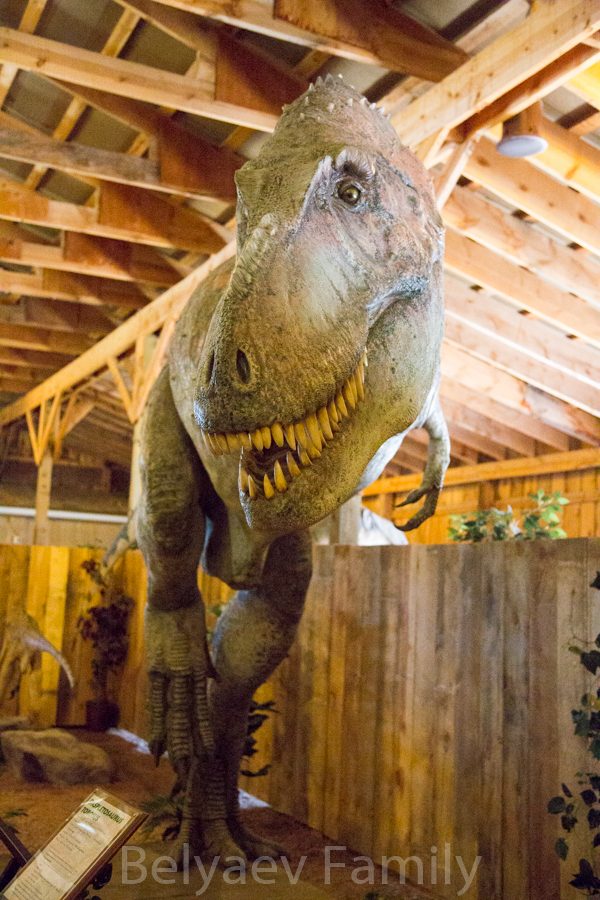
And some more pictures: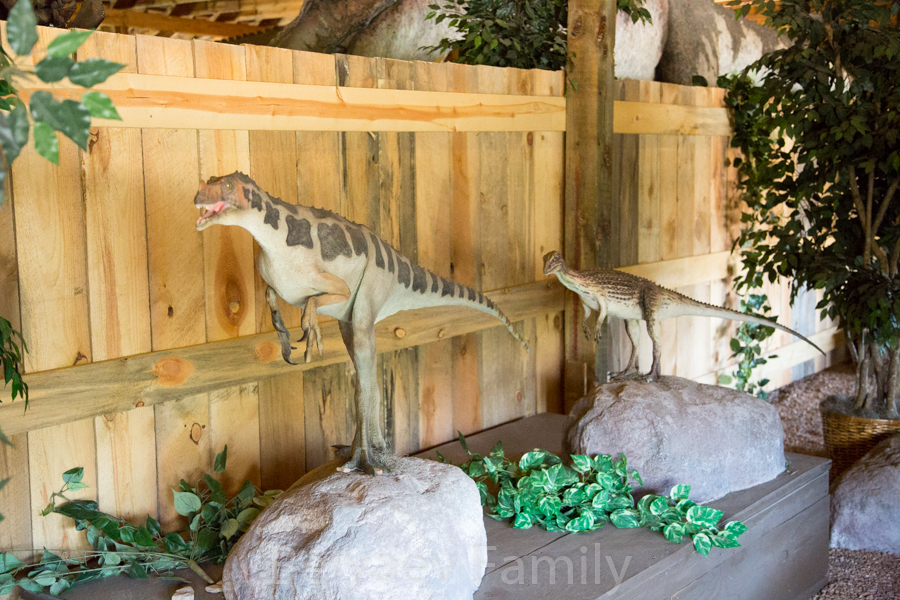
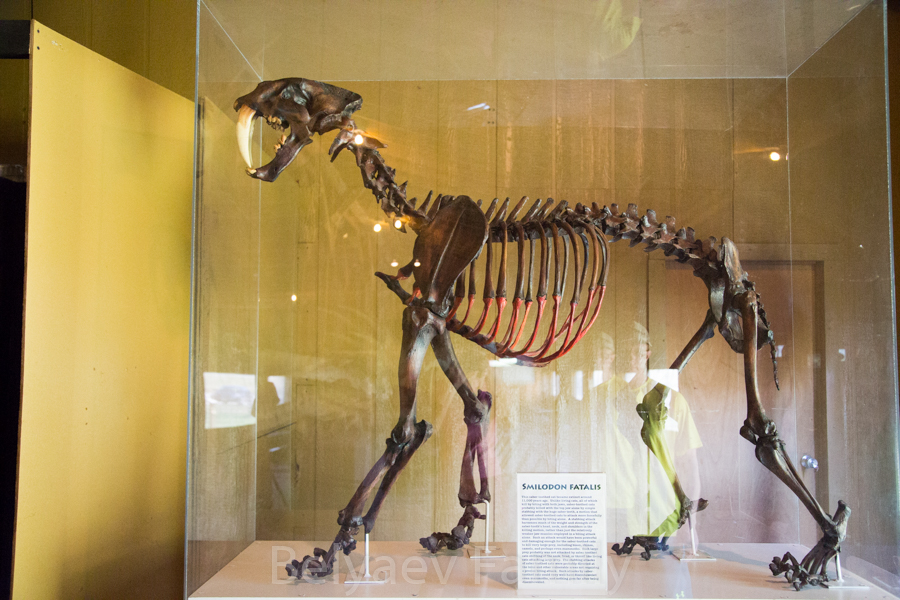
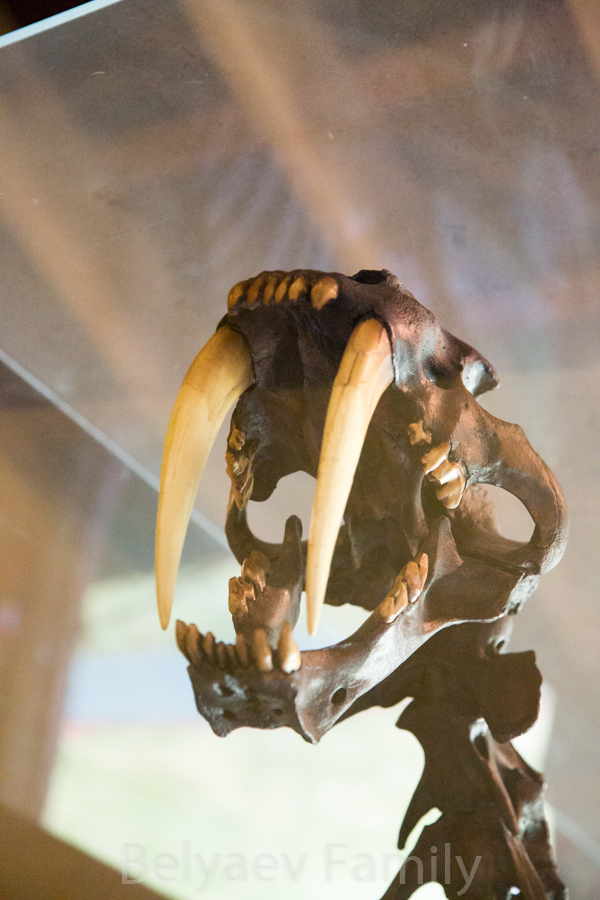
Saber-toothed cat
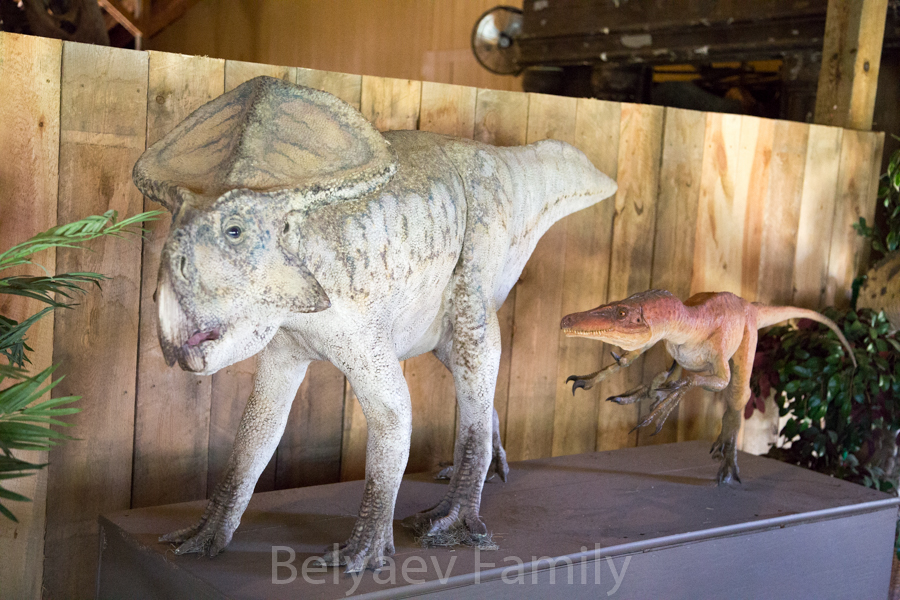
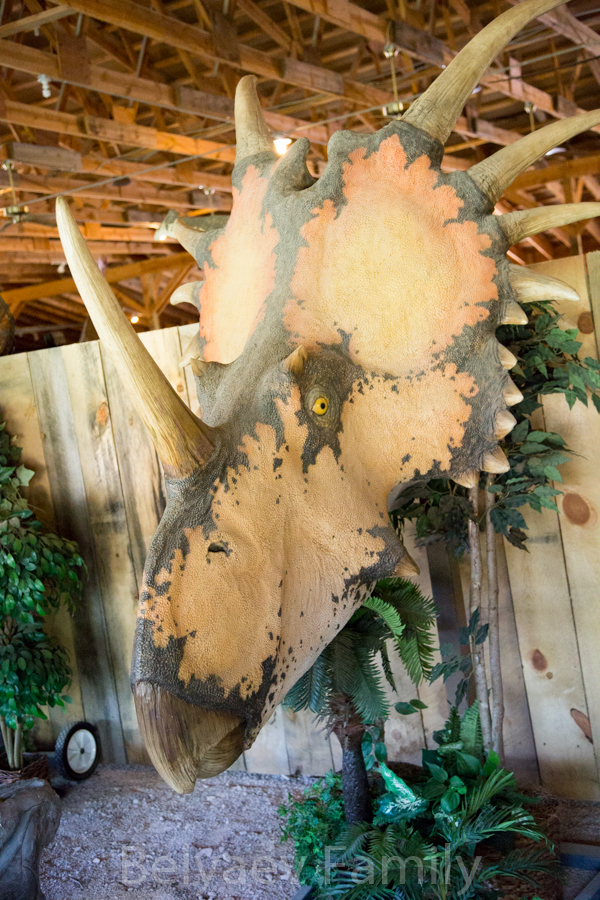
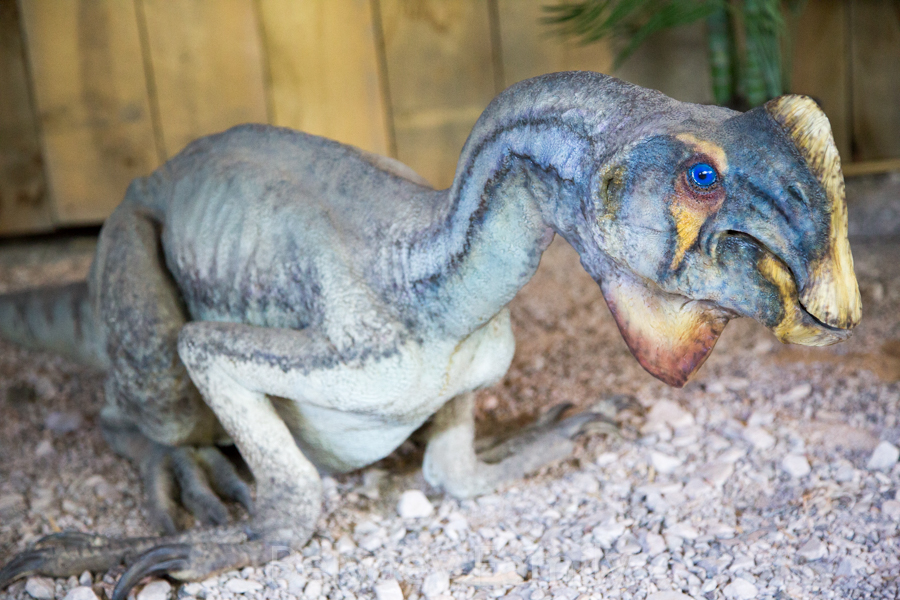
While we were walking and looking to the giant dinosaurs, kids ran by them and hid in the mirror maze. Soon we heard laughing and shrieks of excitement.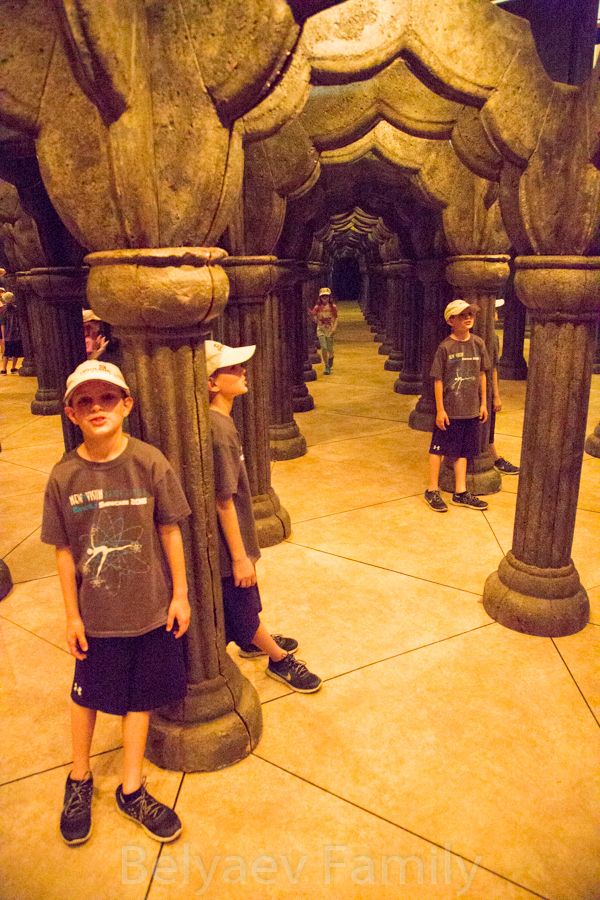
It was fun but we need to move on.
Part 4 here