

Part 35 here
Today we would like to visit one gold mine in Colorado.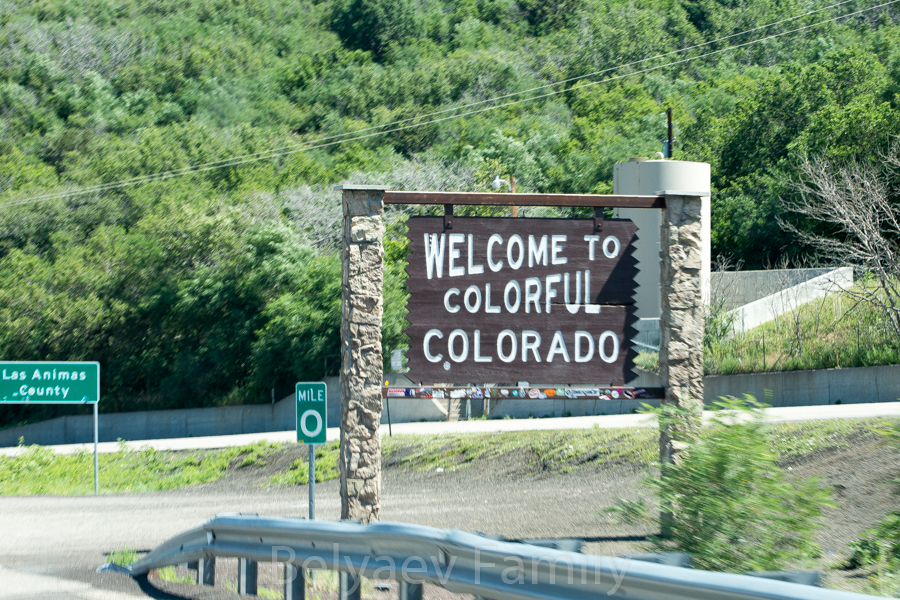
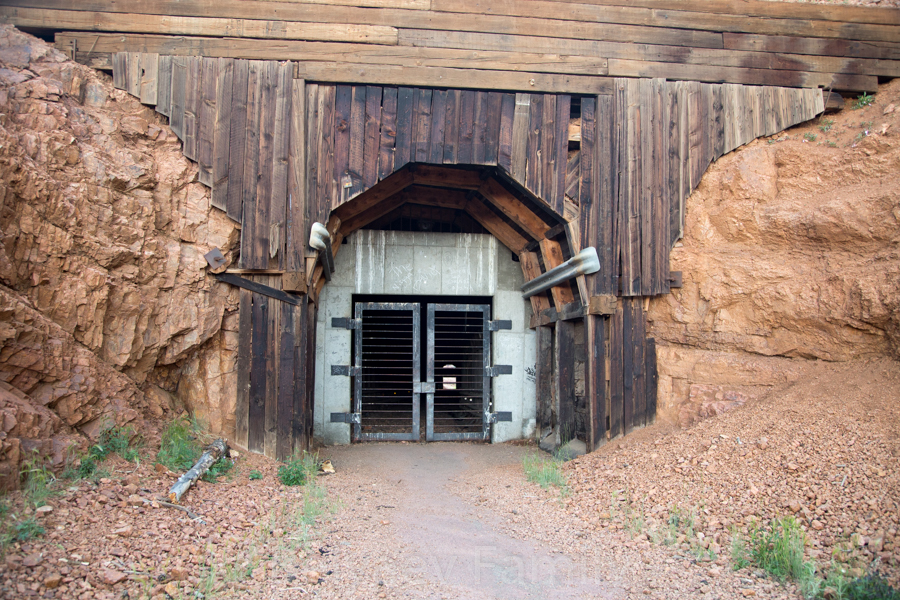
Entrance to the mine was here once
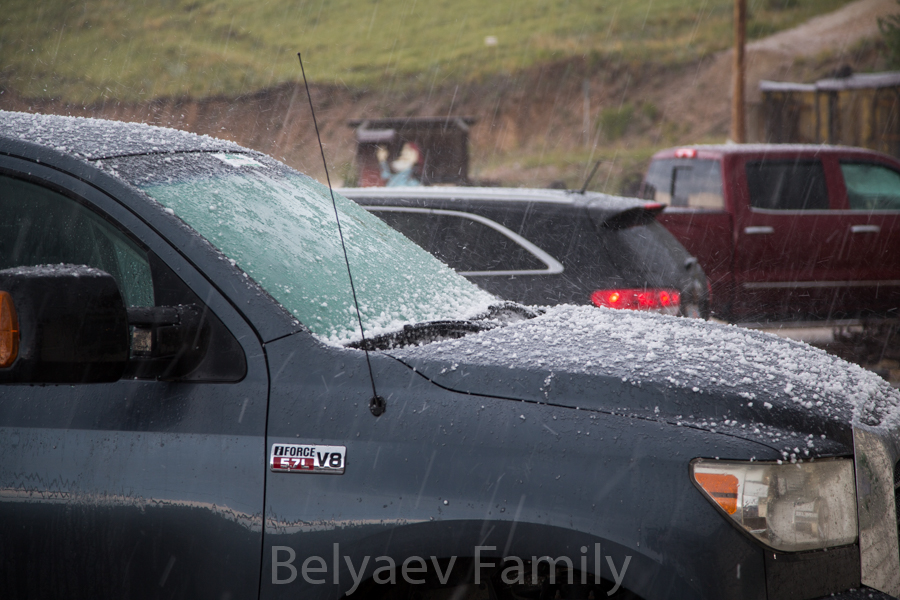
Hail
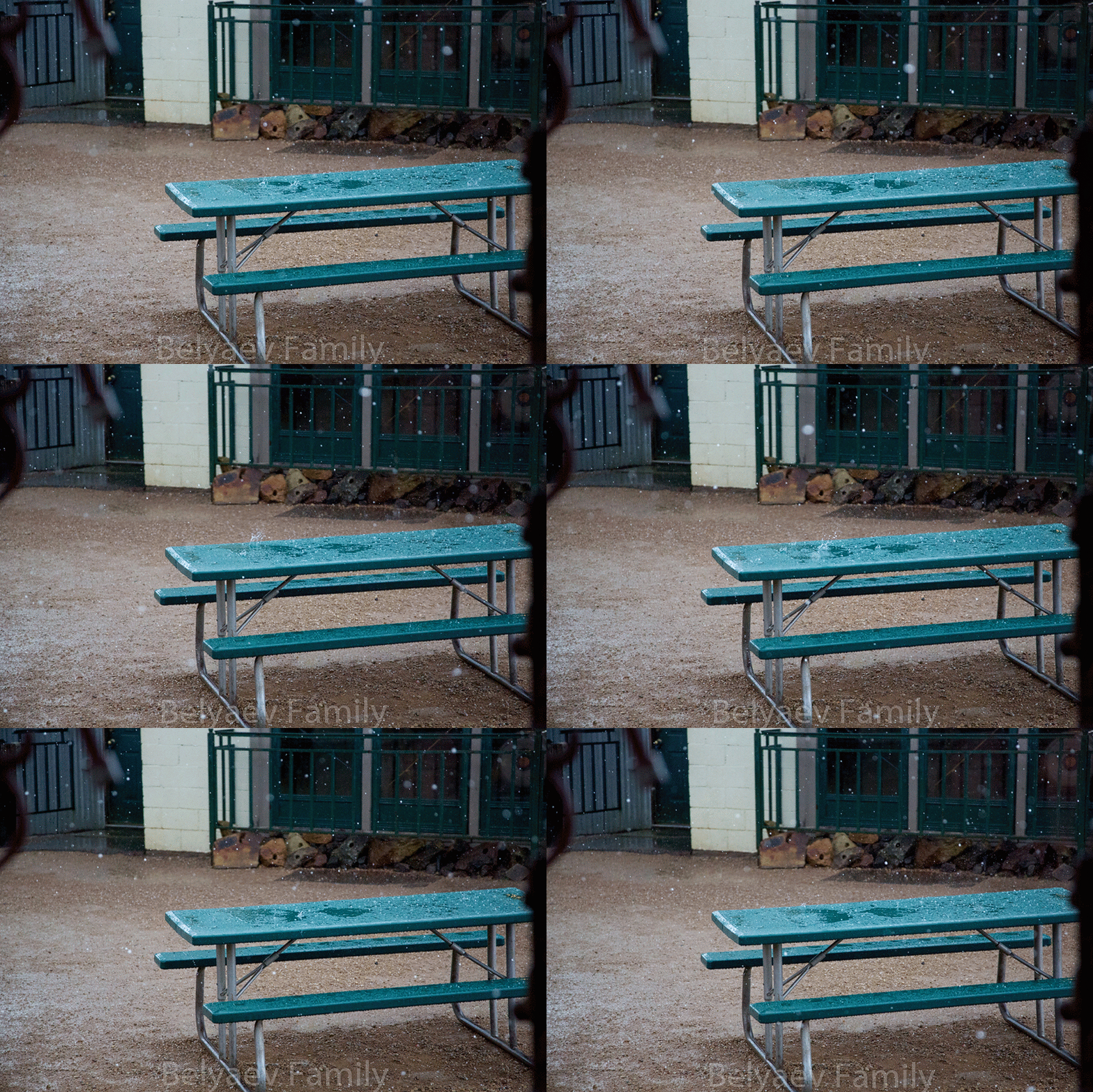
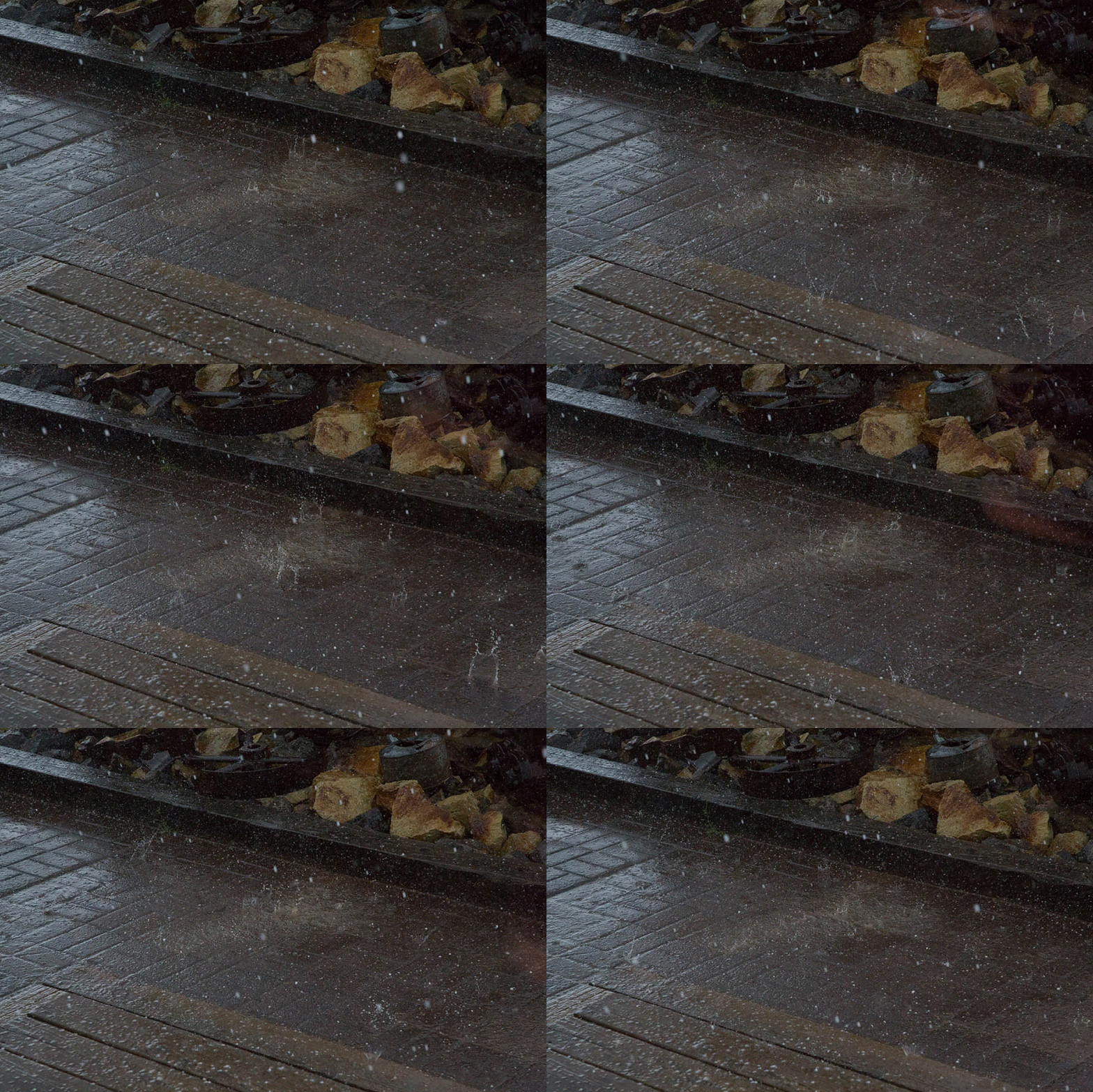
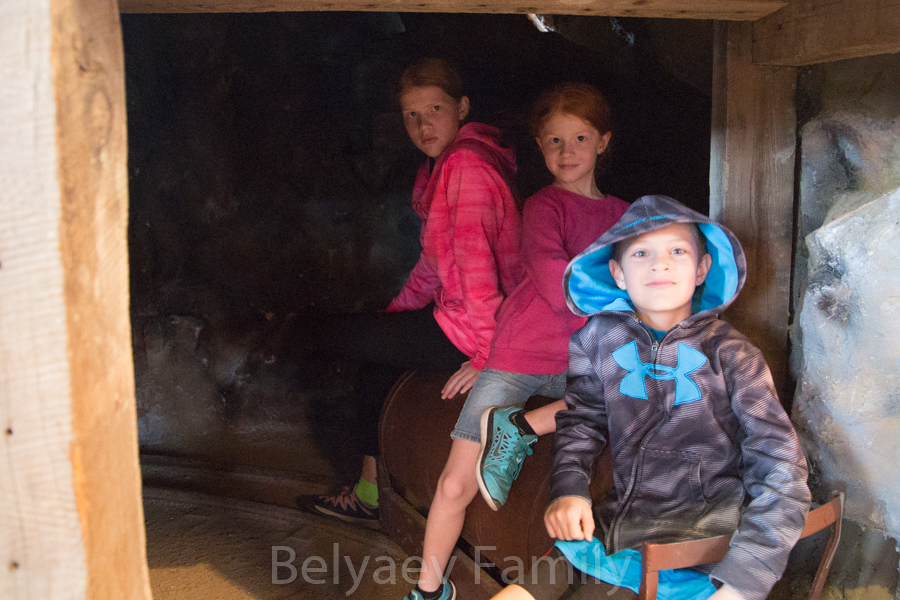
Kids are hiding from the hail’s loud sound
In the end of 18 century Mollie Kathleen Gortner and her family, consisting of husband and two kids, lived in Colorado Springs, CO. In 1891 Mollies son, Perry employed as a surveyor in Cripple Creek area that was found a gold. Mollie filled the family wagon with supplies and joined the next wagon train heading west up Ute pass to visit her son. After four days of traveling she arrived to Cripple Creek and was glad to found out that Perry already built a construction of a half log half canvas field tent.
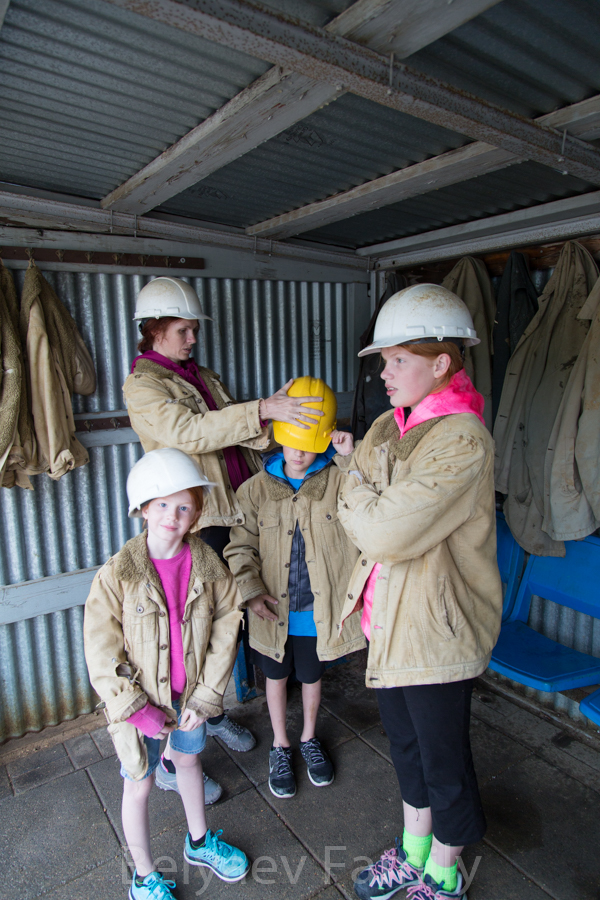
Preparation before entering the mine
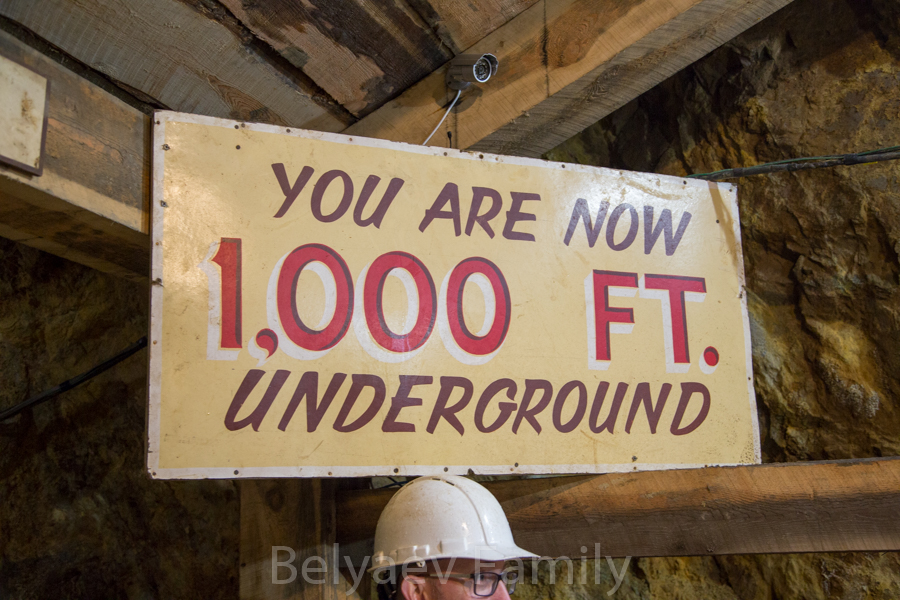
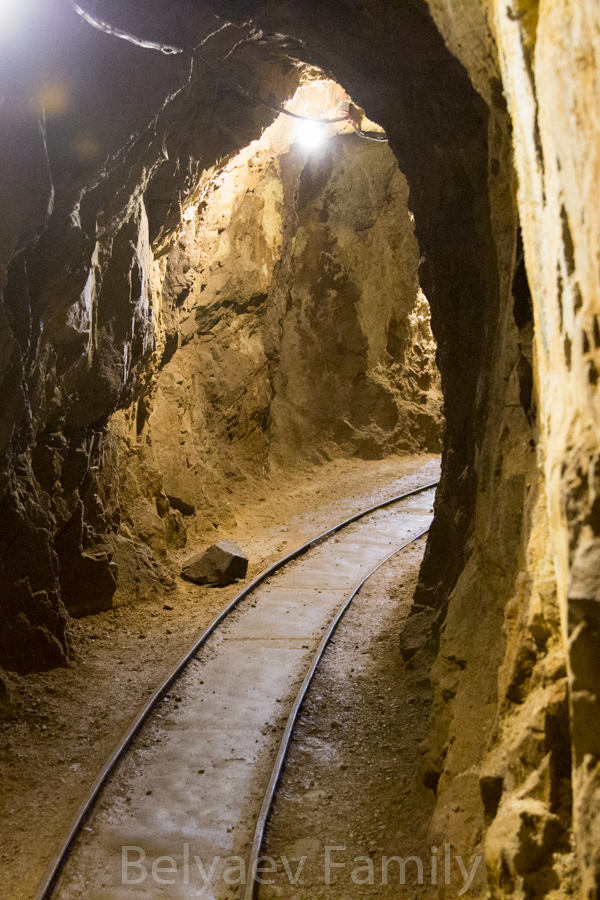
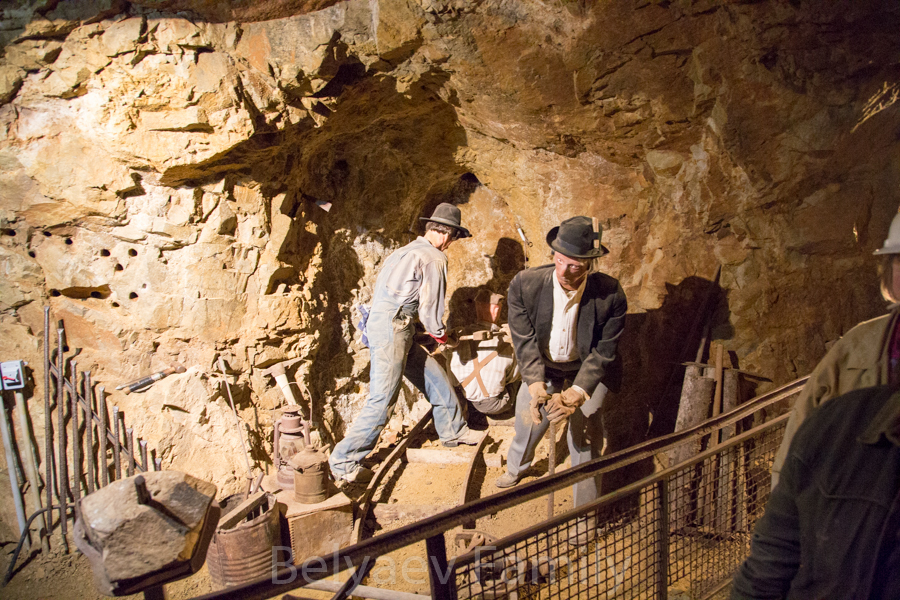
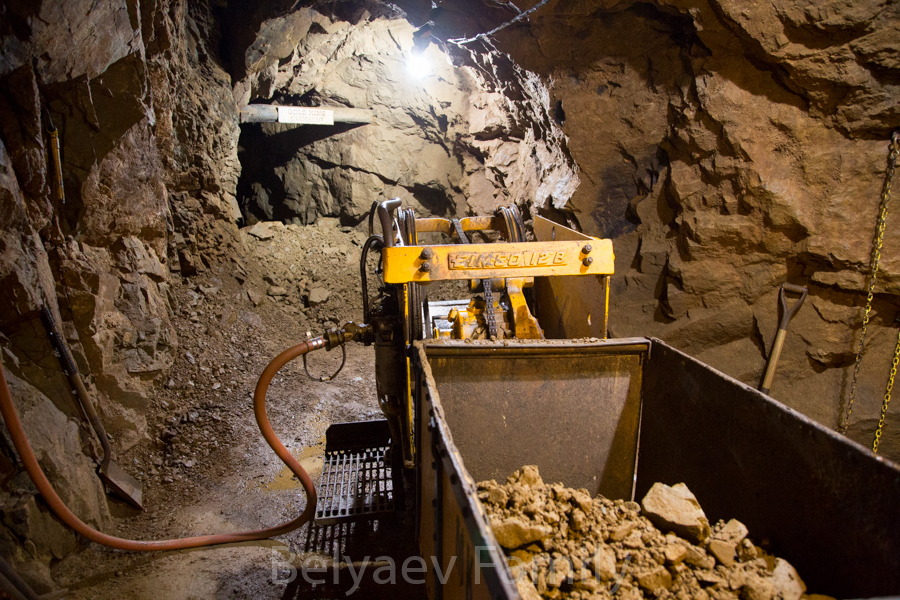
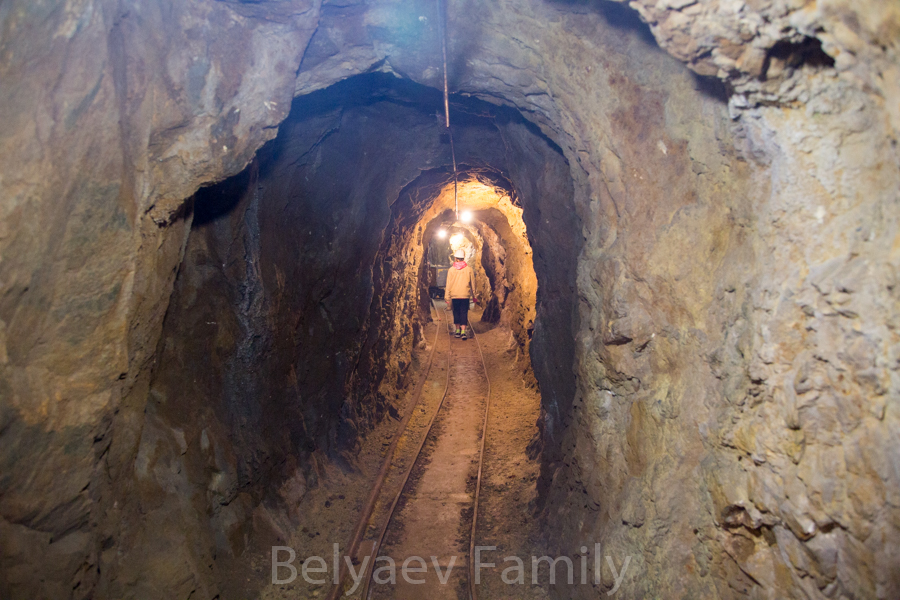
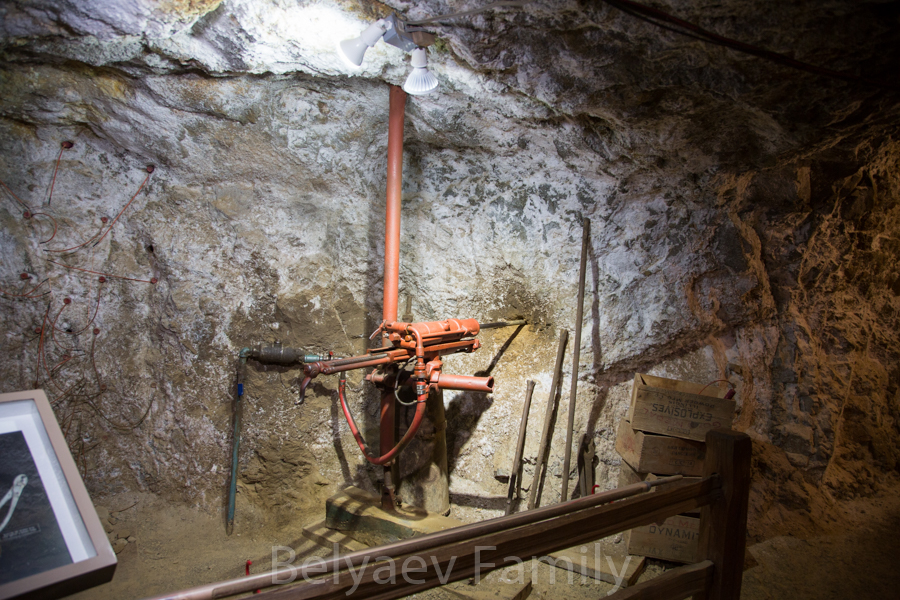
In September 1891 Perry, while surveying upper Poverty Gulch, saw a huge herd of elk. Later he told Mollie of the herd so she headed out to see for herself. As she made her way up Poverty Gulch, winded, Mollie decided to rest. Looking downward, as she caught her breath, Mollie noticed an interesting rock formation that winked back to her. Using a rock to break off the sample, she could hardly believe her eyes, the outcropping was pure gold laced in quartz. With her heart racing, Mollie nonchalantly hid the gold samples inside her clothing. She had to be calm, there were a number of prospectors in the area.
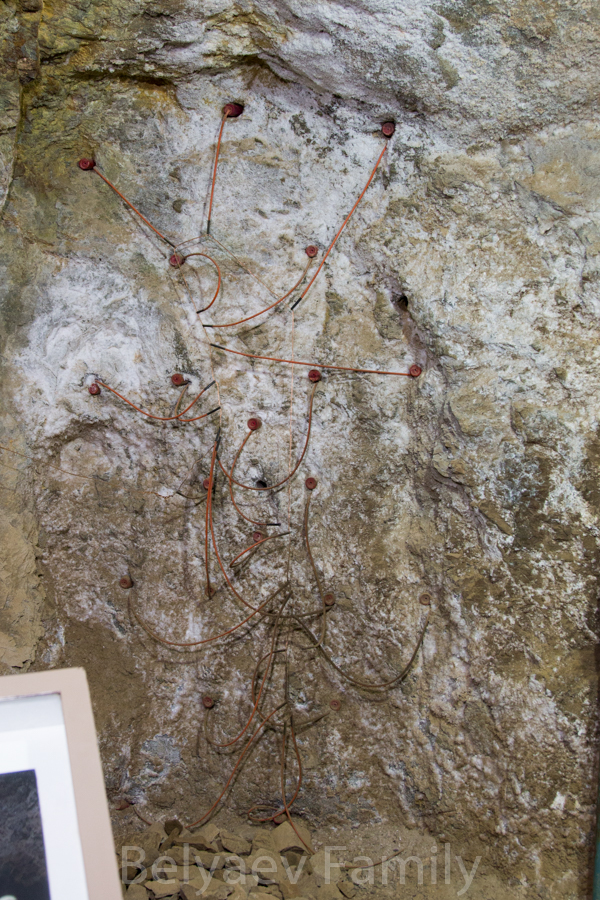
Old dynamite
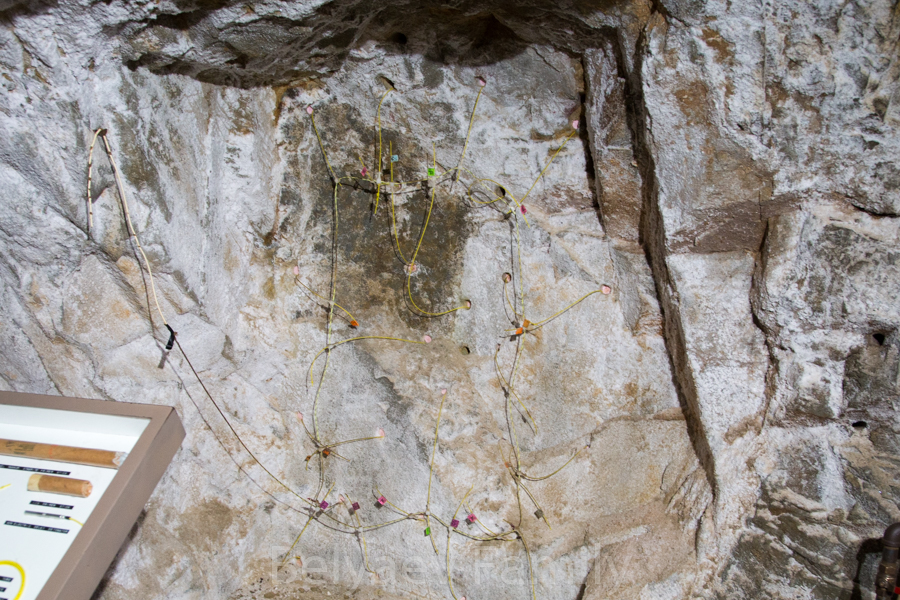
Modern explosives
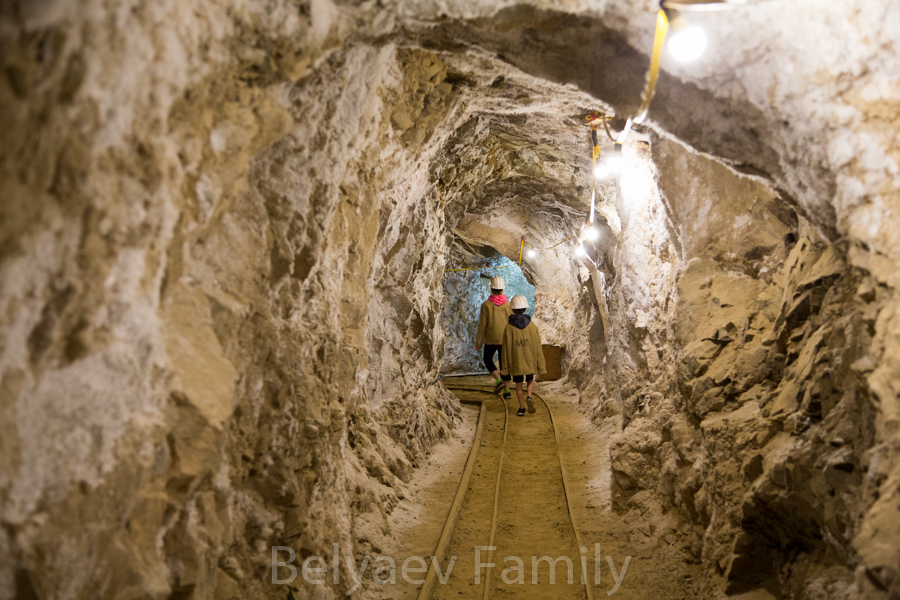
Don’t think to lick the walls, it is cyanide
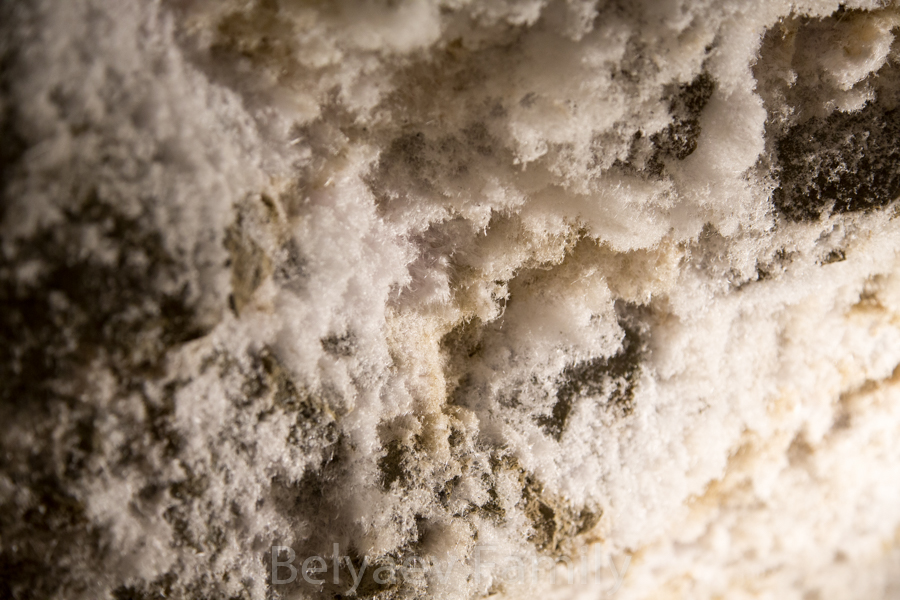
cyanide crystals
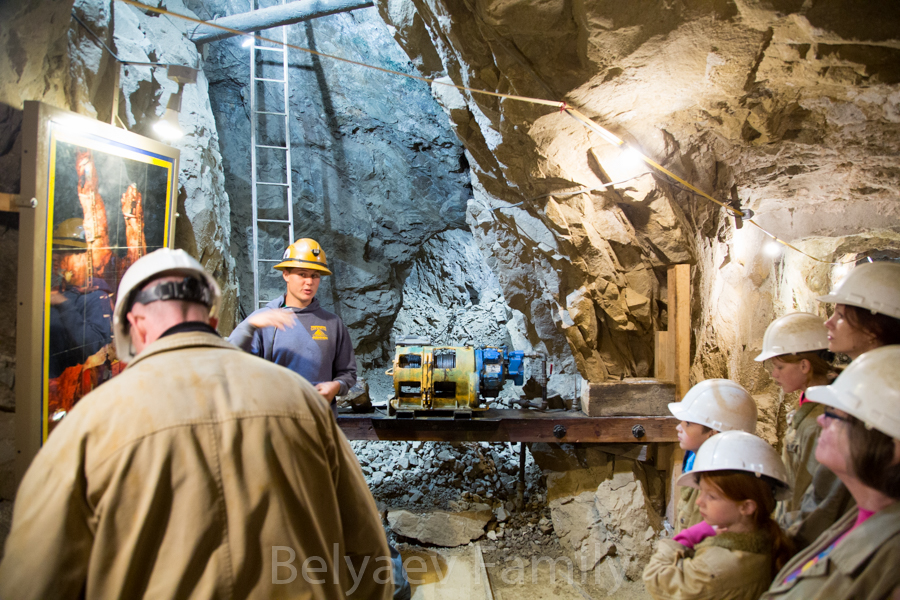
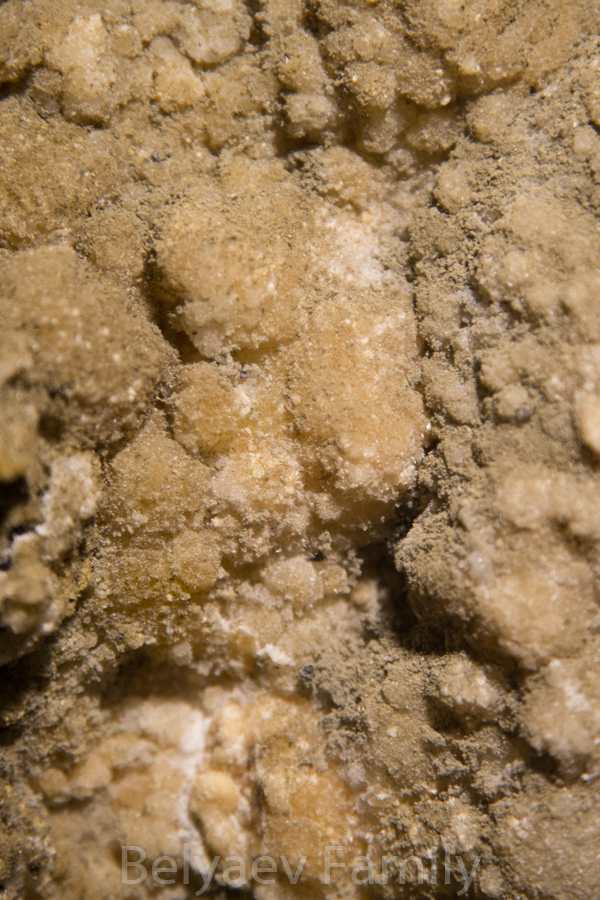
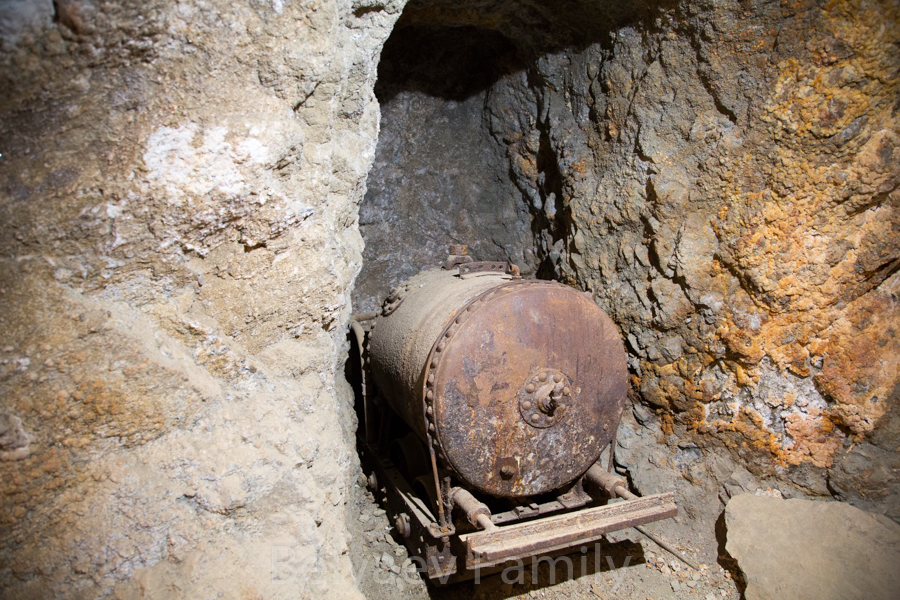
airdonkey
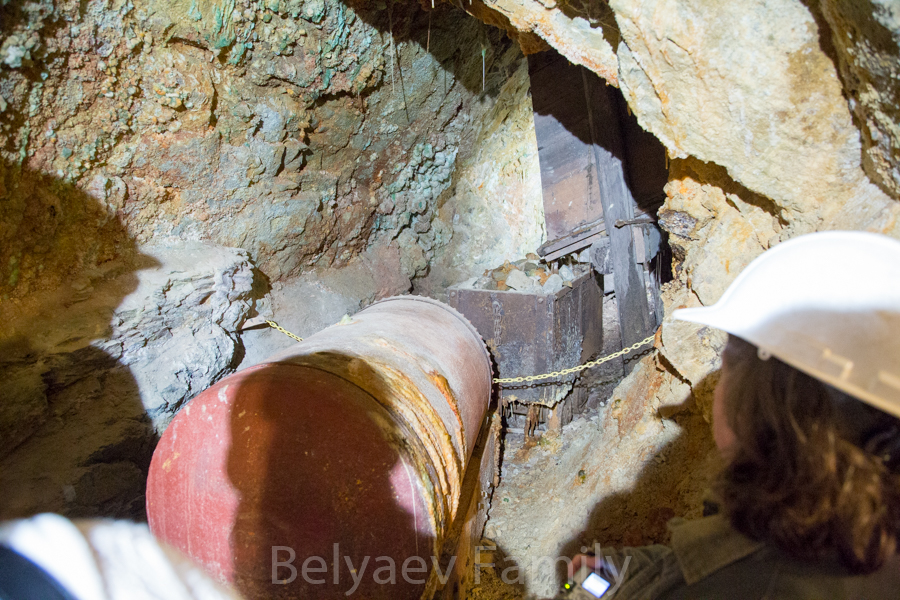
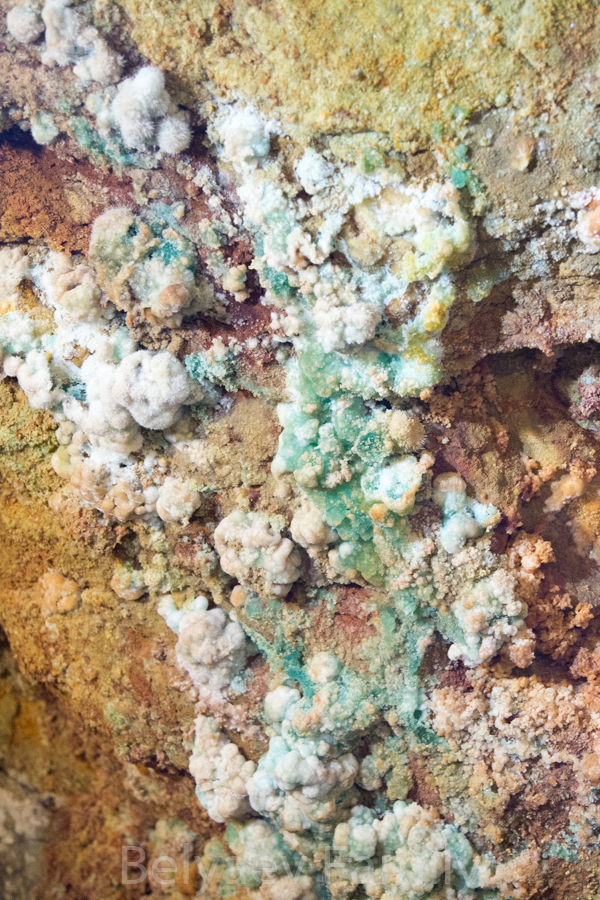
Copper
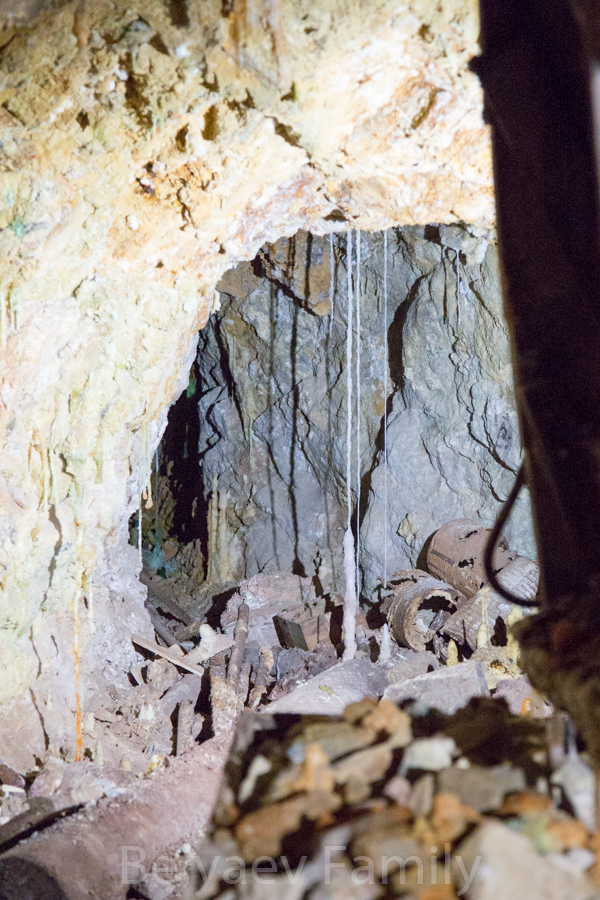
During 50 years of inactivity the column has grown
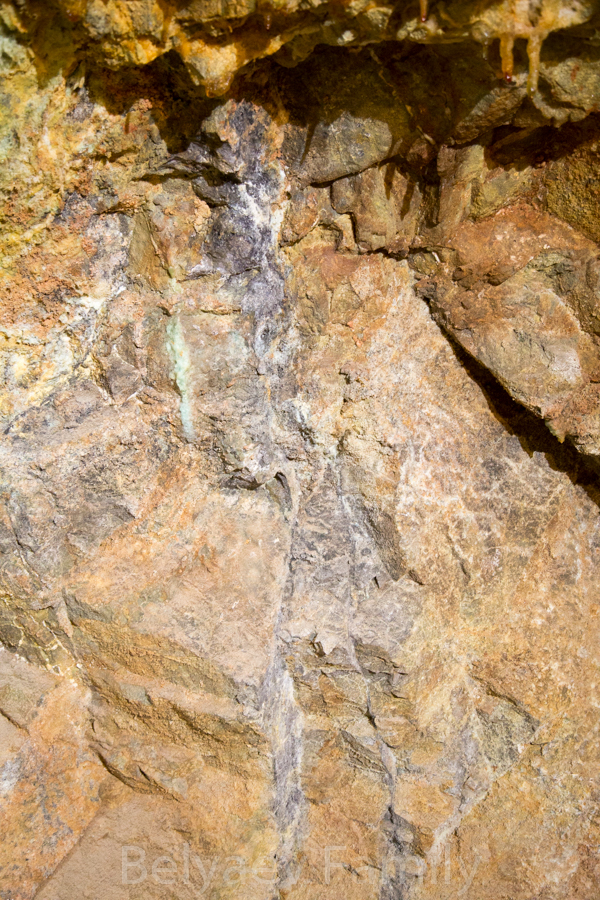
Dark color – it is gold ore
By her determined act, Mollie Kathleen Gortner became the first woman in the Gold Camp to discover gold and strike a claim in her own name. This was clearly a bold move out of step with the times. Most men of the time only named their horses, donkeys and mines after their women, it was very uncommon to let a woman claim something of such value.
Even after her mine was in production and when visited by the national Geological Survey, it’s authors entered their report of the mine being “Discovered by Mr M.C. Gortner” – Mollies full name was Mary Catherine Gortner.
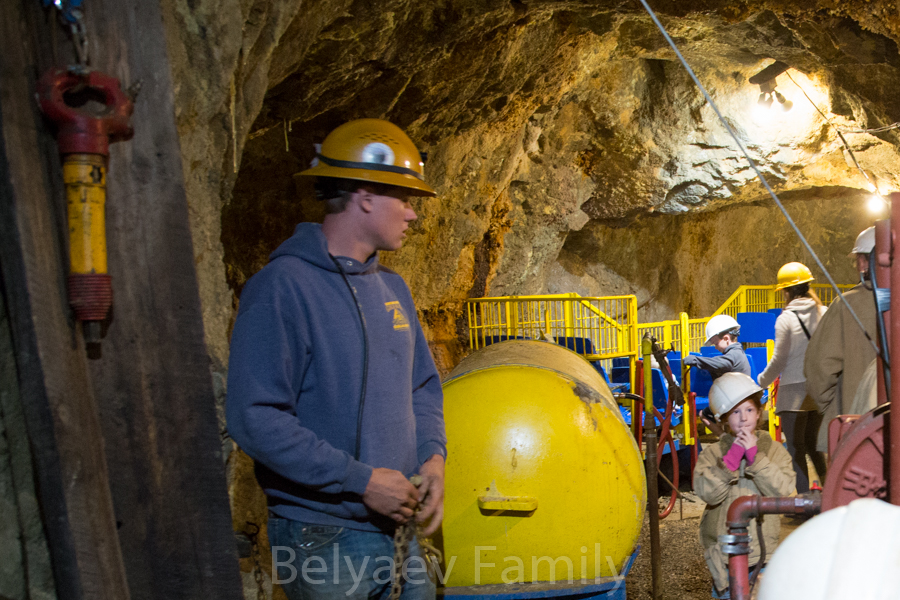
We will ride the airdonkey now
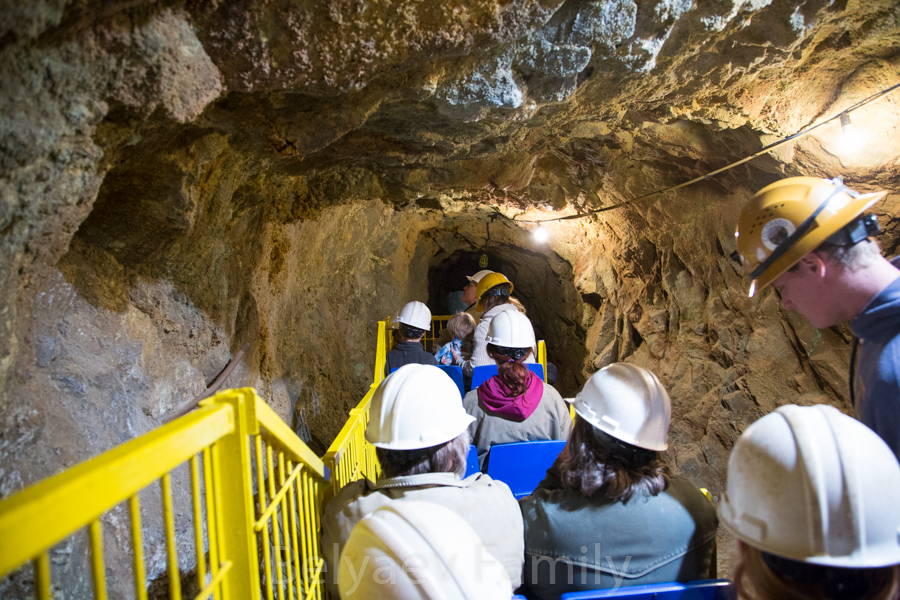
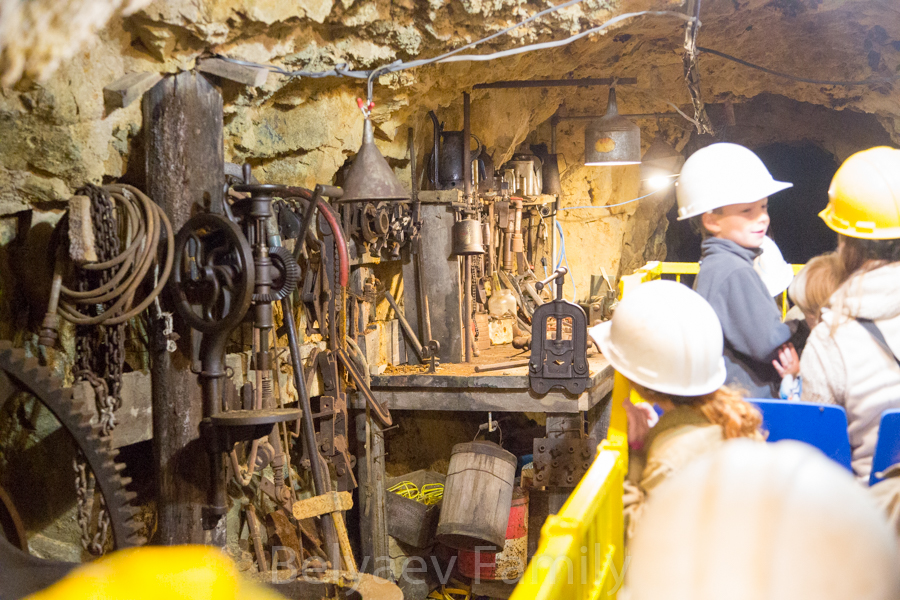
Storage of the instruments
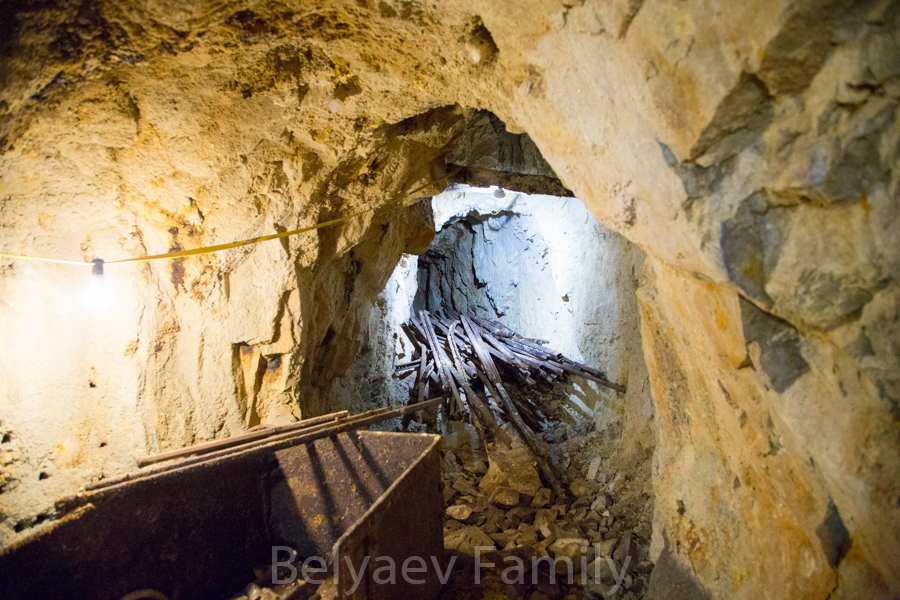
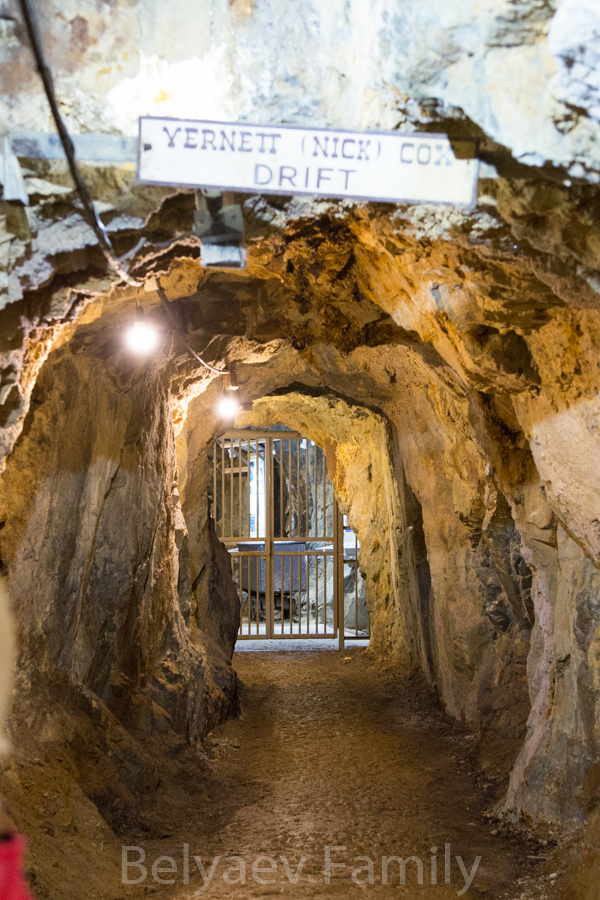
connection with a different mine’s tunnel
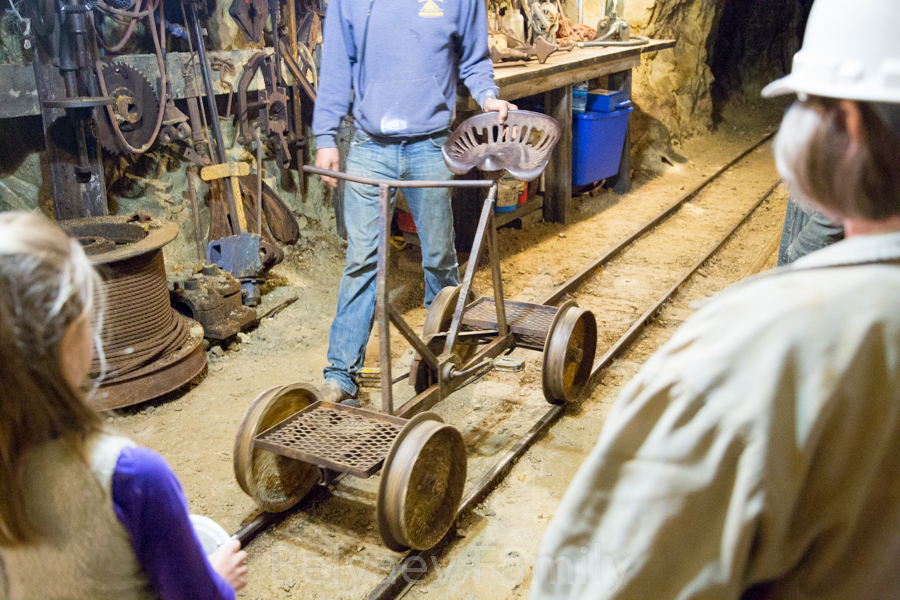
The Manager used such a transport
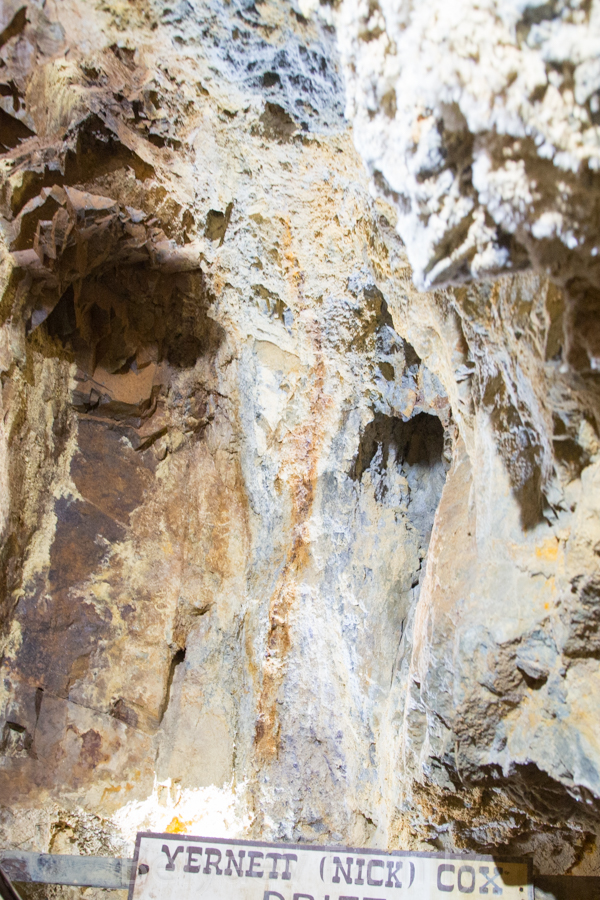
Gold ore
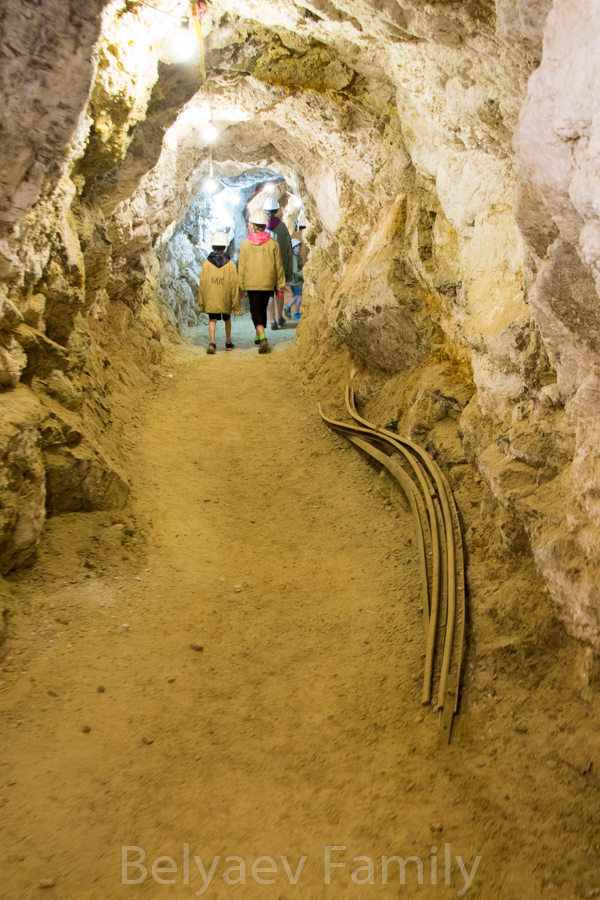
From the early beginning of the Mollie Kathleen Mine many passersby would often wander in, pleading to tour the underground mine. Visitors without hesitation rode an open ore skip. Miners would take turns guiding complete strangers underground, by candle light, to witness fellow workers extracting gold ore. With the introducing of air drills, mining activities become more interesting. With increased public persistence a decision was made to conduct tours on the 700 foot level. That allowed miners to drill rounds and load explosives on the 1,000 foot level during the day. At night the rounds were shot, ore was mucked, trammed and hoisted to the surface. Our tour guy told us that if it would be possible to take all the tunnels and connect them so one tunnel would appear, on the other end we would see London, UK.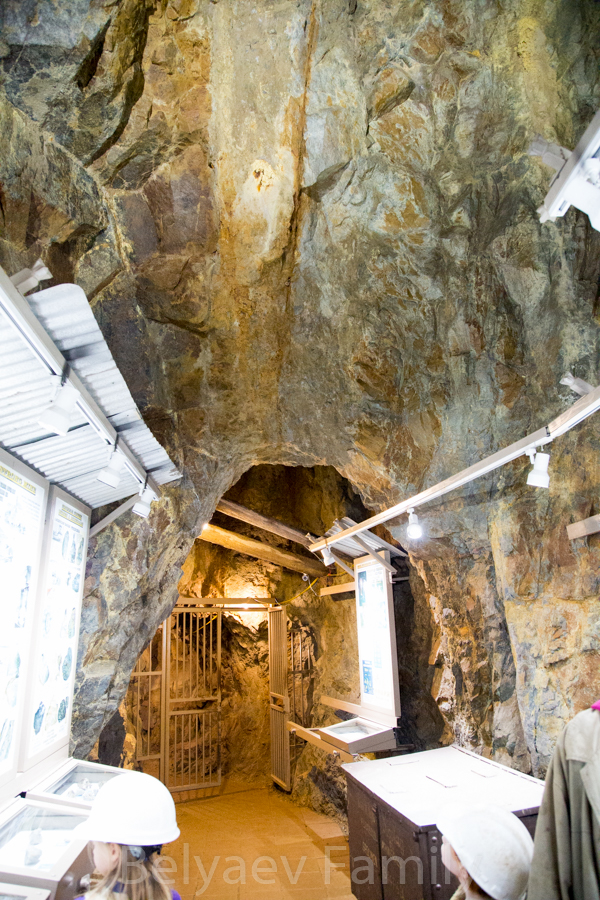
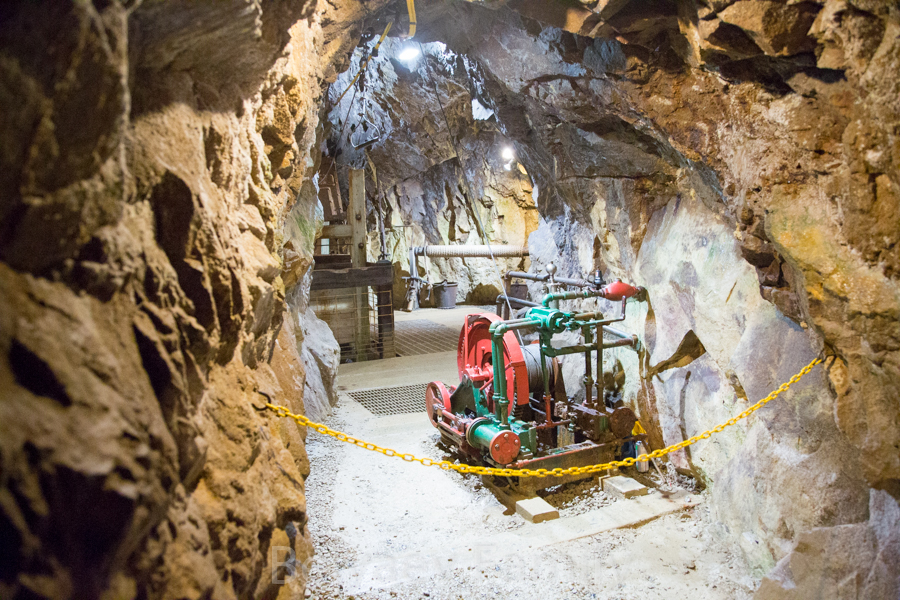
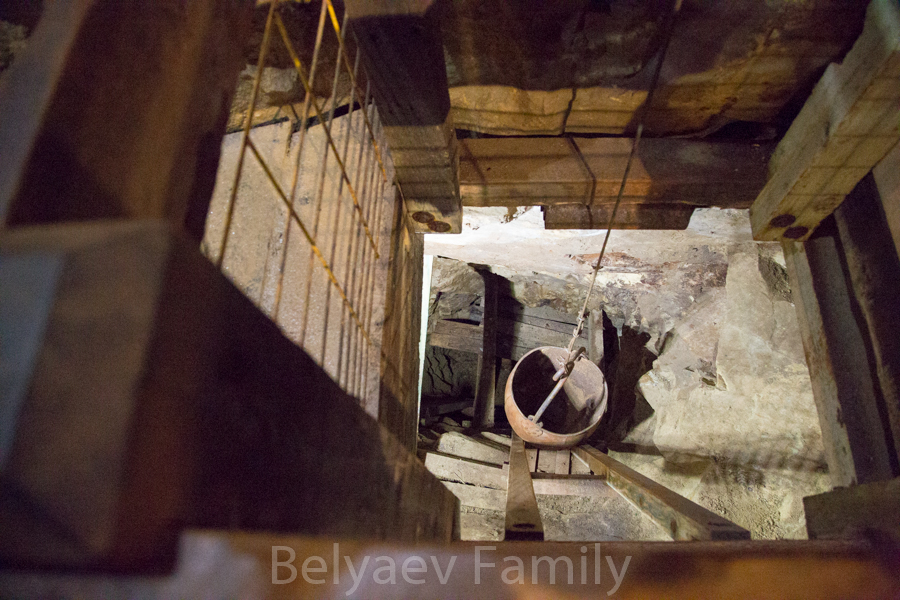
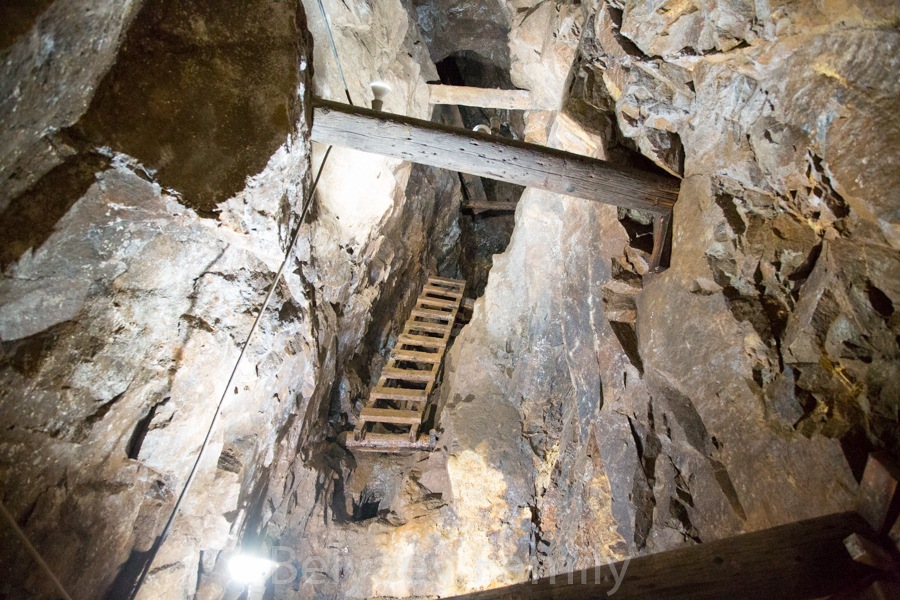
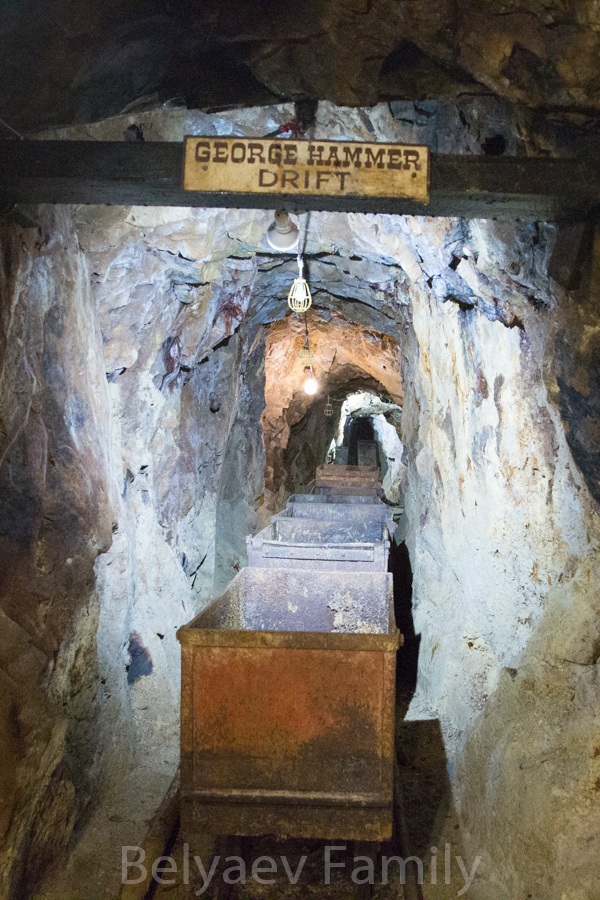
Mining continued until 1961 when the Carton mill closed. With no way to process ore the mollie, along with the other working mines of the Cripple Creek district, were given little choice other than to halt gold production. However, decision was made not to close mine completely, but continue tours and at the same time make all the modernisations so if the Carton Mill will reopen again, the mine will be ready to produce the gold.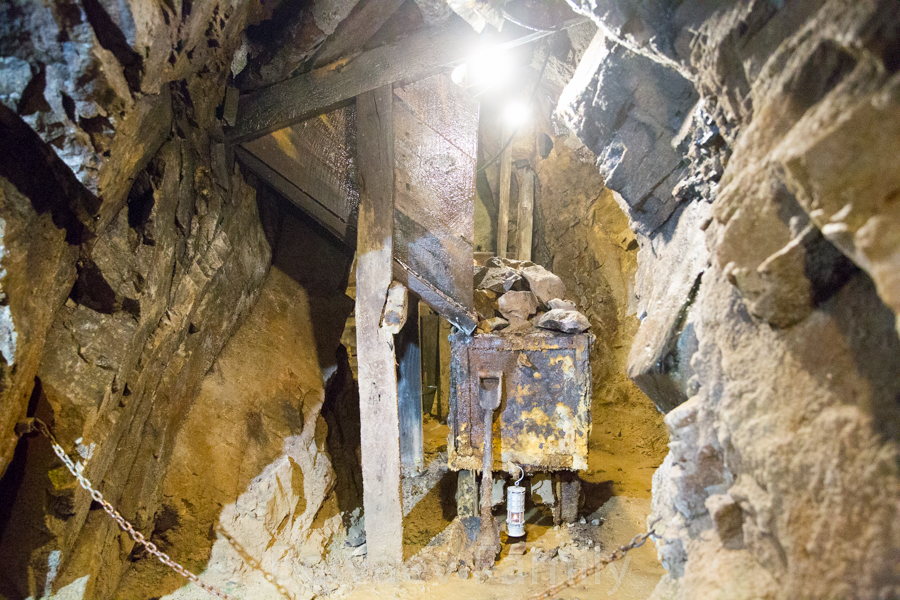
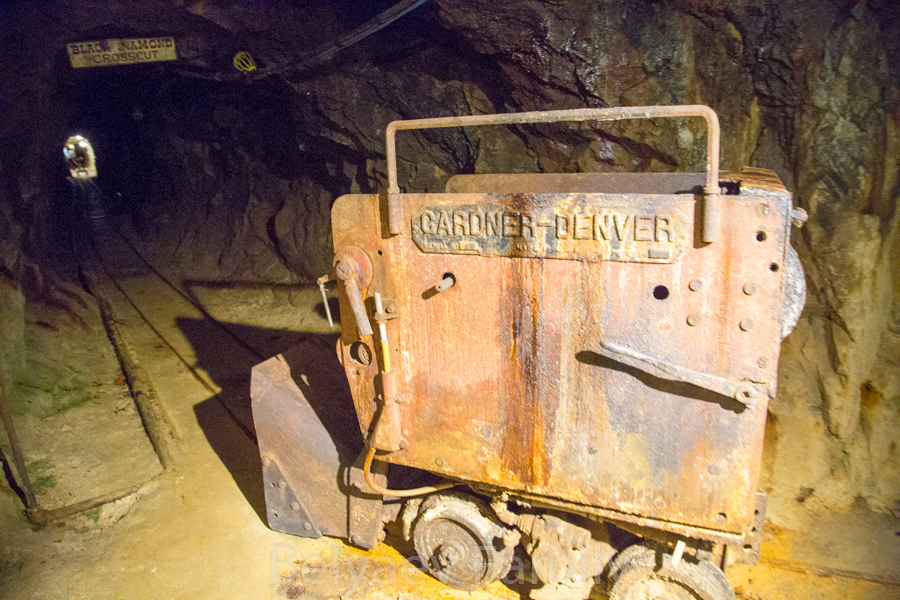
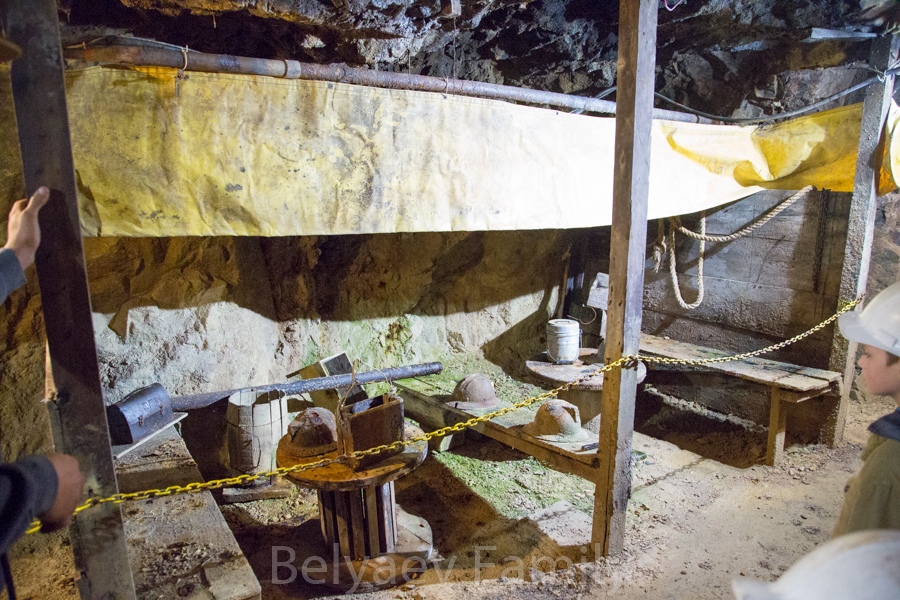
When the live donkeys were used in mine, they spent the night here
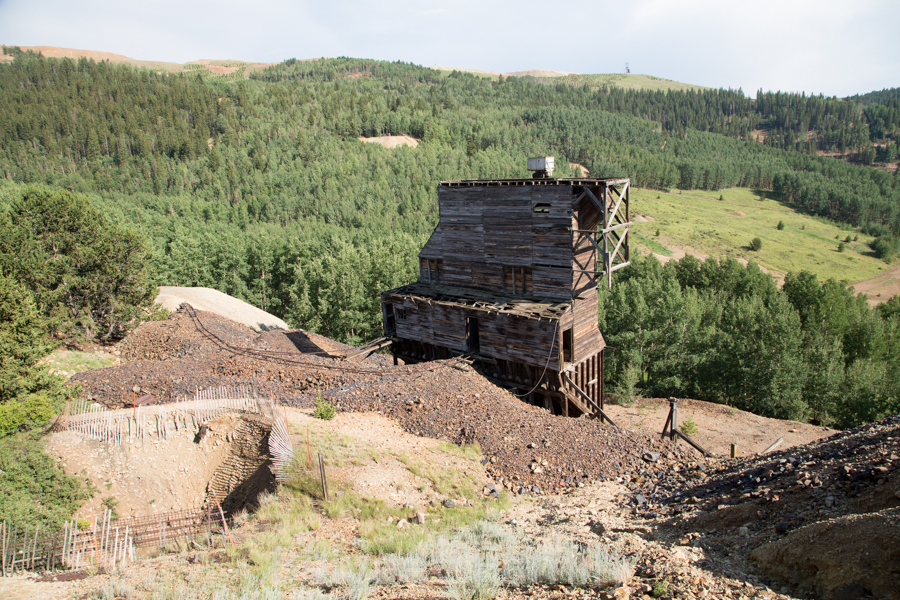
During the tour we saw different instruments that were used in mining, included very primitive ones. And we even rode the airdonkey – a little tram that replaced the real donkeys.
Part 37 here