

Part 22 here
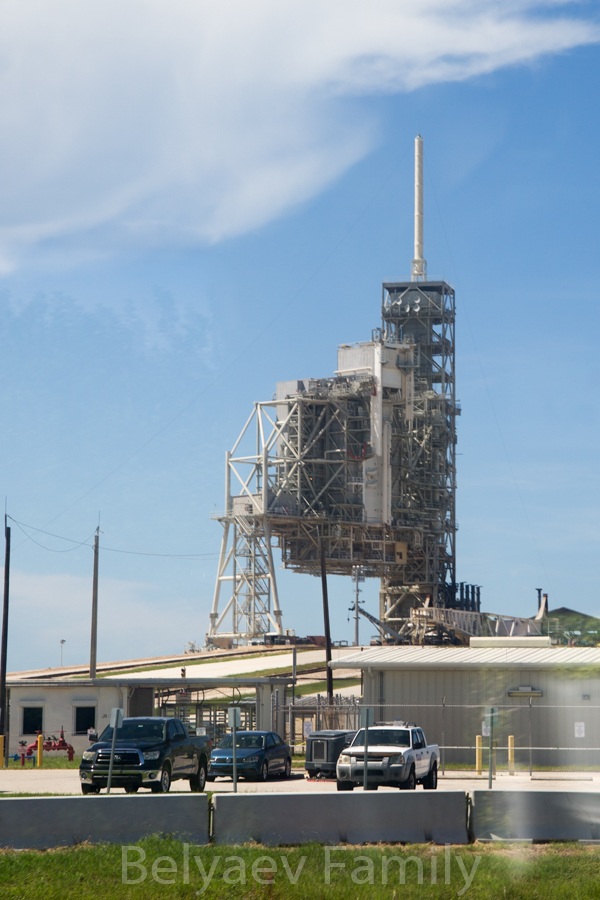
After arriving to the train station and getting our car back we went to the Cape Canaveral, to visit the Space Museum. First was the bus tour, we went through some of the launching pads. One of them was Space X’s and we saw the preparation for the future launch that will take place here in 6 days. One of the ex-shuttle’s pad is in the reconstruction stage. The future heavy lifter SLS will be launched here when ready. We were told that SLS will be able to reach Mars and Jupiter.
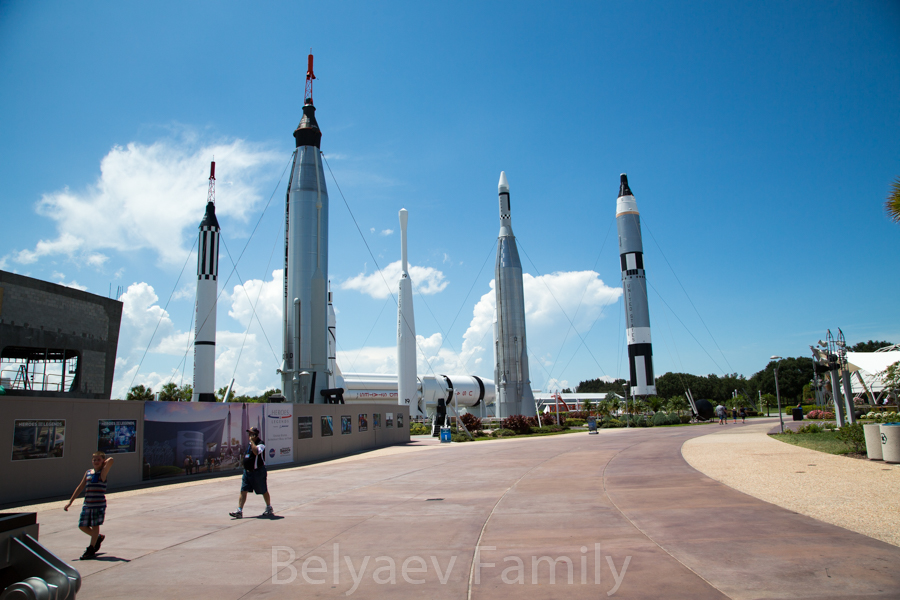
At the entrance
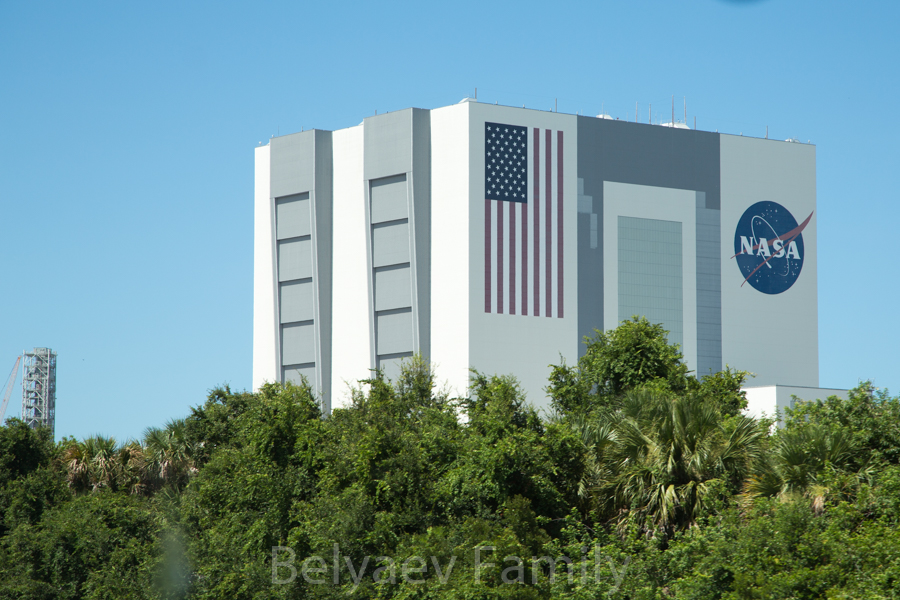
Hangar where the rocket’s final assembly and preparation happened
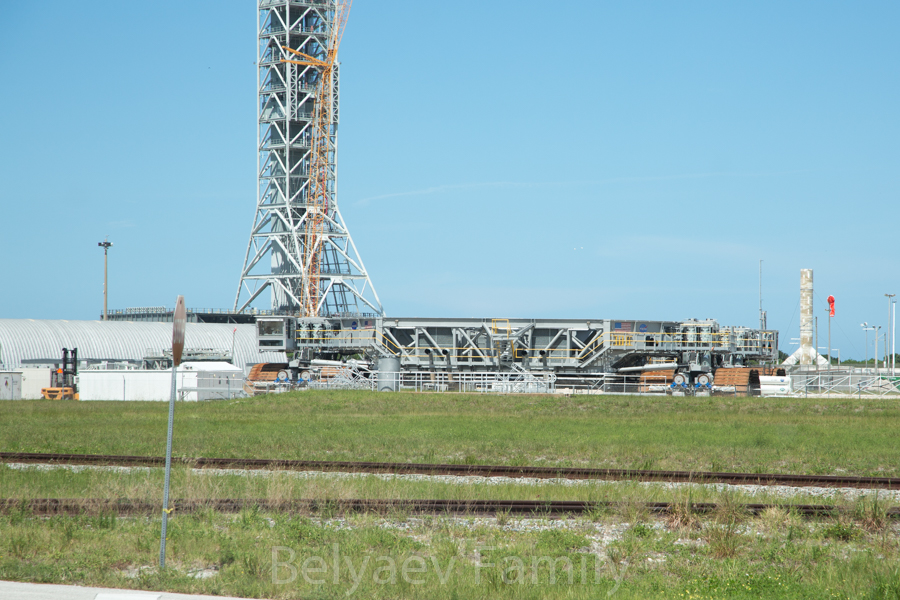
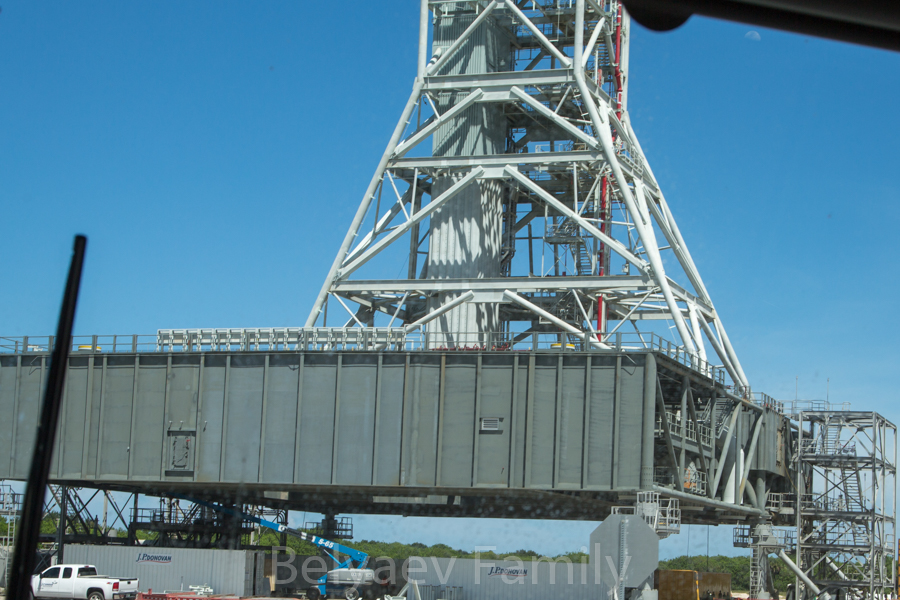
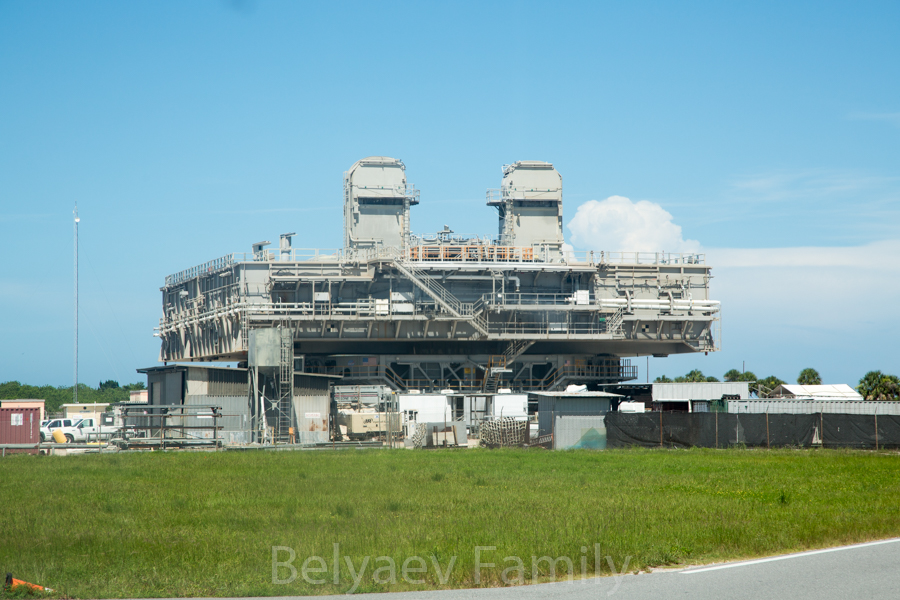
platform that was used to launch shuttles
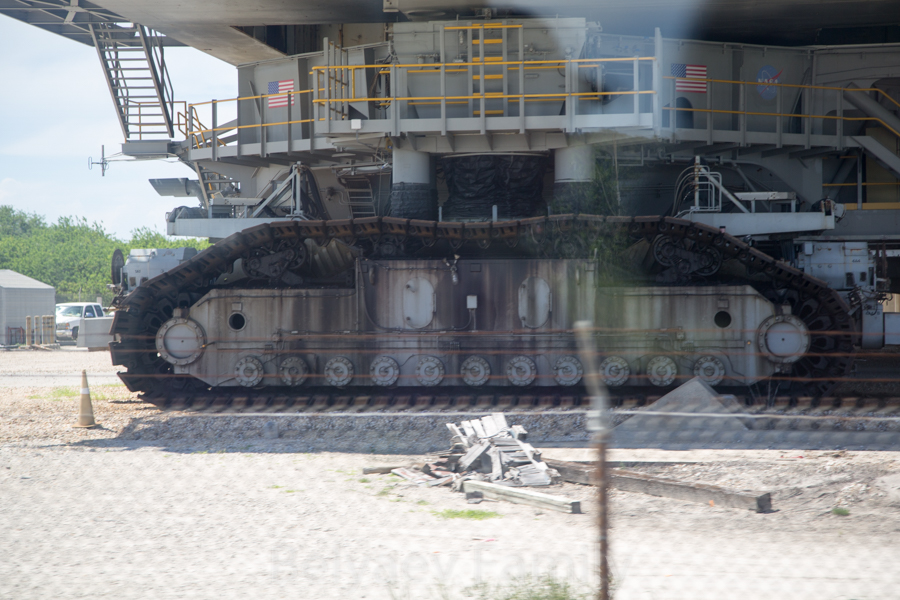
this is her moving part, single track section weighs 6 ton…
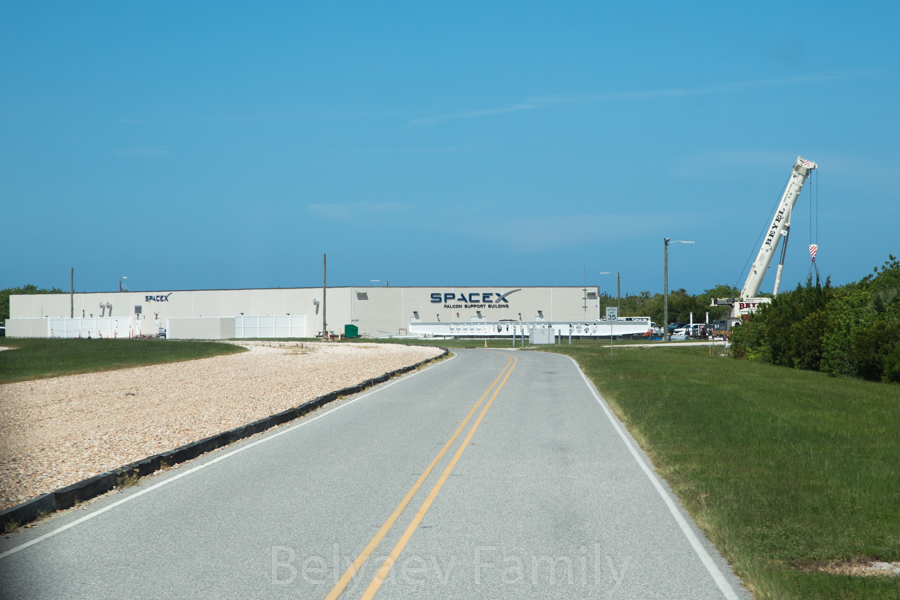
Space X’s launching pad
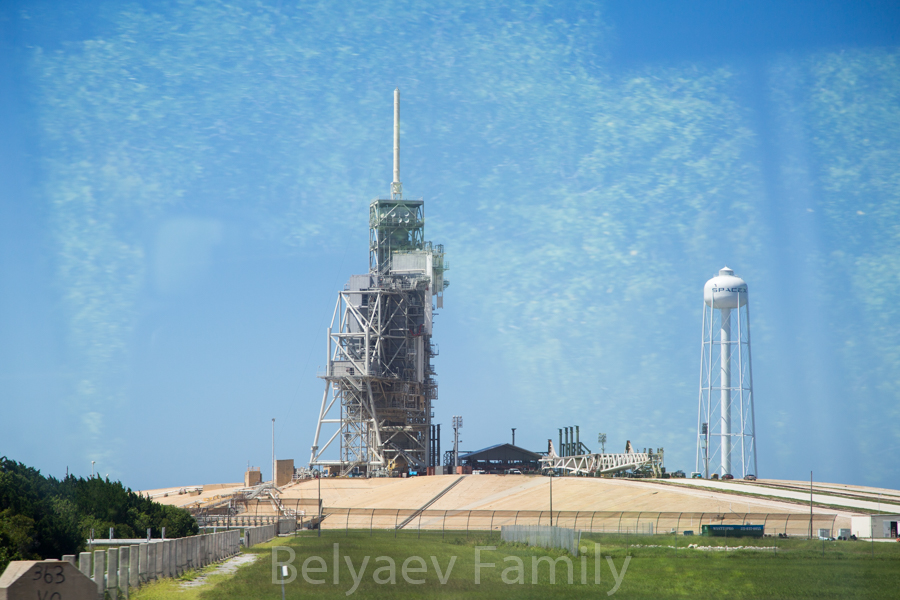
In 6 days the launch will happen here
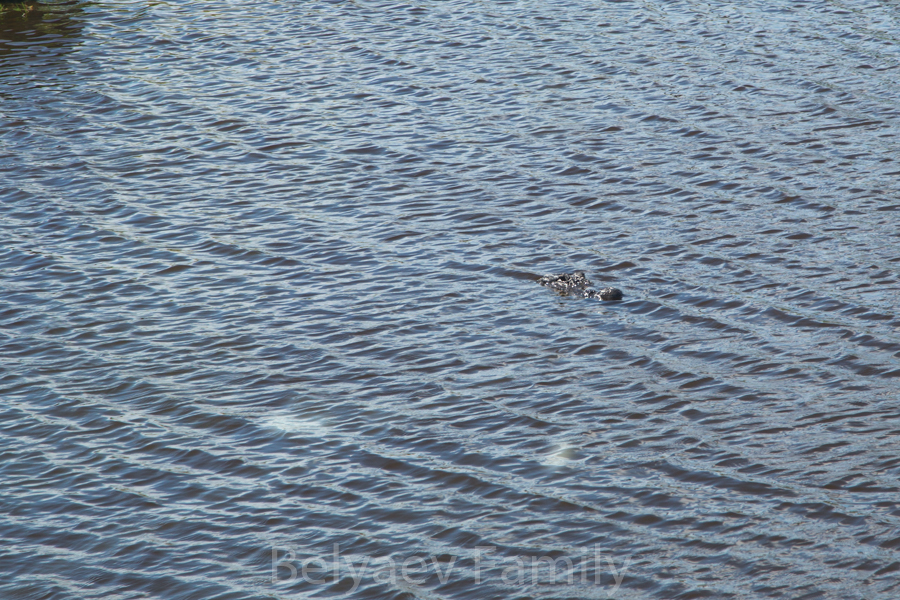
Alligator
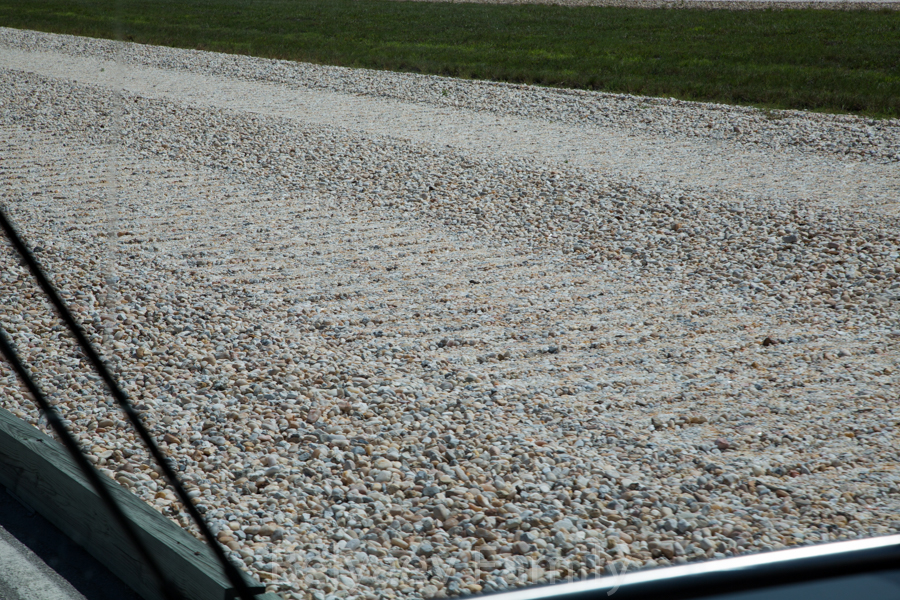
The launching platfrom’s traces
When the tour was over, we went to the Apollo / Saturn V Museum. Can you imagine, they have the real Saturn V hanging there? That thing is HUGE! It is divided by stages with some information about each one.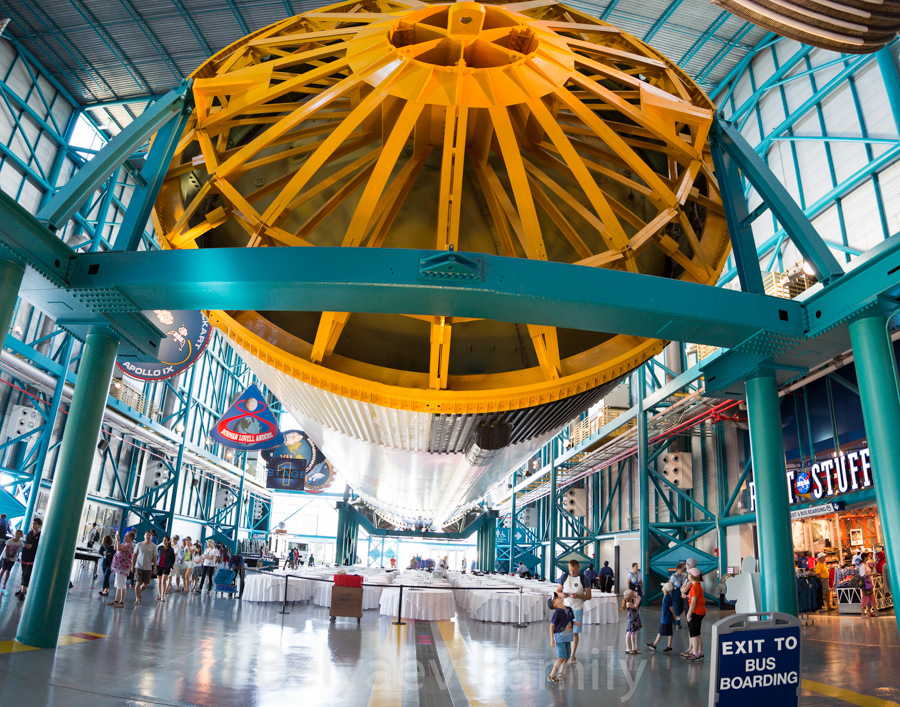
The First Stage (S-IC) was responsible for launching the 6,2 million pounds Apollo / Saturn V vehicle. The five F-1 engines at the base of the S-IC propelled the spacecraft to a speed of 5,000 mph and consumed fuel at a rate of 15 tons per second. Approximately 2.5 minutes after launch, the engines cut off and the stage was jettisoned into the Atlantic Ocean.
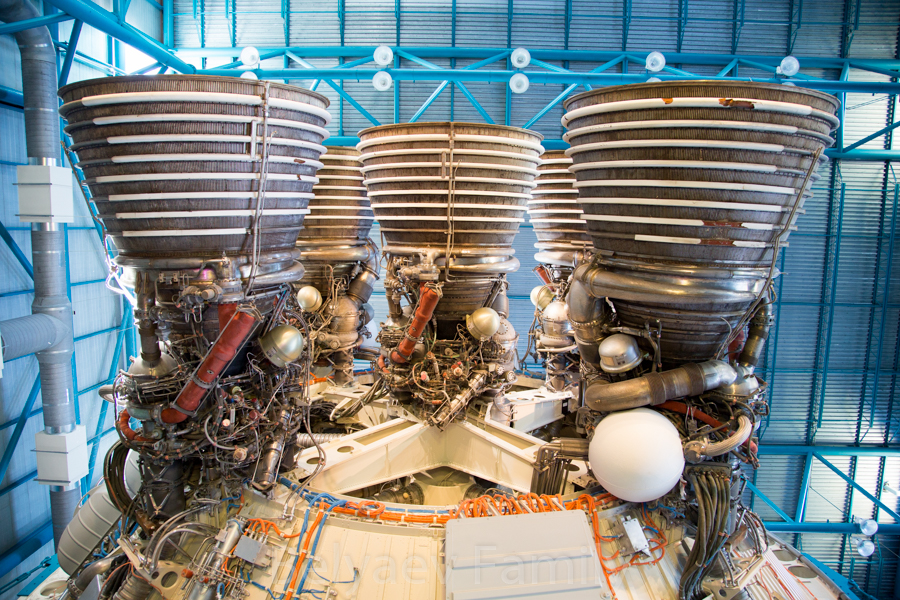
Second stage’s engines
After separation of the S-IC stage, the Saturn V’s Second Stage (S-II) ignited to propel the spacecraft to a speed of 15,000 mph. Producing a combined thrust of 1,125,000 pounds, the five J-2 engines at the base of the S-II stage boosted the rocket 100 miles above the Earth. The S-II burned for about 6.5 minutes and was also jettisoned into the Atlantic Ocean when its fuel was entirely consumed.
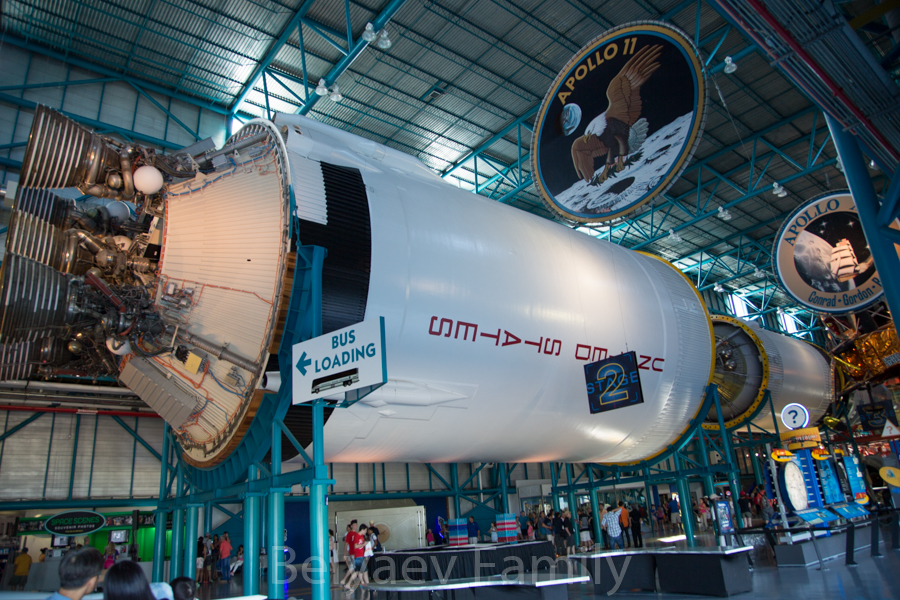
Second stage
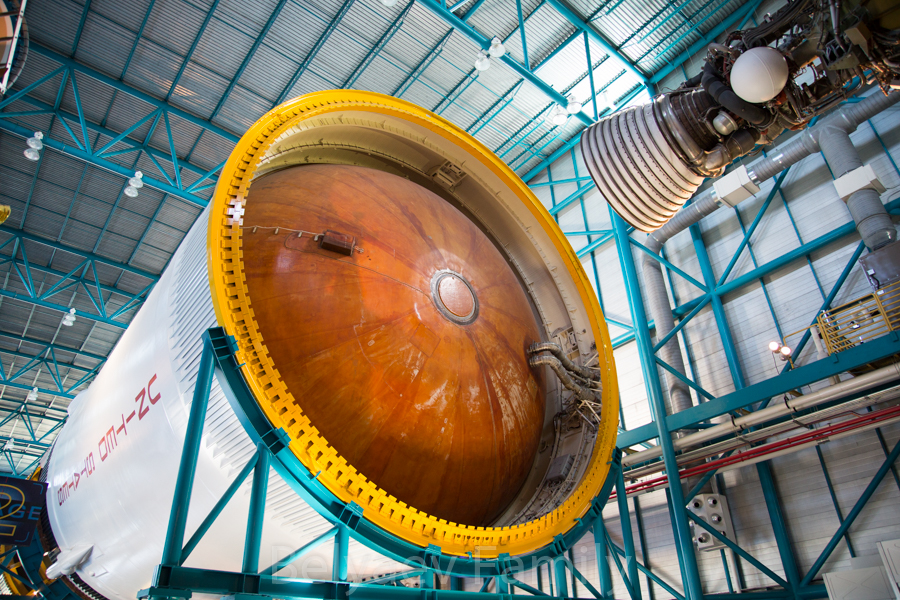
Third stage (S-IVb) had only one J-2 engine, that worked twice. First time it burned for 2.5 minutes and sent the rocket orbiting the Earth. And second burn was about 5.5 minutes that boosted the spacecraft toward the Moon.
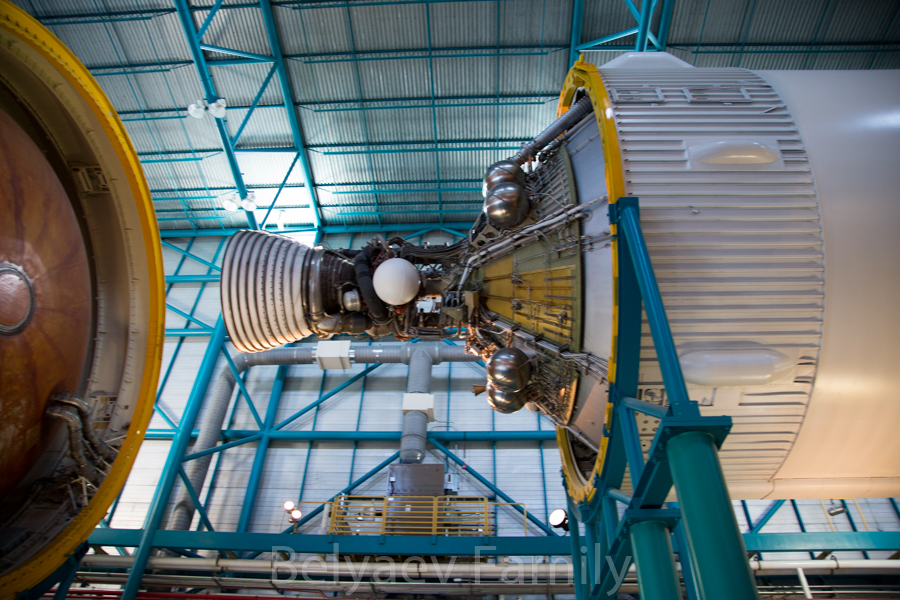
Third stage’s engine
Referred to as the “brain” of the Saturn V rocket, the Instrument Unit (IU) contained guidance, navigation and control devices used to steer the spacecraft. It also regulated tracking, communications, electrical and environmental systems.
The Lunar Module (LM) transported two astronauts from the Command and Service Modules (CSM) down to the surface of the Moon. The LM was composed of descent stage and an ascent stage. After serving as a lunar base, the ascent stage transported the two crew members back to the CSM. The LM did not require a streamlined shape because it flew only in the vacuum of space. It was designed to be as lightweight as possible. The LM’s ladder was so fragile it could only function in the one-sixth gravity of the Moon and would have broken if used on Earth.
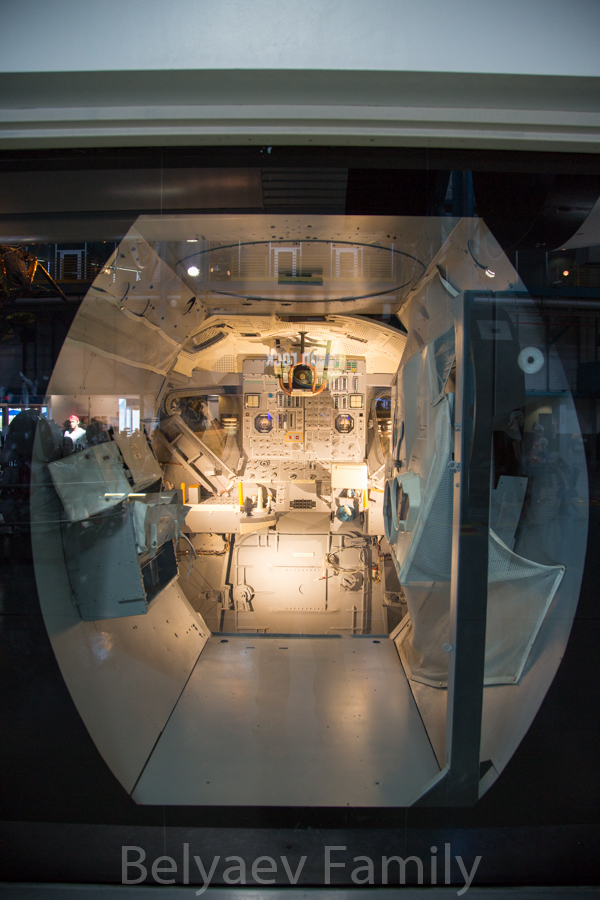
This is how Lunar Module looked inside
The Service Module (SM) provided the Command Module (CM) with essential supplies such as oxygen, water, fuel and electricity. The SM also acted as the CM’s primary source of propulsion and was responsible for placing the spacecraft into lunar orbit as well as thrusting it back toward Earth in the end of the mission. It also could be used in case if mission was aborted and spacecraft needed to be returned to the Earth before reaching the Moon. (During Apollo 13 mission the explosion had happened here, that was the reason why Apollo 13 didn’t land on the Moon)
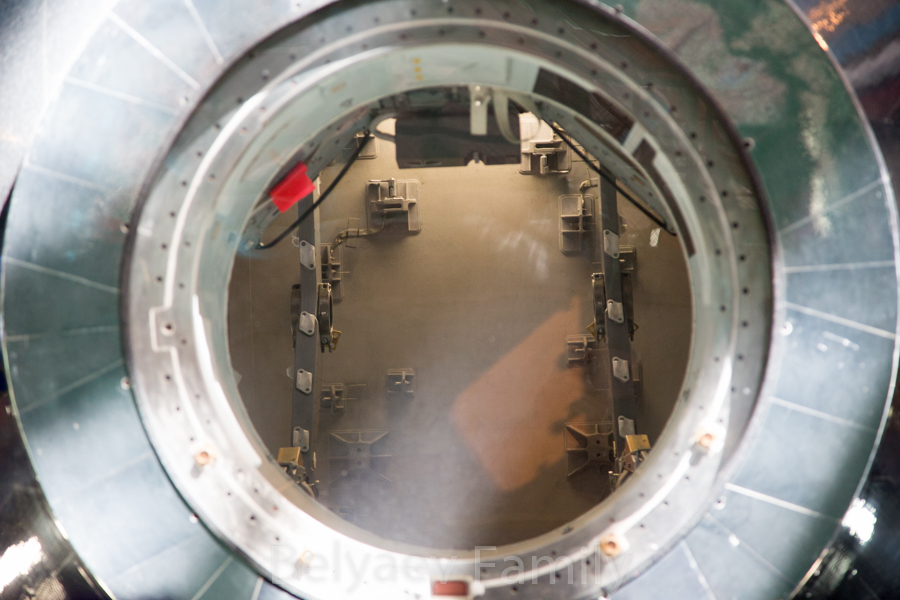
Service Module
The Command Module (CM) was the only Apollo / Saturn V component to return to Earth. Functioning as cockpit, office, kitchen, bedroom and bathroom, the CM was home to the three astronauts except when two of the crew members visited the Moon in the Lunar Module. The launch Escape System (LES) at the tip of the Apollo / Saturn V was designed to separate the CM from the rest of the rocket in the event of a launch emergency. It was jettisoned approximately 30 seconds after the ignition of the S-II stage.
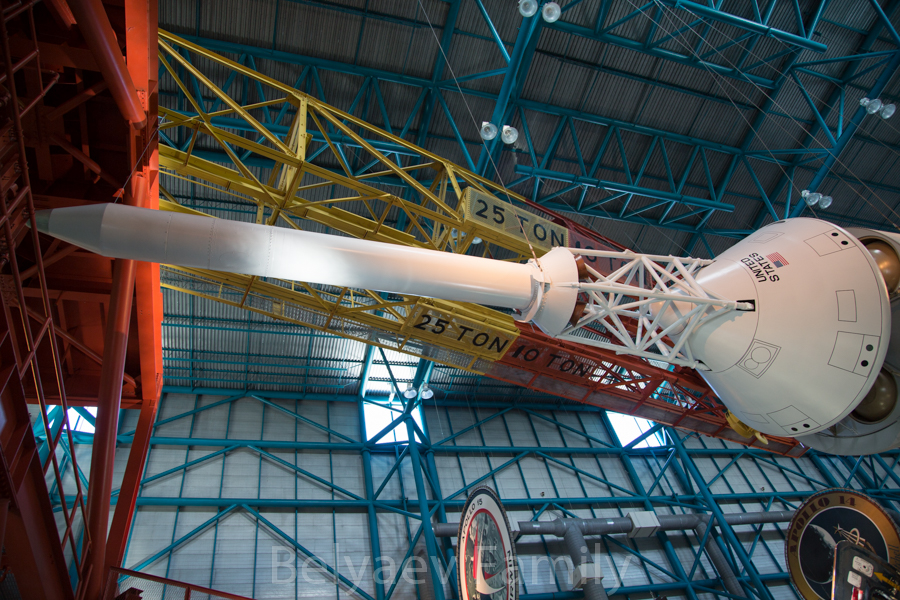
Command Module and LES
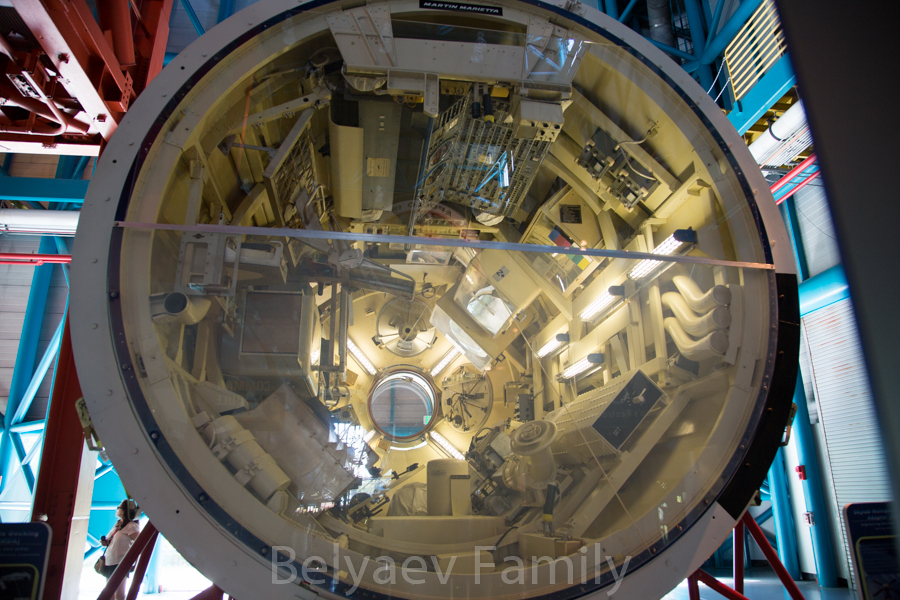
Skylab
After that we went to look to the Atlantis Shuttle. First we were shown a quick 12-min film about creation of the shuttle, from the idea to the spacecraft. Then doors opened, welcoming us, and we went inside the hall that was looked like we were inside the huge shuttle’s cabin. That was a cinema too and we felt like we were inside the launch they showed to us. The images was around us everywhere – in the front, in the ceiling, at the sides… and when our “shuttle” was in the space, the front screen slowly disappear and the real Atlantis was in front of us. Very spectacular!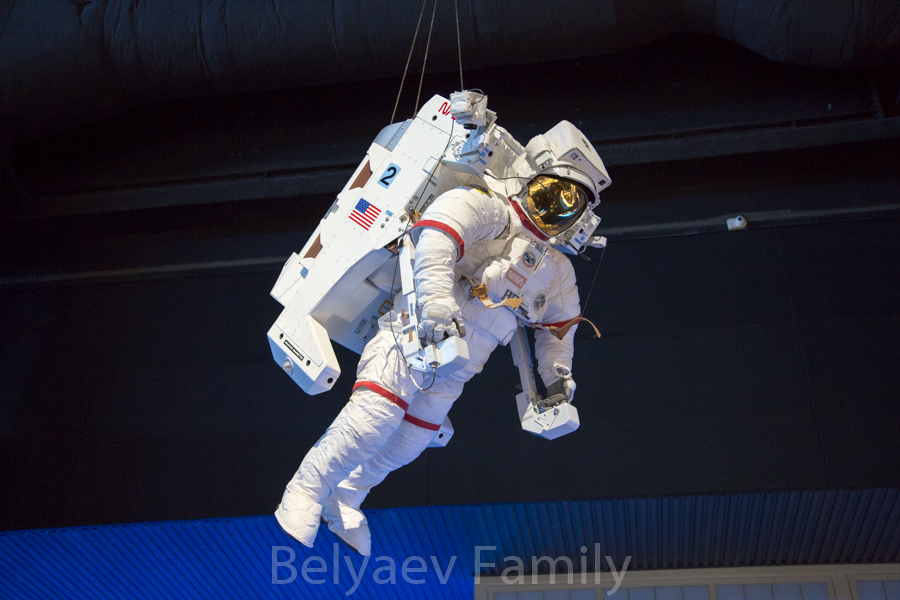
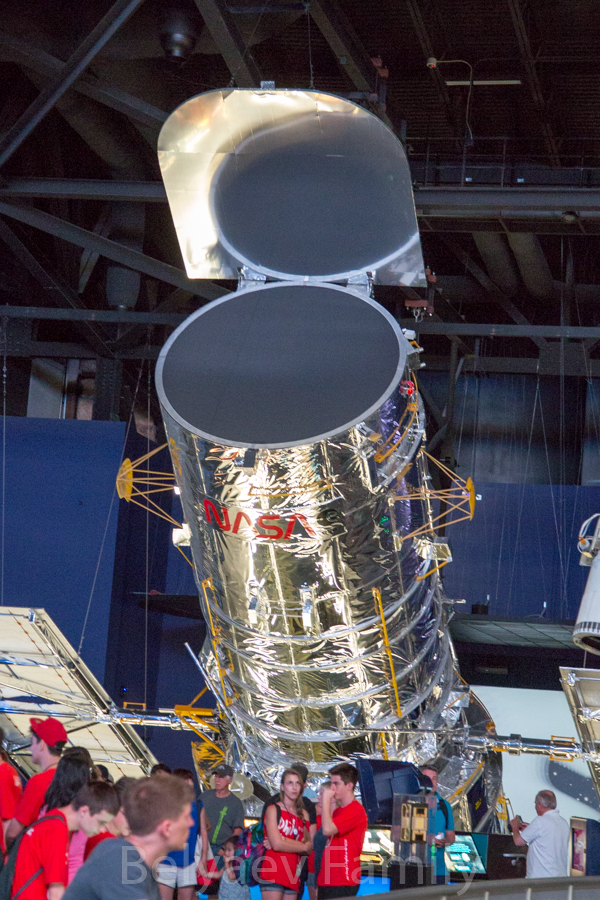
Hubble telescope
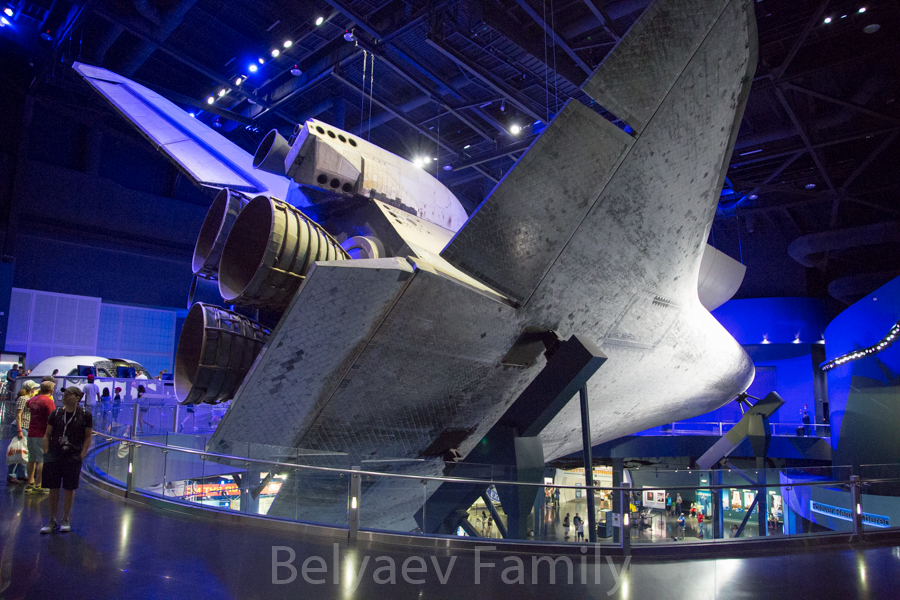
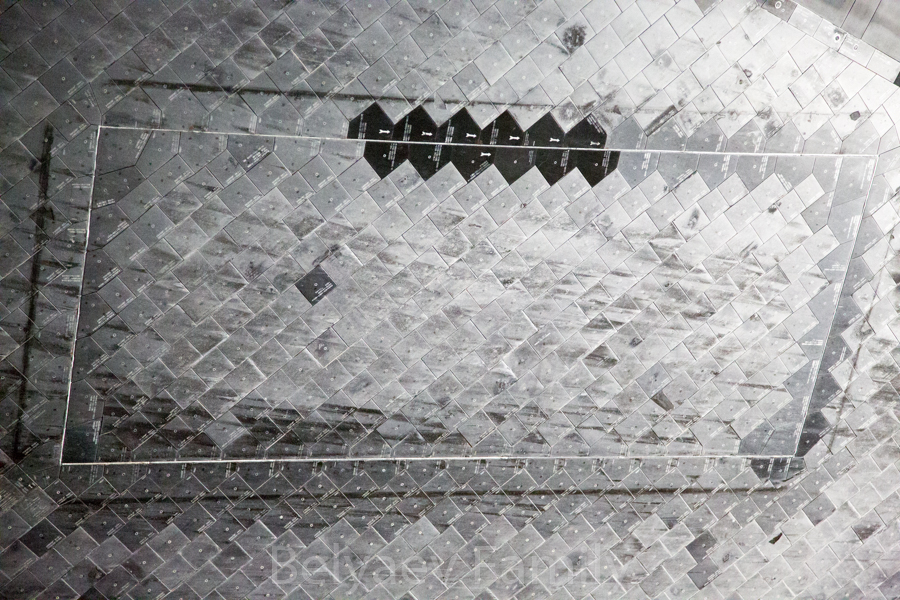
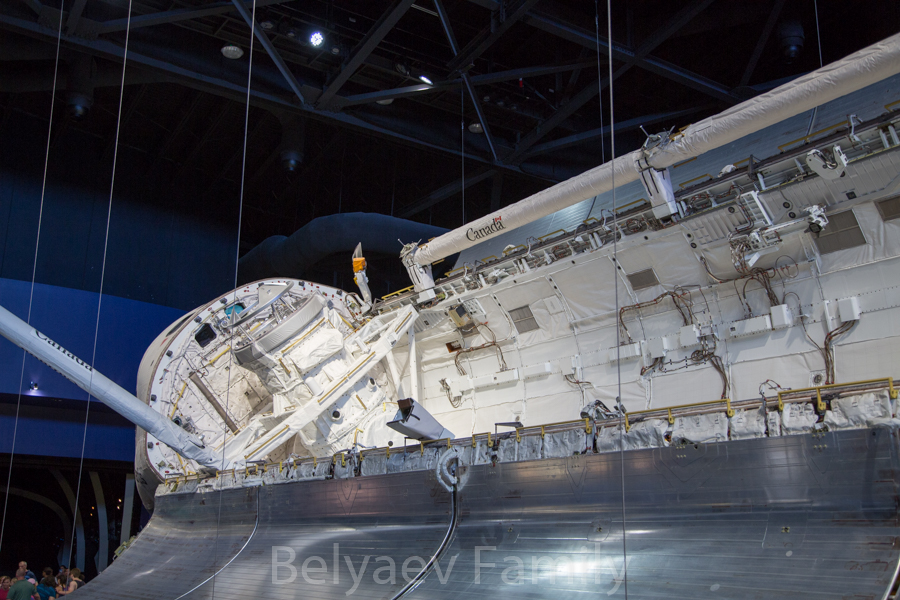
Cargo was placed here
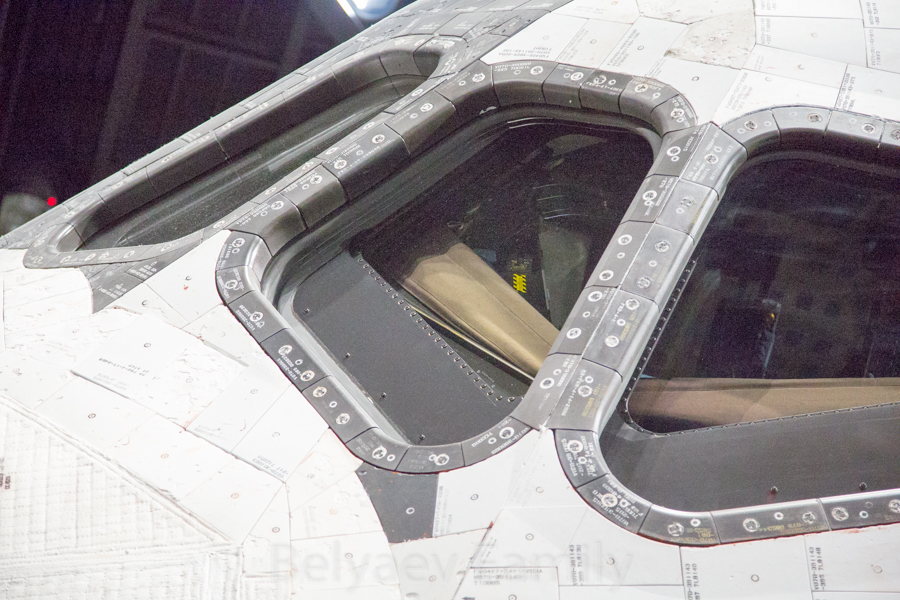
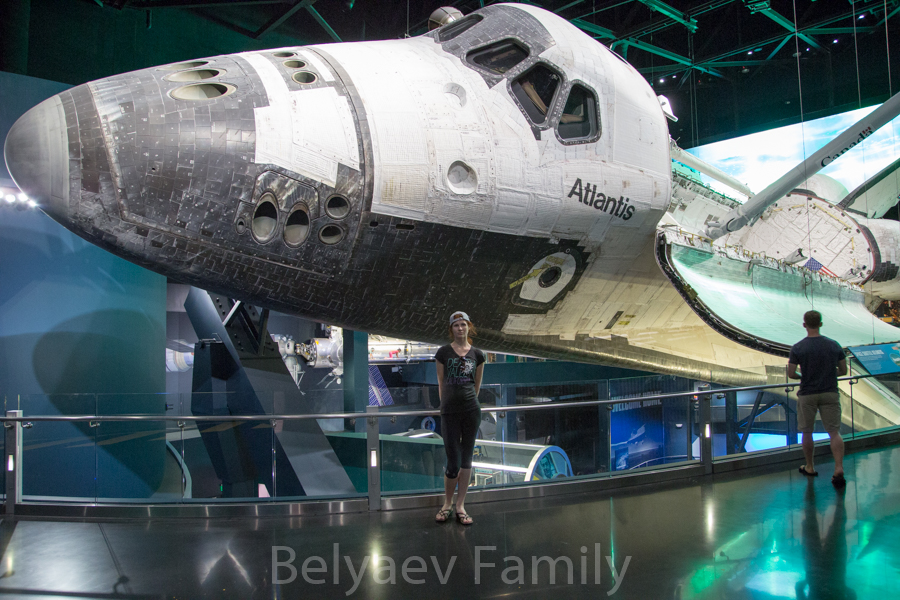
Near the shuttle there were interactive informational screens, showing work and purpose of each system. Down the stairs was the shuttle’s tires – the real one, after the last landing. They were absolutely bald and shiny (engineers tried to make spacecraft as lightweight as possible). The front tires were changed every other landing and the back tires were changed every time.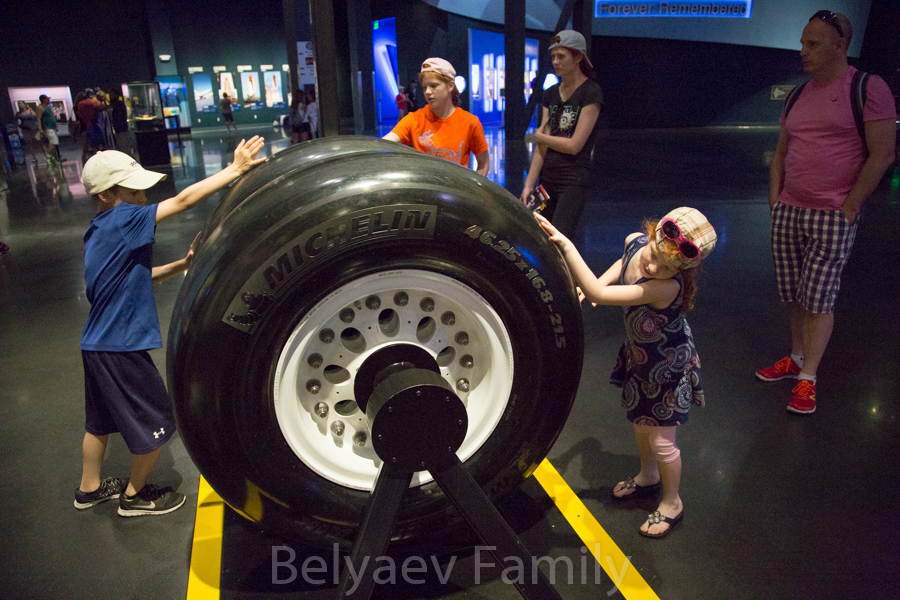
And the last was the attraction showing us how the real launch feel like. As the astronauts said, when they’ve tried it, it was as close to the real launch as possible. And I’d say, it was really fun! we laughed there a lot (as well as shrieked and squeaked too).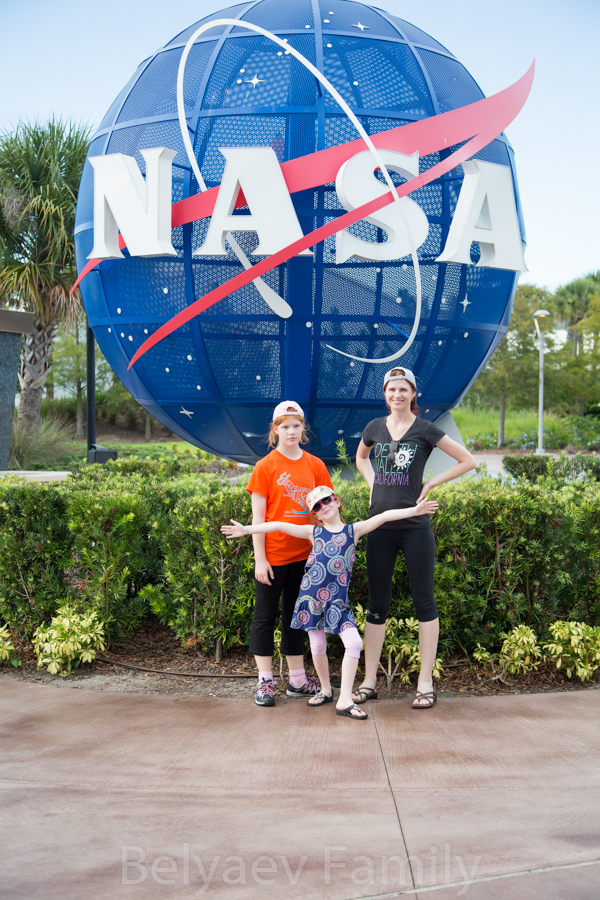

Turtle cloud
Part 24 here